

ZDNET
Follow ZDNET: Add us as a preferred source on Google.
Unlike last year, Google’s new affordable Pixel 10a is closer to its predecessor than the base flagship model, the Pixel 10. Last year, the Pixel 9a bridged the gap between A-series and flagship Pixel phones. Unfortunately, the same can’t be said for Google’s lineup in 2026.
The Pixel 10a doesn’t compete with the Pixel 10 as well as the 9a did with the 9. And it isn’t just because of its minimal upgrades.
Also: I went hands-on with every Google Pixel 10 model – and was surprised by the one I loved most
In 2025, Google upgraded its base model with a bunch of new features (a dedicated telephoto camera and PixelSnap, among others), which had low chances of trickling down to the A series in the first place. But with the latest launch, it pulled the Pixel 10a from getting closer to the Pixel 10 series by not giving it a processor, camera, or battery upgrade.
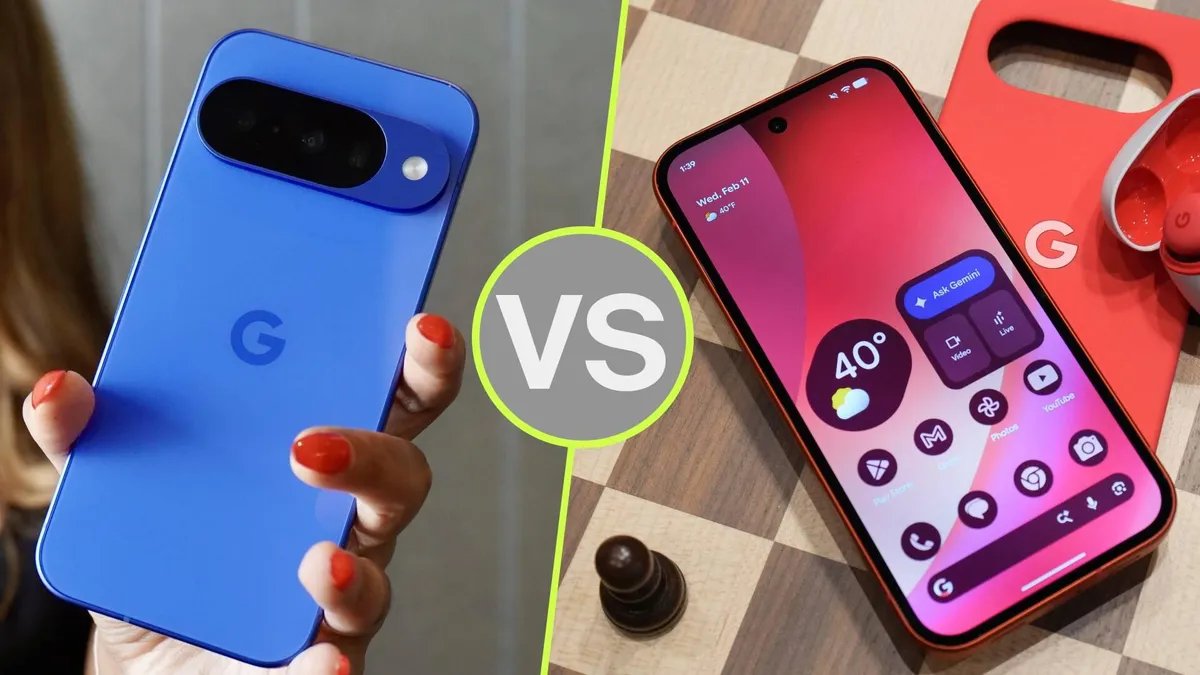
Despite its modest improvements, the Pixel 10a remains a solid option under $500 and even beats the Pixel 10 in some areas. Here’s how the two Google phones compare, and which one you should buy.
Buy the Google Pixel 10a if…
Kerry Wan/ZDNET
1. You want better battery life
The latest Google phone packs a 5,100mAh battery, which is rated to last up to 30 hours on a single charge. Going by the same official metrics, the Pixel 10 is said to give you 24 hours of battery life with its 4,970mAh cell.
I’ve used the Pixel 10 and last year’s 9a, and found the latter to last longer, so Google’s metrics are reliable. Neither of the two phones will last you an entire day if you push them to the limits, but the Pixel 10a fares better in day-to-day use.
Also: Google Pixel 10a vs. Pixel 9a: How much of an upgrade is the new affordable phone?
2. You shoot a lot of selfies
The Google Pixel 10a has a higher resolution 13MP front camera with a wider field-of-view (FoV) at 96.1 degrees. In comparison, the higher-end Pixel 10 has a 10.5MP selfie shooter with a 95-degree FoV. It has autofocus, too.
However, autofocus doesn’t matter if the quality of the photo isn’t very good. if you snap a lot of selfies for socials or are the go-to selfie shooter for your group, the $499 Pixel 10a will serve you better.
3. You need a lightweight phone without a camera protrusion
Kerry Wan/ZDNET
The new Pixel 10a is 21 grams lighter than the slightly smaller and slimmer Pixel 10. At 183g, it isn’t the lightest phone but Google’s base flagship model is one of the few small phones that cross the 200g mark and it could get hefty in day-to-day use.
Also: Changing these 10 settings on my Pixel phone greatly improved the user experience
Google also flushed the camera bump on the Pixel 10a. It sits flat on a table. This change fixes the awkward phone wobble on your desk and other flat surfaces. I don’t find it bothersome, but I’ve seen people complaining about rear-camera housings protruding more every year. If you’re one of those people, there’s finally a phone for you. By contrast, the Pixel 10 has the signature Google phone look with its visor module.
Buy the Google Pixel 10 if…
Joseph Maldonado/ZDNET
1. You want the best of Google AI features
The Google Pixel 10 is powered by the Tensor G5 chipset and paired with 12GB of RAM, as compared to 10a’s Tensor G4 processor and 8GB of RAM. This gives it the edge in performance and AI features.
Also: 7 Google Pixel phone settings you should change immediately (and how to do it)
You get things like Pixel Screenshots, Magic Cue and Auto Unblur, among others. These features might not look like a major differentiator on the spec sheet but could come in handy in daily life.
2. You need a more versatile camera setup
Kerry Wan/ZDNET
The Pixel 10 is the first base Google flagship phone to get a dedicated telephoto camera. It isn’t the best sensor, but it gives you more flexibility. You get a 10.8MP Dual PD telephoto camera capable of 5x optical zoom and up to 20x digital zoom.
I like having three lenses at my disposal and would recommend the Pixel 10 over 10a for this reason. Apart from this, both phones have the same primary and ultrawide-angle lens. There’s a 48MP main sensor with f/1.7 aperture and a 13MP ultrawide-angle lens with a 120-degree field of view on the back.
3. You use magnetic accessories
I love Apple’s MagSafe and Google’s Pixelsnap technology. Many think they’re just made for wireless charging alignment but I find them more useful for on-the-go accessory support.
Also: Your Android phone feeling slow? My 4-step refresh routine works wonders every time
On my iPhone, I’ve attached tripods, grips, wallets and more magnetically without thinking twice. Bring a compatible accessory close to your phone and bam! It attaches magnetically, without needing you to fiddle with handles or any sort of cases. Since Pixelsnap is based on the Qi2 wireless charging standard, any of the MagSafe accessories previously marketed for iPhones also work with the Pixel 10.
If battery life and budget are your priorities, the Google Pixel 10a is for you. It has the same main camera and ultrawide lens, bigger cell and a flush camera module packed in a lighter design. However, if you want a more powerful phone with the latest and greatest Google features, the Pixel 10 should be your next phone.
