

Although they entered the mainstream about 20 years ago, electric vehicles (EVs) have been around for a long time.
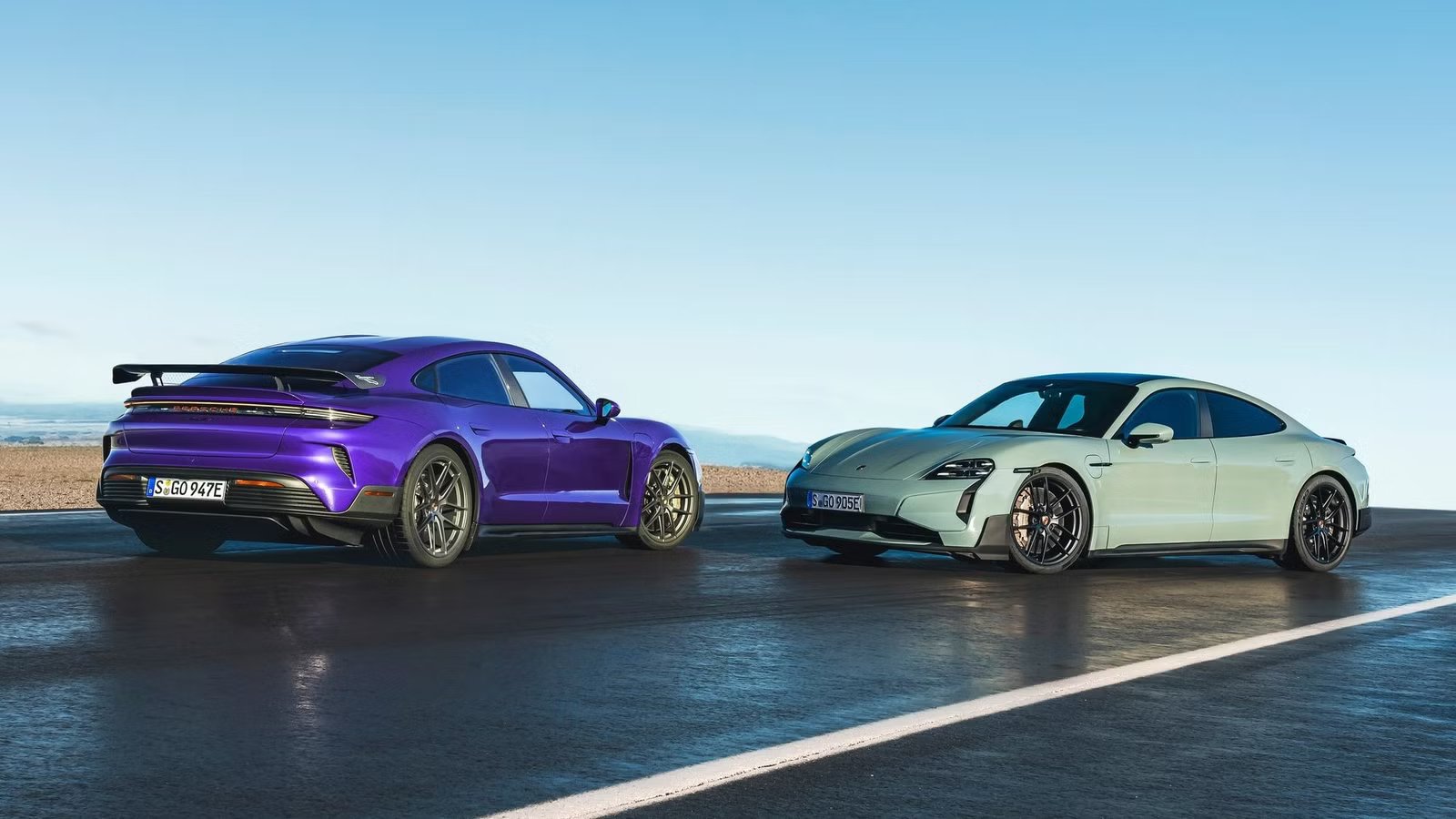
Ferdinand Porsche was developing EVs over 125 years ago. There are few automakers with a name as legendary as Porsche. Many of their sports cars are in such high demand that they often sell for well above MSRP. If any company could build an EV sports car that enthusiasts want to own, it would be Porsche. However, that isn’t the case with Taycan sales down 22% last year.
Porsche is not alone in their struggle to find EV sports car buyers. Ferrari and Lamborghini are also delaying the launch of their EV sports cars. These are iconic manufacturers with millions of loyal fans all around the world. You would think that buyers would be beating down the dealership doors right now to get their hands on an EV sports car built by either Porsche, Ferrari, or Lamborghini.
EVs can be blindingly quick. The 1,234-horsepower Lucid Air Sapphire can hit 60 mph in less than two seconds, run the quarter mile in nine seconds, and has a top speed over 200 mph. Even the most jaded performance car enthusiast must admit those are staggering numbers. The lack of EV sports car demand can’t be chalked up solely to a lack of performance. In fact, it can’t be attributed to any one thing.
Related
10 Electric Cars That Are Faster Than They Look
These unassuming EVs make perfect sleeper cars.
Lack of emotion and engagement
EVs are quick, but speed and power are not enough
Credit: Lucid Motors
EVs have the speed and power, but not the emotion that a combustion-powered sports car can offer. The engine noise and vibration, the ability to manually shift gears, and the sound of the exhaust. These are attributes that car enthusiasts hold near and dear. Without these sensations, many enthusiasts are simply not interested.
Let’s take the Dodge Charger Daytona as an example. In 2024, Dodge sold nearly 35,000 gasoline-powered Chargers. In 2025, they sold about 7,400 EV Chargers. That is a 79% decrease. Dodge fans showed little interest in the EV Daytona even though Dodge went to great lengths to make it as engaging as possible.
They went so far as to develop a Fratzonic Chambered Exhaust that mimics the sound of a traditional HEMI V8 engine, and it actually sounds pretty convincing. You know it is fake, but that isn’t the end of the world.
In The Matrix, there is a scene where Cypher is enjoying a delicious steak he knows isn’t real, but he doesn’t care because it tastes so good. The simulated exhaust sound is not a dealbreaker; neither is the nearly three-ton curb weight. The problem is that Dodge may have made the car a bit too good.
Credit: Carl Anthony / How-To Geek
Dodge muscle cars have never been light, nimble, quiet, or point-and-shoot type of machines. They are the polar opposite of the sports cars created by Lotus. Dodge muscle car owners know the limitations; they know what they are signing up for. What matters to them is that the car is a bit unhinged. If you aren’t careful, it will spit you into the woods.
In the film The Fast and the Furious, Dom admits to never driving his dad’s 1970 Dodge Charger R/T because it scares him. That is what Dodge muscle is all about. It needs to be a bit bad to be good. The EV is big, heavy, quick, and sounds decent, but it doesn’t have that muscle car edge.
In a traditional Dodge muscle car, you slam your foot down on the gas, and all hell breaks loose. That is what Dodge fans want, and Dodge plays up to that. Their brand ambassador program is called “Badassador.” Yet on the Charger Daytona EV, there is a PowerShot mode and a Drift/Donut mode that might be a bit too techy and cutsie for traditional muscle car fans.
Different from the Chargers of the world, some sports car enthusiasts love the wind-in-the-hair sensation that can only come from a convertible. Mazda is a good example here, having sold over 1.2 million Miatas since 1989.
It is one of the most beloved sports cars of all time and the best-selling roadster ever. It is not the most powerful or the fastest. But it has one of the best manual transmissions ever, and the manual soft top is a cinch to use. The term Jinba-ittai was coined during the development of the Miata. It translates to “horse and rider as one.” That is the feeling you get behind the wheel of the Miata. There is currently no EV convertible on the market that provides this type of driver and car interaction.
Related
10 fast American cars more reliable than a Miata
The Mazda MX-5 Miata sets the bar for durability, though these American models cruise past it when it comes to easy ownership.
Not modification-friendly
EVs don’t offer as many options
Credit: NetCarShow.com
The appeal of an EV is that it has fewer moving parts and is thus easier to maintain. But there is a flip side to that. People love to modify their vehicles. In 2024, the global car modification market was worth over $60 billion.
The options for modifying an EV are limited. Sure, you can wrap it, install new wheels, add a body kit, and change the suspension. But gasoline-powered cars offer far more options. Everything from simple air filters to LS-swaps are open to owners of gasoline-powered performance cars. Installing a new exhaust, headers, cams, and turbos are all part of the sports car experience. EV owners are largely shut out.
Go to any car show, from a local Cars and Coffee to a major Concours d’Elegance, and what do you see? Many cars with their hoods up. When you walk around these shows, you will hear people asking all the time something along the lines of “what does she got in there?” To which the owner is all too happy to explain that the engine started out as a Chevy 350 but now is a 383 stroker with a four-bolt main, forged con-rods and pistons, a hydraulic roller camshaft, and so on.
If an EV is at the same show with the hood up, you assume they are just getting their lunch out of the frunk. The EV might have a custom body kit and some cool aftermarket wheels, but you won’t be discussing battery packs and electric motors because nobody is modifying those.
High MSRP, repair costs, and range anxiety
A trio of bad news for car buyers
Credit: Audi
According to a AAA study in 2025, the interest in buying an EV fell to its lowest point since 2019. Only 16% of U.S. adults report being “very likely” or “likely” to purchase an EV as their next vehicle. Some of the most common reasons given for the lack of interest were high battery repair costs, range anxiety, and the perceived inconvenience of using an EV for a long trip.
No doubt respondents in the AAA study have been paying attention to the market, and they can see that EVs are expensive (and especially now that federal tax credits have expired). Beyond the purchase price, there is depreciation to consider. A study by iSeeCars showed that EVs lose the most value after purchase, falling almost 60% in five years.
Let’s use Porsche as an example. A combustion-powered Porsche 911 loses just 19.5% of its value after five years. That equates to an average loss of $24,428. The Porsche Taycan EV loses 60.1% of its value after five years. That equates to an average loss of $59,691. Losing an extra $35,000 in depreciation is a hit to the wallet that no sports car buyer wants to experience.
Enthusiasts will buy EV sports cars once they offer everything they want
Credit: Hyundai
Given all the above, the EV sports car must fundamentally change. They need to become less expensive and not depreciate as quickly. The infrastructure needs to change to make charging faster, easier, and more convenient. Solid-state batteries could go a long way towards making EVs more appealing to enthusiasts as well as the general car-buying public. They can increase range and decrease charging times.
Simulated gear shifts and engine sounds are a start in terms of driver enjoyment, but the tech to make an EV more engaging needs improvement. In addition to technological leaps, we need to see enthusiast models, such as convertibles, being built. Many traditional sports cars today are not always practical and efficient, and that is okay because they offer an overwhelming amount of fun. EVs need to raise their fun quotient. If/when that happens, enthusiasts will take notice and be willing to add an EV sports car to their garage.
