

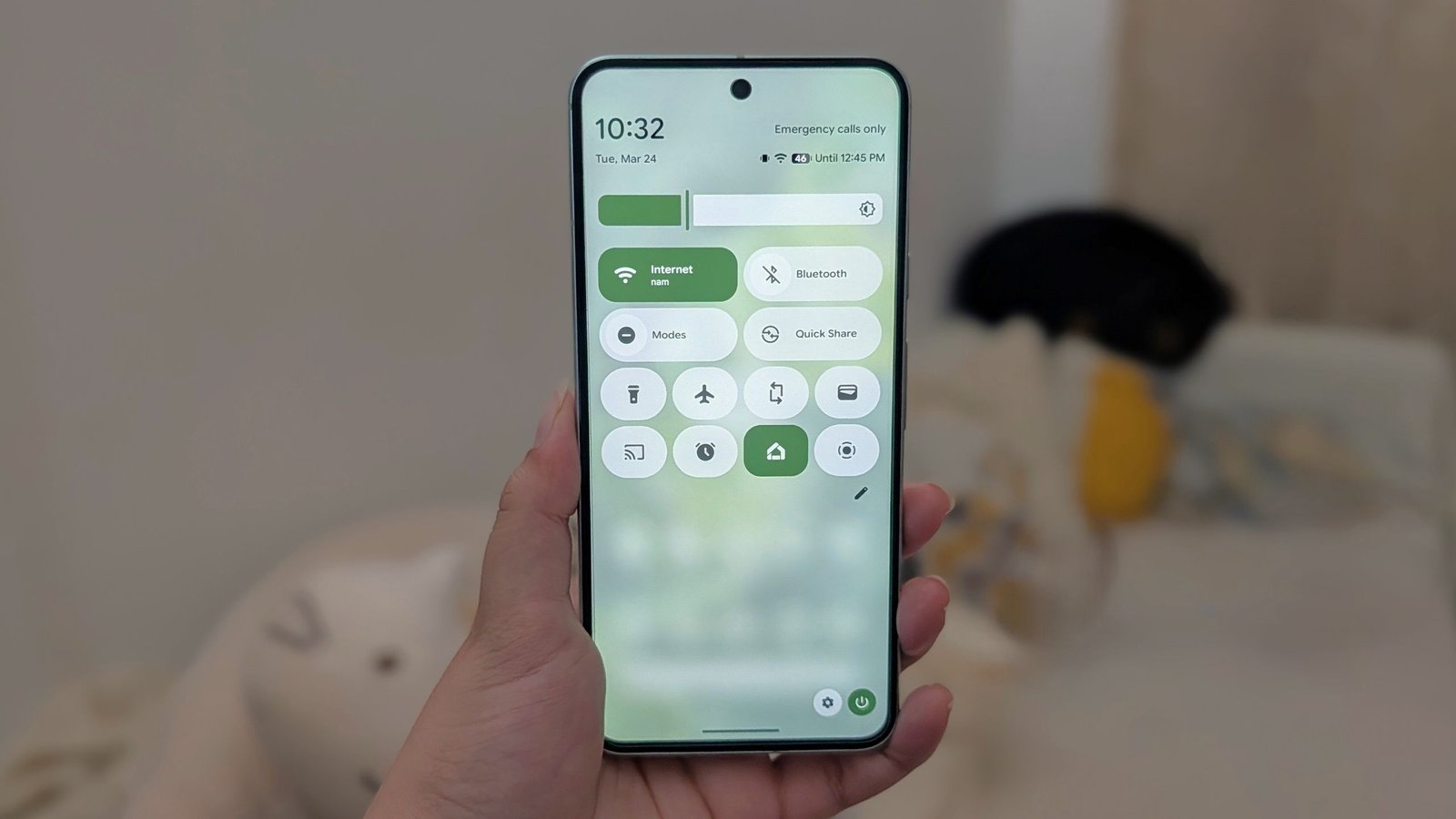
Quick settings look really neat and clean on Android 16, specifically on phones running stock Android, like the Pixel 10. You can add and remove tiles, reorganize them, add third-party tiles, and even change their sizes. The bare bones version comes with a few basic tiles out of the box. There are plenty of quick settings tiles we all need daily that are missing from the stock settings.
This is why I like to add at least six of the most important tiles to the quick settings as soon as I set up a phone for the first time. A few of them are quite surprising, because why would Google not add those tiles to the quick menu off the bat?
Article continues below
You may like
Location tile
(Image credit: Derrek Lee / Android Central)
As shocking as it may be, Google does not add the location tile to the quick settings menu by default. Considering this is perhaps the most used setting of them all, I find it perplexing that it is not automatically present on phones like the Pixel 10 right out of the box.
Leaving your GPS on can drain your battery a lot more, and you obviously also have to think about privacy concerns. This is why the location tile is the first one that you need to add to the first page of your quick settings.
Adding it is pretty simple. Take note that you’ll follow the same instructions for virtually every other tile addition.
Simply swipe downwards from the top of your screen twice. Once the full quick settings menu is drawn out, click the pencil icon to edit tiles. Tiles are sorted by categories, so you’ll need to scroll down to the privacy section to find and add the location tile.
(Image credit: Namerah Saud Fatmi / Android Central)
Hotspot tile
(Image credit: Namerah Saud Fatmi / Android Central)
Maybe you’ve got a secondary device like a tablet. Or if you’re like me, you like to use your mobile data plan on your laptop, especially when roaming. Sometimes your friends might need you to share your mobile data with them. These are just a few of the many good reasons why the hotspot tile is important.
You can find the hotspot tile under the connectivity section when editing tiles in the quick settings.
QR code scanner tile
(Image credit: Sanuj Bhatia / Android Central)
Google Lens can scan QR codes in a jiffy. If you have the Google Search widget on your home screen, the Lens button is accessible from there. Some phones, like the Pixel 10, even have this feature built into the camera app.
What to read next
Adding the QR scanner shortcut to quick settings cuts down all these steps. All you have to do is swipe down and tap. I find this to be the most convenient way to scan QR codes on my phone. The QR code scanner tile is found under the utilities category of tiles.
TV remote tile
(Image credit: Namerah Saud Fatmi / Android Central)
Not everyone has an Android TV or Google TV, but from what I’ve seen, even those who don’t have such smart TVs add dongles to make their dumb TVs smart. I am one of those people. Therefore, the TV remote tile is an absolute must-have.
How many times do we lose our physical TV remotes in the folds of the couch or the depths of the couch cushions? My cat makes matters worse, plopping down on the remote and sleeping on it for hours. Forget about looking for the TV remote, just add this tile (under the system apps header) to your quick settings and control your TV using your phone. This lets you skip the hassle of opening the Google Home or Google TV app.
Song search tile
(Image credit: Namerah Saud Fatmi / Android Central)
Not everyone has a Google Pixel to show the songs being played automatically on their phones. Song Search is another tile from system apps, just like the TV remote. It’s basically a shortcut to the “hum to search” feature from Google.
If you have a Pixel, however, I also suggest adding the Now Playing button to your quick settings menu, as it’s much more useful. Now Playing cannot recognize songs that a human sings or hums on the spot; however, this is why Song Search is incredibly useful.
If there’s an earworm stuck in your head, you can use Song Search. But if you want to identify and save songs being played around you or on your device, Now Playing a handy add on too. Google recently revamped Now Playing into a standalone app, and the new app tile is already available to Pixel users on Android 16.
Battery saver tile
(Image credit: Derrek Lee / Android Central)
If you haven’t changed your stock settings, the battery saver should automatically switch on when your phone’s battery drops below 20%. If you want to quickly toggle it on and off, go to the utilities section of tiles when editing your quick settings and add the battery saver shortcut.
Tapping a tile in the quick settings is a lot more convenient than digging through your phone’s settings every time.
That’s a wrap on my top six favorite quick settings tiles. Some of them might seem obvious, but what may be common practice for one individual can sometimes be a new idea to another. I hope this helped you configure your quick settings shortcuts better.
If you think I missed out on any other important tiles or any shortcut buttons that you value, let me know in the comments below!
First in line for updates
Enjoy all the latest Android features as soon as they are available with the Google Pixel 10. This phone has amazing cameras, excels at the AI side of things, runs multiple demanding apps super smoothly, and is still small enough to be suitable for one-handed use.
