

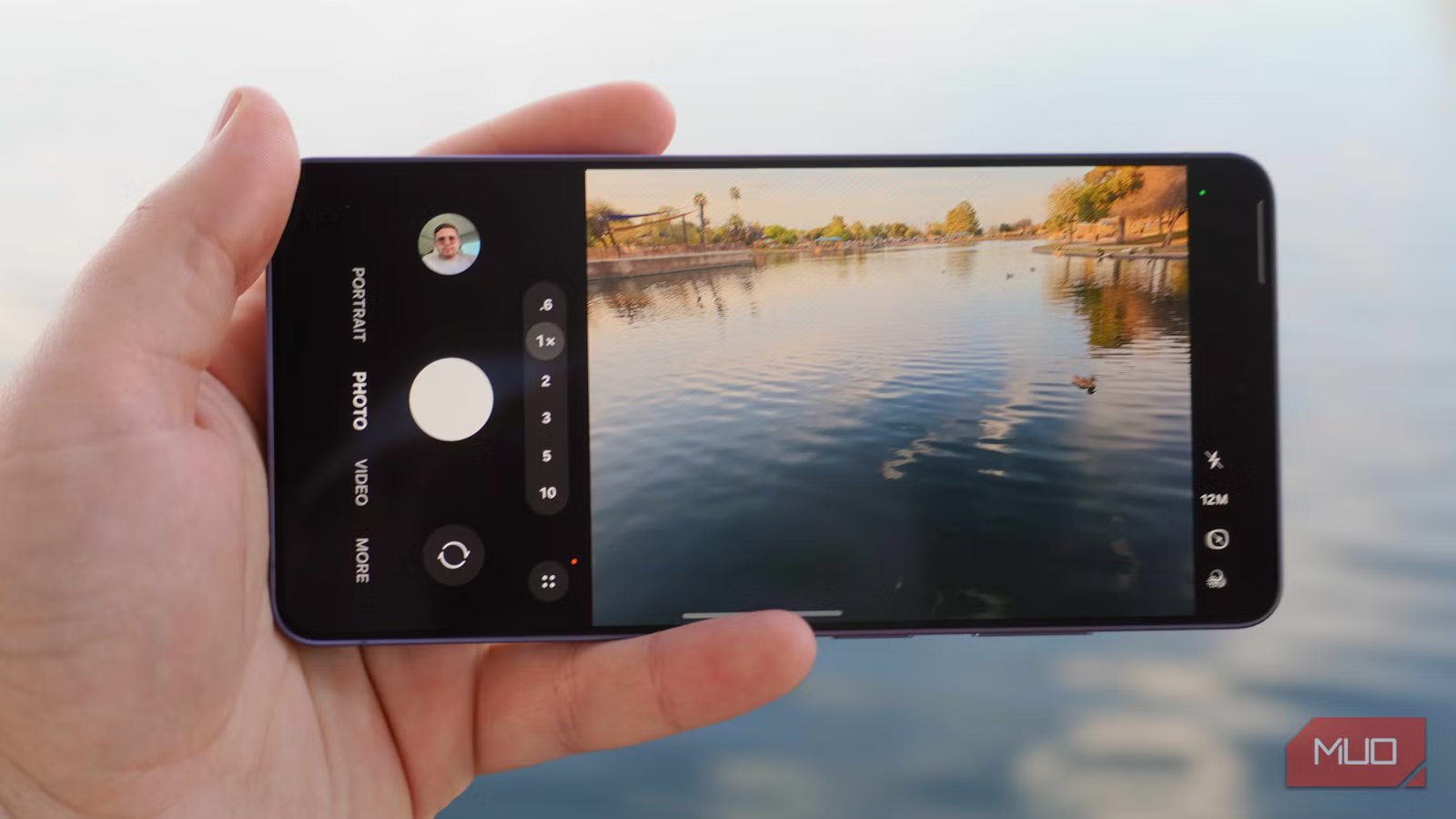
Smartphone cameras are small, and that leads manufacturers to employ software tricks to improve image quality despite the inherent size limitations. You can easily find an Android phone or iPhone with a camera sporting a higher megapixel count than a mirrorless body or DSLR camera. As you’ve probably heard before, megapixels aren’t everything, and they hardly tell the entire story. Image sensor size is the more important spec than megapixel count, and that’s a problem for smartphones with tiny cameras.
Megapixels quantify the resolution of a camera, measured in millions of pixels. A phone with a 50MP main camera has 50 million pixels, while a device with a 200MP camera has 200 million pixels. However, pixels aren’t always equal. Pixels are the tiny squares that capture light to create images, but they come in different sizes. Pixel size and image sensor size determine the resolution of a camera, measured in megapixels. To cram more pixels into an image sensor, you either need to include a larger sensor or miniaturize the pixels.
Smartphones use smaller pixels and image sensors due to their obvious space constraints, and that’s why they feature a trick called “pixel binning” to improve performance. By combining pixels together, phone cameras can produce better images with a lower resolution (megapixel count). It’s the reason why a 12MP photo can look better than a 50MP or 200MP one captured with modern camera phones.
Pixel binning improves image quality
By combining pixels, a 12MP photo can look brighter and sharper
Credit: Brady Snyder / MakeUseOf
Megapixel counts are easy to market, which is why smartphone brands advertise them so prominently. Everyone knows a bigger number is better than a smaller one, right? That’s hardly the case in mobile photography, but many consumers mistakenly assume that the Galaxy S26 Ultra’s 200MP camera sensor is automatically better than the iPhone 17 Pro Max’s 48MP primary shooter. Instead, the pixel size and sensor size are more important in predicting camera performance. For instance, the Galaxy S26 Ultra’s 200MP main camera has tiny 0.6-micron pixels, while the iPhone 17 Pro Max’s main camera offers much larger 1.22-micron pixels.
Regardless of your smartphone’s pixel size, you can expect the mobile image sensor pixels to be small. The concept of pixel binning is simple — pixel binning bundles the image data from four separate pixels into a single pixel. Using a lower resolution, smartphone cameras can capture photos matching the quality of sensors with larger pixel sizes using the pixel binning technique. So, when the iPhone 17 Pro Max is taking binned shots, it has an effective pixel size of 2.44 microns — double the size of the hardware pixels.
Credit: Amir Bohlooli / MUO
This helps explain the dilemma of whether to shoot in a higher or lower megapixel mode. Using a 48MP primary camera sensor, you can either shoot using every bit of the maximum 48MP resolution with smaller pixels or opt for the 12MP resolution with larger, binned pixels. There’s a mix of hardware and software working behind the scenes to make pixel binning possible. The camera lens typically offers a quad-bayer filter that ensures four adjacent pixels all have the same color filter, allowing them to be binned together. In high-resolution shooting modes, software converts the filter arrangement to process pixel color individually.
Now that you know the background, it’s easy to see why pixel binning is necessary. When using the high-megapixel shooting modes on a smartphone camera, you’re using an image sensor with smaller individual pixels that works best with an abundance of light. Without great natural lighting, these smaller pixels will be more susceptible to noise and a loss of dynamic range.
This explains how a 50MP or 200MP photo captured with a phone camera can look noisy, underexposed, or flat compared to a clear, bright, and colorful 12MP photo. A 12MP binned photo uses larger pixels that can take in more light and have a higher signal-to-noise ratio, producing a better image overall despite the lower resolution.
Related
Smartphone cameras never advertise the specs that actually matter
And the one they do use isn’t giving a clear picture.
Phones don’t default to the highest megapixel count
Even if your phone has a 200MP camera, it’s not shooting in that mode
When you spot that your 48MP, 50MP, or 200MP smartphone camera is saving photos at 12MP or 12.5MP quality, it’s natural to feel like you’re missing out. Every smartphone brand, including Apple, Google, and Samsung, captures photos at a lower resolution than their phone camera’s maximum by default. Instead of looking at the lower resolution, remember that you’re getting a “superpixel,” and it’s actually an upgrade. Superpixels are the name for clustered pixels combined during the pixel binning process, and allow phone cameras to take quicker photos with more detail in worse lighting conditions compared to traditional photos.
Another factor to consider is post-processing, which is a major consideration in smartphone photography. Post-processing are the software improvements applied to a photo after it’s captured to improve brightness, quality, and color, among other aspects. Smartphones often use different post-processing pipelines for binned photos compared to full-resolution images. For example, Samsung uses an AI-based fusion algorithm for 12MP and 24MP images on the Galaxy S26 series, which the 50MP or 200MP shooting modes don’t get. So, if you like these software processing and color science tweaks, you may prefer binned photos to higher-resolution ones.
Related
My 200MP camera was saving 12MP until I found this setting
What’s going on with Samsung’s 200MP camera and 12MP shots.
It’s all to make up for smaller camera sensors
Megapixels are just one part of smartphone photography
Credit: Brady Snyder / MakeUseOf
Pixel binning allows smartphone manufacturers to get the best of both worlds — they can provide a high-resolution camera sensor while offering a practical default shooting mode. Brands like Samsung market flashy 200MP cameras with tiny pixels, and that’s why phones including the Galaxy S26 Ultra default to 12MP instead to compensate.
The pixels and sensors are small, but by combining four pixels into one through the pixel binning process, smartphones can deliver photos with better lighting, color, and detail. So, if you’re constantly finding yourself preferring 12MP photos to 50MP ones, you’re not crazy — you’re just seeing the real-world results of pixel binning technology in action.
SoC
Snapdragon 8 Elite Gen 5
Display
6.9-inch Dynamic Super AMOLED 2X
RAM
12 or 16 GB
Storage
256GB, 512GB, or 1TB
Battery
5,000 mAh
Operating System
Android
The Samsung Galaxy S26 Ultra isn’t a massive leap in specs compared to the previous generation Samsung Galaxy S25 Ultra, but it boasts improvements in every aspect. The smartphone includes a 200MP main camera sensor, but it defaults to taking 12MP binned photos that combine multiple pixels into one for better overall performance.
