

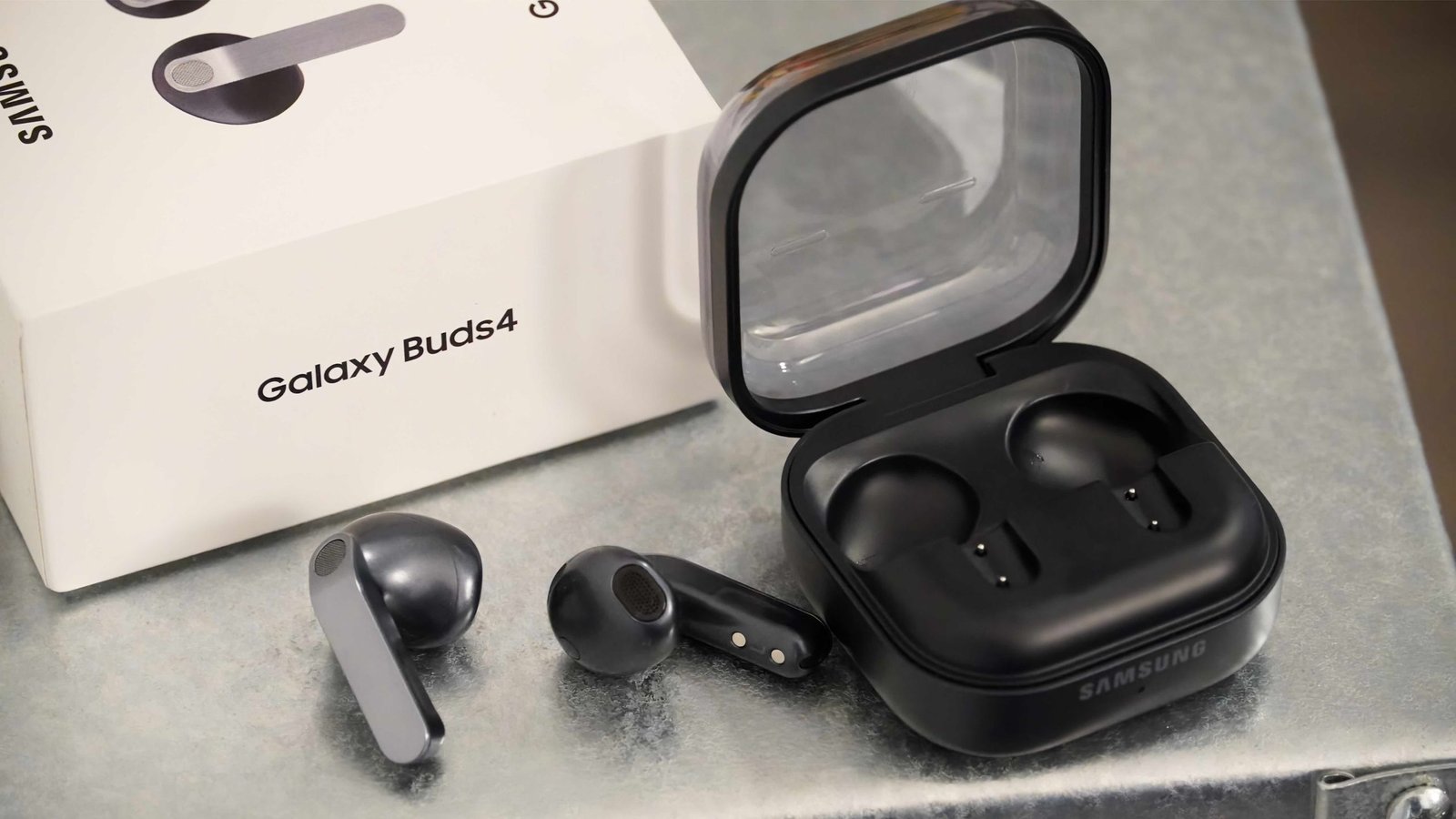
The Samsung Galaxy Buds 4 series is here with a fresh design and new-look charging case, but the hardware is just the beginning of the changes. Make no mistake, the Galaxy Buds 4 and Galaxy Buds 4 Pro are a major visual departure from the Galaxy Buds 3 and Galaxy Buds 3 Pro. Still, there are just as many exciting upgrades on the software front, and I’ve been testing the Galaxy Buds 4 to find them all.
From unlocking hi-res Bluetooth audio to tracking your earbuds’ location, these are the features you need to use to make the most of the Galaxy Buds 4. At $180 for the Galaxy Buds 4 and $250 for the Galaxy Buds 4 Pro, these are compelling options for any Samsung Galaxy phone owner. You gain access to exclusive features when you use the Samsung earbuds with a Samsung phone, like some of the ones on this list.
Today’s best Samsung Galaxy Buds 4 deals
Gaming mode
(Image credit: Brady Snyder / Android Central)
Samsung equipped the Galaxy Buds 4 series with Bluetooth 6.1 and Bluetooth Low Energy (BLE) support. Still, the standard wireless mode used by the Galaxy Buds 4 and many wireless earbuds may not be desirable for gaming. When playing your favorite games, latency is crucial — you need to hear sounds as they happen for peak competitiveness and immersiveness. Luckily, there’s a hidden gaming mode available for the Galaxy Buds 4.
Article continues below
You may like
You can find it by opening the Settings app on a Galaxy phone paired with your earbuds and tapping the Galaxy Buds 4 tab. Then, find the Advanced features tab in the list and tap Labs. Here, you’ll find the Gaming mode toggle that reduces audio delays for “vivid, synchronized gaming sound.”
Notably, this mode may cause reliability issues or dropped connections, especially in areas with heavy Bluetooth interference. You should enable gaming mode only when you’re actively listening to in-game audio with your Galaxy Buds 4 for the best experience.
Ultra high quality audio
(Image credit: Brady Snyder / Android Central)
Samsung offers a few sound-quality features for the Galaxy Buds 4, including 360 Audio with spatial audio and head tracking. However, the intriguing new feature here is ultra-high quality (UHQ) audio support. Using the Samsung Seamless Codec (SSC), your Galaxy Buds 4 can hit up to a 96kHz sample rate in supported apps. This mode delivers true high-quality audio over a wireless connection and aims to compete with codecs like Sony’s LDAC or Qualcomm’s aptX suite.
To get the peak 24-bit/96kHz audio quality offered by the Galaxy Buds 4, you’ll need a Samsung phone. The feature is also optional, which isn’t surprising. You might not always need or want the extra quality boost, and using the SSC-UHQ wireless audio codec consumes more battery life.
Still, it’s a neat feature you can enable by opening the Settings app on a Galaxy phone paired with your earbuds and tapping the Galaxy Buds 4 tab. Next, tap Sound quality and effects and press Advanced quality options. This is where you can flip the toggle beside ultra high quality (UHQ) audio for better sound. Keep in mind that you can use high-quality audio or the low-latency gaming mode — they can’t be used simultaneously.
Samsung Find
(Image credit: Brady Snyder / Android Central)
Wireless earbuds are incredibly convenient, but they’re also easier to lose. The Samsung Galaxy Buds 4 series connects with the Samsung Find app to make tracking and locating the earbuds seamless. To set up the feature for the first time, open the Settings app on your phone and tap your Galaxy Buds 4 tab. Then, select Find my earbuds and follow the prompts to add them to the Find app. You’ll need to grant the app location permissions to use the feature.
After that, your earbuds’ last known location will appear in the Find app, where you can also ring them or try to refresh their location. The app also displays the earbuds’ battery life, so you know how long you can use them before their battery fades. Finally, there’s a lost mode and Notify when left behind toggle that helps you keep track of your earbuds before they’re lost. If you’re someone who tends to lose earbuds, this is a no-brainer feature to enable.
What to read next
Auracast
(Image credit: Brady Snyder / Android Central)
Since the Galaxy Buds 4 offer Bluetooth Low Energy support and connect with Android 16-based phones, you can use them with Auracast. For those unfamiliar, Auracast is a new wireless technology that allows multiple low-energy devices to connect to host devices to receive audio broadcasts. You might use Auracast to connect 10 pairs of earbuds to a single tablet to watch a movie, or for hundreds of people to hear announcements at a public museum.
The possibilities are seemingly endless, but the concept is still in its infancy. If you want to give it an early try, you can with the Galaxy Buds 4. In the earbuds’ settings menu, you’ll find a Listen to audio broadcast button at the bottom of the list that allows you to connect to nearby Auracast streams. Similarly, you can create your own broadcast to share your phone’s audio with other Auracast-compatible headphones.
Head gestures
(Image credit: Brady Snyder / Android Central)
Finally, the Galaxy Buds 4 are the first Samsung earbuds to support head gestures. We’ve seen this feature on Google Pixel Buds and AirPods in the past, but it’s new to this generation of Galaxy Buds. When enabled, you can use the feature to nod or shake your head to accept or decline incoming calls. The gestures also work with voice assistants like Bixby, as you can answer yes-or-no questions and end conversations with head gestures.
To use head gestures, open the Galaxy Buds 4 settings page and find the Head gestures toggle. Flip it on to start using them, or tap the Head gestures tab to customize the actions for each gesture. There’s also a tutorial to help you master head gestures before you start using them with calls and voice assistants.
Starter Samsung earbuds
While there are Galaxy Buds more or less expensive than the Galaxy Buds 4, this new model balances feature set and price point. It’s solid for everyday wear, but audiophiles and athletes may be left wanting more.
