

Samsung is a large conglomerate with many different arms — the one making your favorite Galaxy products is Samsung Electronics, while the Samsung Foundry and Samsung Display divisions sell individual components to other companies. When the company’s Display division shows off new technologies, it affects the entire industry.
I toured a few Samsung Display projects in development at MWC 2026, from new Privacy display features to a phone with a slidable screen. Here’s the tech that might shape your next gadget.
Samsung’s Privacy Display is already looking at big upgrades
(Image credit: Brady Snyder / Android Central)
Samsung’s new Privacy Display feature debuted on the Samsung Galaxy S26 Ultra, and it uses a new pixel structure featuring both narrow and wide pixels. The narrow pixels can be seen only head-on, while the wide pixels can be seen from forgiving viewing angles. When using the Privacy Display functionality, the wide pixels are disabled, so your screen can’t be viewed off-angle.
You may like
This mimics the functionality of privacy screen protectors, but Privacy Display is better in a few ways. For one, you can disable it in software when you need peak visibility. Another advantage is that Privacy Display blocks unwanted viewing from all off-axis angles, whereas privacy screen protectors only block viewing from the left and right — not the top or bottom. Currently, you can either enable Privacy Display for the entire screen or use it specific apps, for notifications, or when typing in passwords.
Although it feels like Privacy Display just launched, Samsung is already showing off new ways to use it that are labeled “under development.” At the show, Samsung Display revealed an experimental feature that lets you enable the Privacy Display feature for certain parts of the screen. For instance, this developmental feature would make it possible to only block the top or bottom of the screen as needed.
(Image credit: Brady Snyder / Android Central)
The cool thing about this Privacy Display functionality is that it requires no additional hardware. It would work on the Samsung Galaxy S26 Ultra’s Flex Magic Pixel display, though there’s no word on when or if the new Privacy Display settings will make their way to the just-announced model.
LEAD 2.0 is shrinking bezels and brightening colors
Image 1 of 3
(Image credit: Brady Snyder / Android Central)(Image credit: Brady Snyder / Android Central)(Image credit: Brady Snyder / Android Central)
LEAD 2.0 is Samsung’s newest OLED display technology, and it’s the Samsung Display showcase I’m most excited about. Smartphone screens today are plenty bright, but you never seem to get those advertised peak brightness ratings in real-world use. Your phone gets hot, you take it outside in the sun, and all of a sudden thermal throttling limits your screen’s brightness when it matters most. These bright screens, though fickle in effectiveness, also consume a ton of battery life.
There’s a chance LEAD 2.0 solves all of those common complaints. The new OLED tech can hit a maximum luminance of 5,000 nits while using less power. They also have an expanded color volume, so images on LEAD 2.0 screens look bright, vibrant, and detailed — even on displays with lower pixel densities than conventional OLED panels. Samsung says the benefits that come with LEAD 2.0 include a “longer-lasting battery” and “no overheating.”
Consider me skeptical about that last bit, but if true, this new tech could solve my biggest smartphone display headache in 2026.
(Image credit: Brady Snyder / Android Central)
Samsung says it eliminated the external polarizer used in conventional OLED displays with LEAD 2.0 technology. This may be part of the reason LEAD 2.0 screens have nearly nonexistent bezels. Take a look at the photo above — that’s a phone blending in with an OLED television screen. It’s pretty easy to pick up in the zoomed-in photo, but in person, I genuinely missed it the first time I walked through the Samsung Display booth.
We don’t know when LEAD 2.0 might make its way into consumer products, but if Samsung’s lofty claims hold up, I can’t wait for this upgrade.
Foldables are old news — slidables are the next big thing
Image 1 of 3
(Image credit: Brady Snyder / Android Central)(Image credit: Brady Snyder / Android Central)(Image credit: Brady Snyder / Android Central)
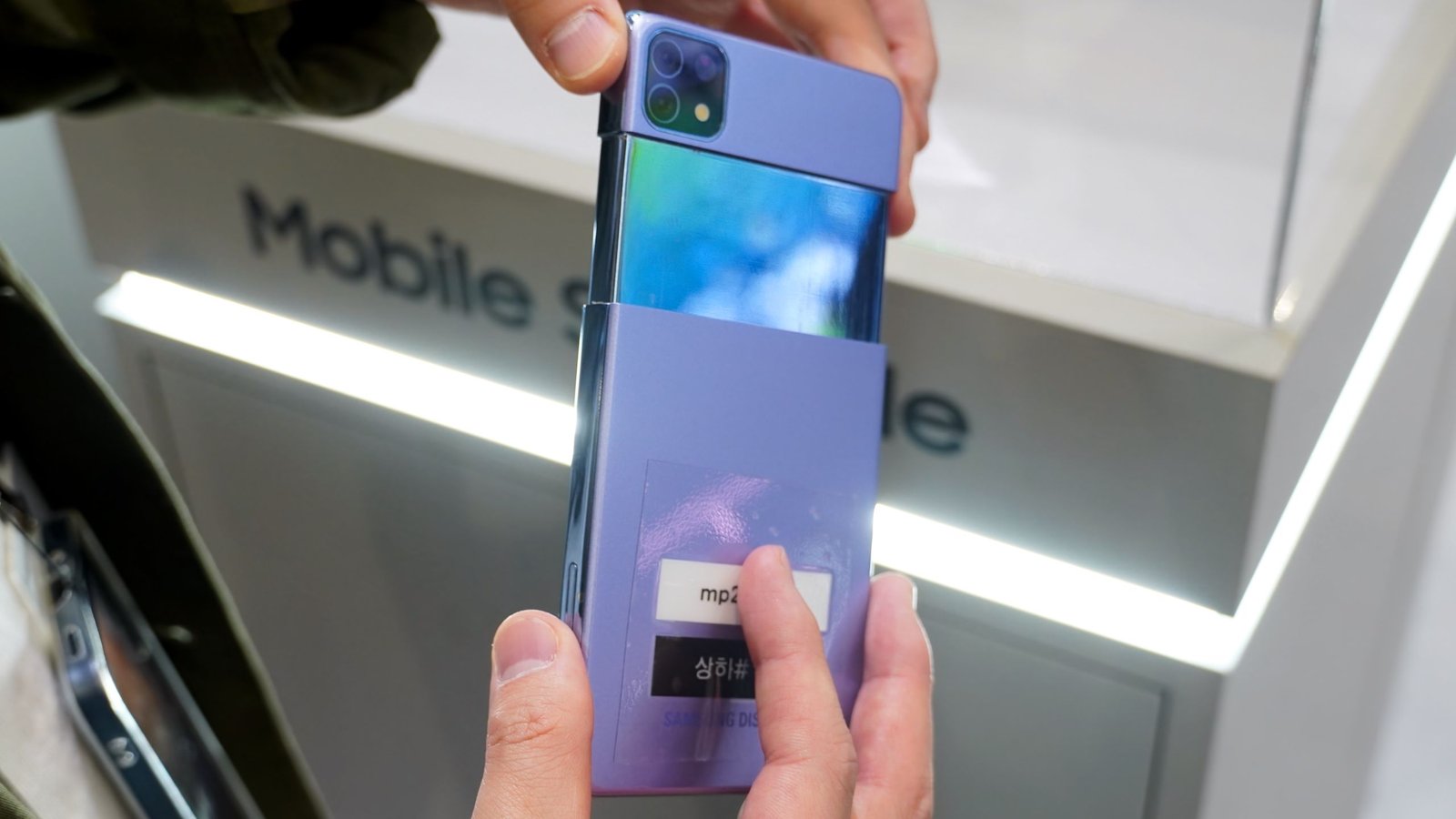
You’ve seen foldable phones, and you might have heard of expandable laptop screens. What if we could have that kind of tech on a smartphone? That’s exactly what Samsung is testing with its “Mobile Slidable” concept. It’s a phone with a 5.1-inch screen that can slide open and become a 6.7-inch screen. Essentially, you get the portability of compact phone with the screen real estate of a modern flagship.
We don’t know a lot about the Mobile Slidable, outside of its FHD+ resolution and dual aspect ratios. When closed, it has a 16:9 aspect ratio that becomes 22:9 when expanded. It has a 1080×2640 resolution that comes out to be 426 pixels-per-inch. It might not be as practical as a folding flip phone or a traditional smartphone, but it’s certainly cool. As it’s an “under development” project, we don’t know when or if it would ever be officially released as a consumer product.
Everything is a Galaxy Watch now
Image 1 of 3
(Image credit: Brady Snyder / Android Central)(Image credit: Brady Snyder / Android Central)(Image credit: Brady Snyder / Android Central)
Samsung putting Galaxy Watch screens in, well, almost anything. There’s a “Smart Gamepad” concept that uses a Galaxy Watch display in a gaming controller, and another that puts one in a pendant. It’s literally a Galaxy Watch, because I saw the One UI 8 Watch quick panel appear after a Samsung representative swiped down on the display.
Do you need a necklace or gaming controller with an OLED screen? Probably not, but it’s cool to see Samsung Galaxy Watch tech appear in odd concept devices.
Of all the “under development” features shown off by Samsung Display at MWC 2026, I’d guess that the Privacy Display upgrades are most likely to get a consumer launch. They don’t require any new hardware other than the Flex Magic Display onboard the Samsung Galaxy S26 Ultra, so it feels like a matter of time before they arrive, whether that’s via an update or a future Galaxy phone model.
Personally, I’m holding out for the LEAD 2.0 screens. If they really fix brightness and overheating issues while slimming bezels and improving battery life, count me in.
