

Hardwired
(Image credit: Nicholas Sutrich / Android Central)
In Hardwired, AC Senior Editor Harish Jonnalagadda delves into all things hardware, including phones, audio products, storage servers, and networking gear.
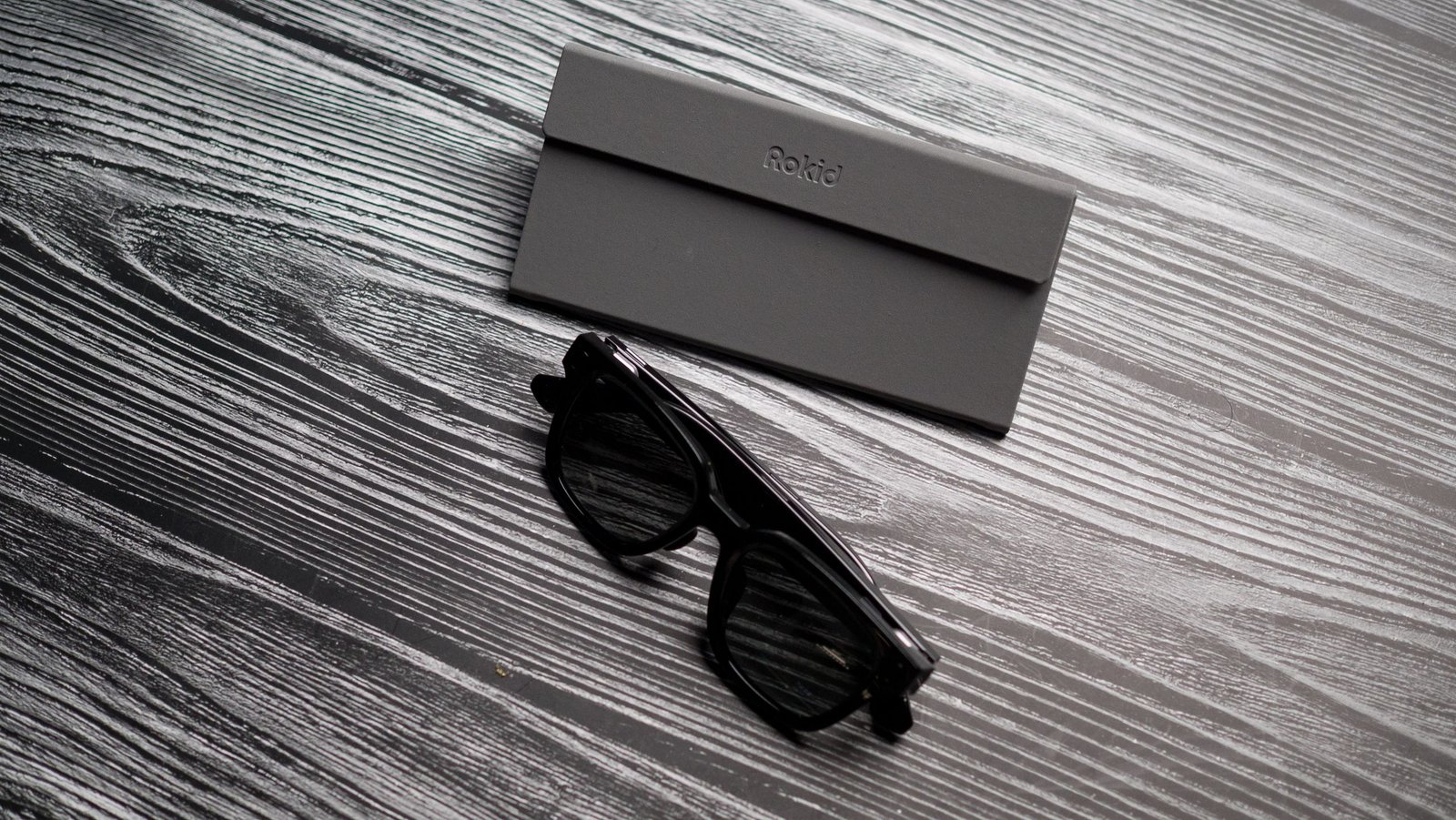
There’s plenty of interest in smart glasses at the moment, and Rokid is a brand that’s doing all the right things. I reviewed the Max 2 glasses last year, and used the recently-launched AI Glasses Style for most of the last three months, and it’s clear that the brand is positioning the product as an affordable alternative to Meta’s Ray-Ban glasses.
Xu noted that the Gemini integration was a pivotal moment, as it allows the brand to meaningfully differentiate its glasses against its rivals. And as to why Rokid added other AI models to the glasses, Xu indicated that it’s about giving users the ability to choose which model they want to run. The best part is that Rokid is interested in building an open ecosystem using global standards, and that was a key driving point in bringing Gemini to the AI Glasses Style and future products.
Article continues below
You may like
On that note, while Rokid’s AI Glasses Style are a great value, they’re sold in a single variant, unlike Meta’s Ray-Ban glasses. Xu said that the goal with the glasses was to bring it to market and build out the software features, but additional styles and colors is a consideration the brand is looking into. And because Rokid wanted to hit as close to the $300 price point as possible, they didn’t include a charging case with the glasses — this was a point of contention when testing the AI Glasses Style, as charging the glasses isn’t anywhere as easy as my Meta Ray-Bans or Oakley Meta Vanguard.
Another area that Rokid is looking to stand out is by adding gesture controls; Xu says this is still something the brand is testing out, but he didn’t rule out the feature coming to a future product. While that would be undoubtedly cool, what I’d like to see is a payment interface that can be used with glasses, and Xu talked about a QR code system that could debut sometime down the line.
(Image credit: Apoorva Bhardwaj / Android Central)
Also, Xu indicated that Rokid is working on native music integration so that services like Spotify can be controlled with the glasses. Given that the industry itself is still nascent, there’s clearly a lot of potential for growth, and each brand is looking to get a meaningful edge over its rivals. Basics like tuning the cameras and audio quality are handled well by every brand, and while Xu indicated that Rokid is looking at adding algorithms that would tune out wind noise, that’s something most glasses will deliver within the next few generations.
A big part of the puzzle is battery life. That was evident when I tested RayNeo’s X3 Pro glasses; while the glasses had a lot of great features, they were resource-intensive, and the glasses only lasted a few hours between charges. Xu said that Rokid is mulling the inclusion of a low-power chipset that handles mundane tasks — similar to what you get on smartwatches like the Xiaomi Watch 5 — so that the workhorse Qualcomm chipset doesn’t need to be activated all the time. That is an intriguing solution, but given that space is extremely limited on smart glasses — even more so than smartwatches — it remains to be seen how feasible it would be to accommodate.
Another solution is an external battery connector, but that adds bulk and weight to smart glasses, negating its usability outside of your home. I asked Xu if Rokid considered silicon-carbon battery tech to potentially add bigger batteries in smart glasses, but he noted that the cost of the battery tech is prohibitive, but that Rokid may consider going this route on future products that cost over $600.
After talking to Xu, I get the sense that Rokid is keen on differentiating its glasses with the software, and that’s interesting in its own right. Most smart glasses are largely the same, and much like phones, gaining an edge with the software has the potential to stand out just that little bit more. With the AI Glasses Style now out and the waveguide-based AI Glasses on shelves, Rokid has decent alternatives to what Meta and other brands are offering.
