

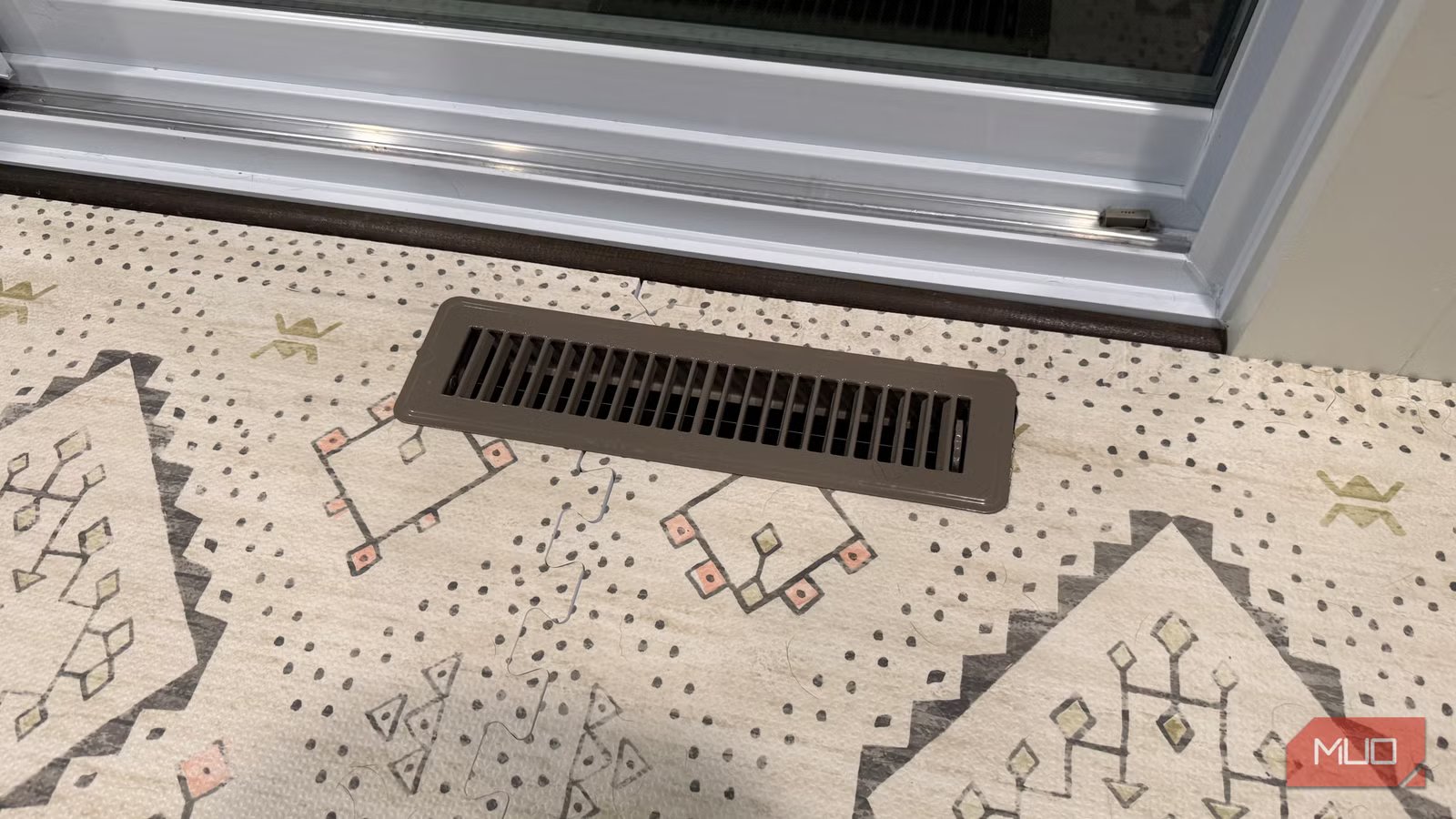
I recently did a little experiment — I walked through my house, closing vents in rooms we rarely use. The logic may feel bulletproof — why pump conditioned air into a guest bedroom that sits empty eleven months out of the year? But was it being clever, redirecting all that heated or cooled air to spaces my family actually occupied?
I very quickly started noticing problems. My furnace ran constantly. One bedroom would be freezing. The living room would be way too warm. There were uneven temperatures throughout my home — closing vents did the opposite of what you might expect. All that vent-closing wasn’t putting any money back in my pocket. It was costing me more and slowly wrecking my HVAC equipment.
Why closing vents seems like a good idea
The logic that makes sense on the surface
Look, I understand the thinking. You’re shelling out money to condition or heat the whole house when nobody’s using most of it. The kids are gone all day. You work from one room. That basement office only gets used on weekends. Closing off those rooms seems obvious, right? The same logic applies as flipping off a light switch.
After 12 years in the HVAC industry, I knew closing vents wasn’t a good idea. But I wanted to try it firsthand to see what would really happen.
My house has three zones, each with its own thermostat. In each zone, I closed several vents in rooms and areas we don’t use that often. I avoided cutting airflow to bathrooms and anywhere with a water line (so my pipes wouldn’t freeze).
What actually happens when you close vents
Your HVAC system wasn’t designed for this
When an HVAC company installs your furnace and air conditioner, they size and balance everything for a certain volume of air moving through the ducts. The blower motor, the registers — it all works together, assuming air can move freely through the entire system.
When you close vents, you’re not redirecting air. You’re creating back pressure. The blower motor pushes the same volume of air, but now it’s fighting against blocked openings.
That resistance builds up in your ducts. The motor works harder. Your system strains to do its job. Whatever air does squeeze through? It rushes out faster and noisier from the vents you left open — without making you any more comfortable. You can tweak your thermostat’s fan settings all day long, but physics wins when you’ve choked off half your ductwork.
Closed vents will eventually cause issues
The problems I started noticing
My furnace ran longer cycles than it used to. It would fire up, and I’d wait for it to cycle off. Fifteen minutes passed, then twenty, and it would still be running. Eventually, the house hit temperature, but man, it took a while. If I kept my vents closed, my heating bills would surely climb.
The temperature swings were noticeable, too. Rooms with open vents felt fine. Rooms with closed vents—even adjacent ones—ran noticeably colder and stuffier. I’ve got Echo Dots in most rooms that send temperature readings back to my smart thermostats. The numbers backed up what my body already knew—rooms on the same zone were running at totally different temps. The system kept cycling on and off, trying to balance temperatures it couldn’t possibly balance with half the vents shut.
Beyond comfort and efficiency, equipment wear must be considered. Is that blower motor straining against increased pressure? It’s working overtime every single day. Ductwork dealing with higher static pressure can develop leaks at seams and connections. You’re shortening the lifespan of components that cost real money to replace.
The right way to manage airflow and save energy
Open those vents back up
The first thing I did was walk through the house and open every single vent. All of them. Let the system breathe the way it was designed to. Within a few hours, the furnace stopped running those marathon cycles. The temperature swings mellowed out. Even the blower motor sounded like it wasn’t fighting for its life anymore.
Now, partially closing one or two vents for minor adjustments isn’t the end of the world. If one room runs a little warm, dialing back that register slightly can help balance things out. The problem is sealing off multiple vents completely and leaving them that way for months. That’s where the damage happens.
Effective ways to reduce heating bills
Better alternatives that actually work
Credit: Jonathon Jachura / MUO
If you genuinely want to reduce energy costs in unused spaces, attack the problem differently. Target your home’s weak points instead of choking your HVAC system. I insulated my garage doors and finally saw my winter gas costs drop in a meaningful way — way more effective than any vent-closing strategy ever was.
Smart thermostat schedules help too. Set temperatures back when nobody’s home instead of trying to manually restrict airflow. If you have zoned HVAC as I do, adjust zone temperatures independently rather than closing vents within a zone. Cracking bedroom and bathroom doors helps too — air needs somewhere to go. And check your ceiling fans. There’s a switch on the housing that changes direction. Clockwise in winter sends warm air back down; counterclockwise gives you that cool breeze in summer.
The point is, your system does better when you stop fighting it. Seal up drafts, set a schedule, keep air moving. That beats closing vents every single time.
Your closed vents are costing you money
Closing vents might sound like a neat little hack. Instead, your bills will go up, your equipment will work harder than it should have, and nobody in the house will be comfortable. Opening those vents back up and tackling real fixes — better insulation, actual schedules, sensors in multiple rooms — that’s what will make your costs finally drop. Let your HVAC work the way it’s designed to.
