

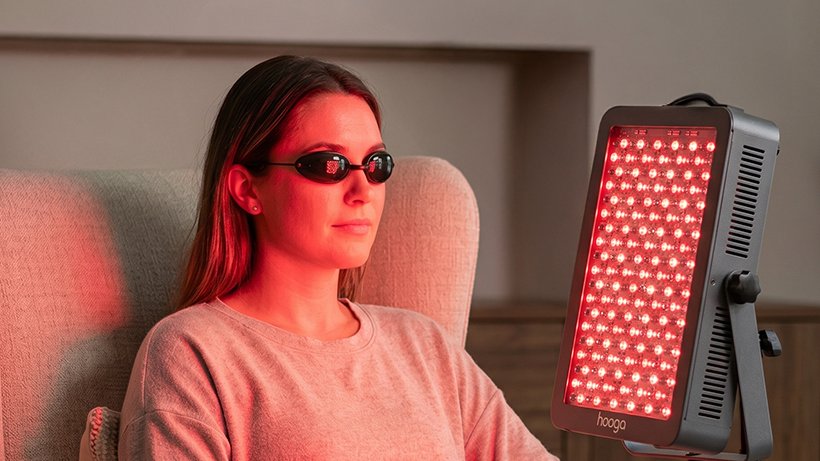
Simplistic device for easy red light therapy at home
The Hooga red light therapy panel is a solid entry-level device, provided you know exactly what you are purchasing. In my testing, Hooga delivered consistent, but still fairly modest results with regular use. That said, it is no match for premium devices in terms of intensity, coverage, and convenience.
In my opinion, Hooga is a truly good option for anyone just getting into red light therapy, but it is not a long-term “upgrade-proof” device. Overall, I’d call it a reasonable yet conditional buy, best suited for beginners willing to trade convenience for a budget-friendly price.
Affordable entry-level panel
Decent irradiance for the price
Simple and reliable to use
Good for targeted treatments
Limited coverage area
No smart features or guidance
Results require strict consistency
At-home red light therapy is no longer being gatekept by wellness professionals—you can get a device and start using it at home very easily. However, after testing a few devices myself, I’ve found that the experience varies a lot depending on the device you buy and how you use it. While most RLT devices promise fast, noticeable results, only some of them can actually fit into your routine.
Hooga takes a solid place in the budget slot of the red light therapy market, marking it as the perfect entry point for RLT beginners. I set out to find out whether this device is actually effective or if its cheap price sacrifices too much compared to higher-end devices.
I tested the Hooga HG300 red light therapy panel for over a month, focusing on its practicality, how noticeable and consistent the results felt, and if it’s something you can actually incorporate into your daily routine.
Quick glance summary
Product name:Hooga red light therapy panelPrice: Budget range (~$150–$200 depending on model)Rating: 4.0/5Verdict:Best budget red light therapy for simple at-home useKey specs:Red light (660nm) + near-infrared light (850nm)Panel format
No app with manual operation
6–12 inch distance required for treatments
Not an FDA-approved medical device
Advertisement
What is Hooga red light therapy, and how does it work?
Red vs. near-infrared explained simply
For example, the Hooga HG300 red light therapy panel uses 660nm red light and 850 near-infrared light. Here’s what it is in simple terms:
- Red light (660nm) works on the skin’s surface to support collagen production.
- Near-infrared light (850nm) penetrates deeper tissues, supporting muscle recovery and alleviating inflammation.
The exact same dual-wavelength setup is the gold standard across most at-home and even clinic-level devices. What it means to you is that Hooga is a pretty universal RLT panel that can be used for skin rejuvenation and for issues like joint stiffness or mild muscle strain.
What happens in the body
Red light therapy works in a fairly straightforward way—the red and near-infrared wavelengths stimulate mitochondria (parts of your cells that produce energy). This stimulation can improve cellular energy production, which translates to:
- Skin repair and regeneration
- Reduced inflammation
- Faster recovery processes
However—and this is important to remember—all red light therapy results are gradual and subtle, and no at-home device can deliver overnight results. So, consistency, patience, and realistic expectations are key when using at-home RTL treatments.
Advertisement
Does intensity matter?
Yes, intensity matters, but it is not as complicated as you might think. Here, intensity simply means how quickly and effectively the light can do its job. Based on this criteria, Hooga HG300 takes a spot on the lower end of the spectrum. However, this does not mean that the device is ineffective—it simply means that my results during testing where gradual and took longer to become noticeable.
Now to a bit more technical side of things. At around 73 mW/cm² (measured at 6 inches), Hooga is in line with other entry-level devices. To put it in perspective, higher-tier panels usually go at around 100 mW/cm², while clinic-grade devices can reach around 200 mW/cm² and sometimes even more.
Overall, this translates to how I had to use Hooga. To get the same effect as with pricier devices, I had to do longer RLT sessions, stick to a routine, and stay patient until the results became noticeable. With a more powerful panel, I simply could’ve expected the results to start showing faster, but in reality, they would’ve still been very similar.
Design and build: Simple, functional, but not premium
I found the Hooga HG300 stands out from budget-tier devices with its compact panel-style design, which I generally prefer over bulb-style options. While bulbs are typically cheaper and more portable, I noticed they offer less coverage and require constant repositioning to reach target areas. Panels like Hooga, on the other hand, distribute light more evenly and, combined with higher usable output, are better suited for targeted sessions on muscles, joints, and face.
As for materials and build quality, Hooga uses a durable iron housing with built-in cooling fans, which help keep up consistent performance and comfort during longer sessions. However, while the device feels solid and reliable, it’s clearly built for function rather than a premium finish.
Advertisement
The HG300 includes a built-in kickstand and handle, keeping setup straightforward. Still, as it is a fixed panel with a 60° beam angle, I had to manually adjust the distance (around 6–12 inches) and angle for each area and session.
Compared to a bit more upscale devices like Omnilux and CurrentBody masks or the Mito Red Light panel, the HG300 is less convenient and requires more effort to use consistently.
Features and usability: As basic as it gets
In terms of features and usability, this is the area where Hooga cuts costs the most. And, be as it may, I immediately noticed it in daily use. Here’s what I found lacking when using the HG300:
- There’s no app
- No smart features
- No guided routines
- No customization on wavelength output
What you do get is quite minimal—a timer and the option to switch between red and near-infrared light, or use both at the same time. With that in mind, I concluded that Hooga is, overall, a mostly manual device, which defined my whole experience using it.
Advertisement
When I tested Hooga, I did 10 to 20-minute sessions per area. Sometimes, when I treated areas like the shoulders, I had to do two separate sittings in one session to fully cover the larger area. I found that this alone is an important factor, as treating larger areas with Hooga takes much longer, and I had to find additional time reserved just for my RLT therapy.
With this lower-level usability, I had to remind myself that RLT therapy benefits only come with discipline and consistent use. Since there was no app and no guided session option, I was responsible for keeping the correct distance from the panel, timing my sessions, and sticking to consistent use throughout more than a month’s testing. So, bear in mind that Hooga is a very hands-on device and not something you can casually add to your existing routine without giving it any thought.
However, the missing features did not make Hooga difficult to use for me—they just made it less intuitive. Once I got used to the device, I found it quite manageable. That said, if you prefer devices that do not intrude into your daily life or routine, Hooga’s level of manual operation may be a drawback.
My experience: What it’s actually like to use Hooga daily
Week 1: Setup and learning curve
My first sessions using Hooga weren’t intuitive at all, even though this wasn’t my first RLT device. First, I had to figure out the correct distance to the device—the brand’s guidelines noted 6 to 12 inches, which to me seemed very close at first. Then, I had to figure out the positioning within the 60° beam angle and how long my sessions should take. As Hooga does not have a feedback system, such as an app, my first sessions were based on trial and error.
Week 2–4: Building consistency
At week 2, once I was more used to the device, things were starting to go more smoothly, and I felt that this could potentially turn into a lasting routine. However, using the compact, panel-type device still felt like a dedicated activity, and definitely not something I could multitask with. At this point, I felt that consistency still required effort and spare time.
Advertisement
Comfort
I found Hooga to be fairly comfortable for regular use, but that did not mean I could be passive about it. The key caveats to comfort I noticed while using Hooga HG300 were:
- The panel emits bright light, making eye protection absolutely necessary. That said, protective glasses are not included with the device, and I had to buy my pair separately.
- The bright LED lights also generate moderate heat. I found it noticeable, but more sensitive users may find it uncomfortable.
- The built-in cooling fans create some noise. To me, it was more on the present side of things, rather than disruptive.
Overall, I had to really commit to my Hooga sessions every time. Some users might find this a hindrance to a sustainable routine. Still, with this device, you are getting exactly what you are paying for—a budget-friendly, utilitarian product with no bells and whistles, that still actually works.
Results: Does Hooga red light therapy actually work?
What improved
After testing Hooga for more than a month, I saw noticeable results. However, they weren’t dramatic, but subtle and gradual. After the first few weeks of use, I noticed the first signs of a more even complexion and a more visible glow, especially in the areas where I used the red light therapy panel most consistently. I thought my skin looked more even and less dull, but not radically different.
Since I also used the Hooga panel on my muscles, especially my shoulders, I noticed that over time they became less stiff, and my post-workout recovery time seemed shorter. And while muscle soreness did not entirely go away, it felt less intense and didn’t stay for as long as without the RLT therapy.
Overall, I would describe the effects on my skin not exactly as full-on rejuvenation, but incremental improvements to my overall look. And as for effectiveness in recovery support, it is exactly what it says—support, rather than clinic-level treatment.
Advertisement
What didn’t improve
While some things, such as skin tone and dullness, did improve with Hooga, there were clear limitations I felt the device could not address, even after a much longer period of use. So, I didn’t see:
- Any improvement in deeper wrinkles
- Dramatic anti-aging effects
- Treatment of deeper issue problems, like persistent muscle tightness
- Fast results
Remember that red light therapy devices are not meant for quick results. Putting it on just before an event won’t give you that dewy, rejuvenated skin result. So, to avoid disappointment, remember that this is not a clinic-level device, and be patient to see improvements.
Timeline
Here’s how my results timeline looked when using Hooga HG300:
- Weeks 2–4. Subtle improvements, such as more even skin tone and minor recovery benefits, like less stiffness.
- Weeks 5–7. Still small, but more consistent changes both in skin appearance and more noticeable recovery.
From my experience, any improvements beyond what I got depended heavily on a sustained routine and, of course, having realistic expectations.
Advertisement
Safety and side effects
After using Hooga for a month and researching its claims and specs, I can say the device is generally safe for at-home use. However, correct use is essential here. For one, you should always wear protective glasses when using this device, as red light can cause eye strain or headaches if looked at without protection for prolonged periods.
Another thing to note is the correct distance. You should keep the device 6 to 12 inches away from your face or any other target area. This way, you’ll avoid unnecessary heat buildup or skin irritation.
Overuse is another hugely important factor to watch. Although I didn’t find Hooga to generate much heat, prolonged or frequent use can lead to mild discomfort or, in some cases, skin dryness. So, sticking to recommended session times (10 to 20 minutes) is key to comfort.
Lastly, remember that the HG300 is a wellness device, not an FDA-approved medical treatment. This means that the benefits you get from using it are mostly supportive, rather than clinical. And while I did not experience any adverse effects when using this RLT panel, I still must stress that safe, consistent use plays a huge role in getting results without irritation.
Price and value: Is Hooga actually worth it?
For instance, Hooga HG300 is priced at around $150 to $200 and sits firmly in the budget red light therapy panel device category. While you can get a still-cheaper bulb-style device, in practice and from my own experience, a panel is a bit more sophisticated choice and a more practical middle ground for structured use.
Compared to premium devices, like the Omnilux or CurrentBody, Hooga is significantly more affordable. That said, it is also not as powerful and does not offer the same coverage or ease of use. That’s why it’s best pitted against entry-level panels, where, from my experience, both its price and effectiveness outperform the competition.
Advertisement
My key takeaway, considering price and value, is this—you get what you pay for. The HG300 offers solid yet basic performance, without the refinement you’d get with top-tier red light therapy panel devices. So, while it is definitely a worthwhile starting point for beginners, it may not cater to the needs of more experienced users who want faster, more noticeable results.
Final thoughts
Something I kept in mind throughout the testing is that the Hooga does not try to compete with premium devices. Yet it still delivers a simple, functional experience with incremental improvements. That is, if you set realistic expectations.
If you have a limited budget and want to try out red light therapy without spending a lot of money, then choosing Hooga makes perfect sense. However, remember that the results will be gradual, and consistency is key. And, to maintain it, you will have to commit to finding time for your therapy sessions.
Ultimately, whether the Hooga red light therapy panel is worth it depends hugely on your expectations. For noticeable, fast results with low effort, this device likely won’t be enough. But if you’re willing to invest in a routine without sacrificing your savings, this minimal yet functional device can offer real value.
References
Advertisement
