

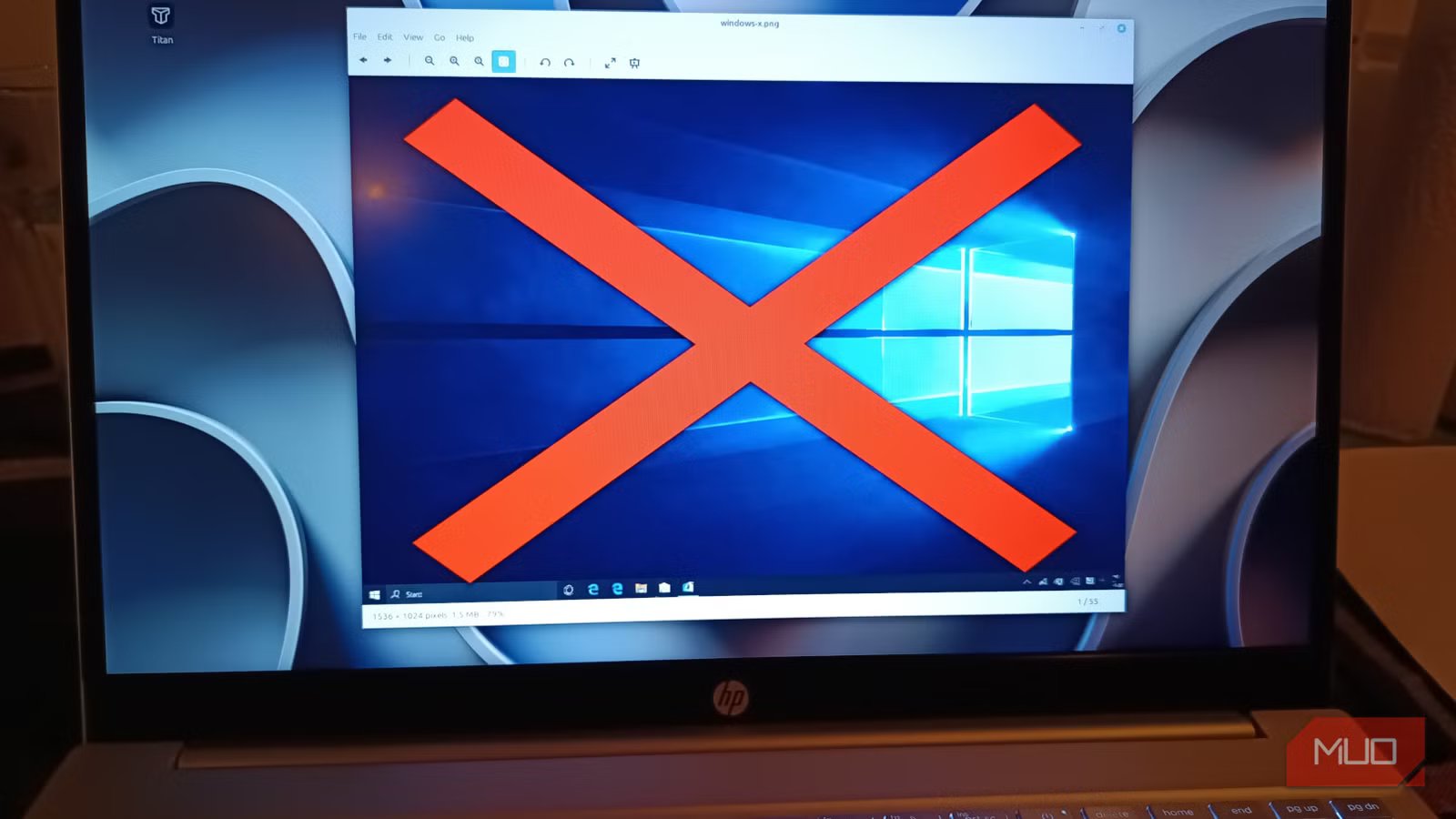
There’s a specific kind of optimism that shows up right before someone installs Linux for the first time: “This time, the computer will behave. This time, updates won’t hijack a workday. This time, the operating system won’t act like it’s the main character.”
About an hour later, that optimism usually collides with Linux discourse, and strangers arguing about distros. Mint is “for beginners.” Debian is “for real users.” Kubuntu is either brilliant or broken. It’s loud enough to make newcomers think Linux itself is the problem. It isn’t.
After living with Linux Mint, Kubuntu, and Debian as daily systems, I came away with a mildly inconvenient conclusion: the distro barely matters. The setup absolutely does.
Why Mint, Kubuntu, and Debian keep dominating recommendations
Three personalities solving the same exhaustion problem
Linux Mint, Kubuntu, and Debian don’t dominate recommendation threads by accident. They keep showing up because they each offer a recognizable escape hatch from Windows, just with different attitudes about how much hand-holding you want along the way.
Mint says, “Sit down. I’ve already arranged things.” It’s curated, familiar, and designed to reduce friction immediately. So much so that Mint has recently made the terminal almost entirely optional. The Cinnamon desktop feels stable in a way that lowers your shoulders within minutes. Almost everything is included from the get go. You find anything from an office suite to media players, out of the box.
Kubuntu says, “Here are the controls. Please try not to touch everything at once.” The KDE Plasma desktop is powerful, flexible, and slightly intoxicating if you’ve ever thought, “Why won’t Windows just let me fix this?” Kubuntu is packed with software, and settings are easily accessible.
Debian says nothing at all. It installs, sets up a clean environment, and waits to see what kind of user you are going to be. This distro comes packing GNOME and with the bare essentials. You choose what you want and need from a software center that is packed to the brim.
Despite the tribal energy around them, they are all trying to solve the same problem: give people a system that doesn’t constantly interrupt, reshuffle, and demand attention. Once you stop romanticizing the choice, the differences start to feel less existential and more logistical.
These distros are three temperaments aimed at the same exhausted Windows user.
Living with all three as daily systems
Comfort, control, and calm depending on how much responsibility you want
No attribution necessary: Image from Pexels
Linux Mint is popular because it’s kind. It doesn’t test you, and it doesn’t surprise you. You install it, log in, and within minutes you’re just using a computer. Notifications behave, updates wait their turn, and the system doesn’t constantly try to reinvent itself.
That’s not boring. That’s mercy.
Kubuntu feels different. KDE Plasma lets you change almost everything. Panels move, shortcuts multiply, themes evolve, and workspaces start to feel intentional rather than accidental. It’s empowering in a way that makes you feel clever for a while.
And then, occasionally, you wake up three weeks later wondering why your desktop feels slightly haunted. You changed something, and you just don’t remember what. Kubuntu gives you control, and control comes with responsibility.
Debian operates on a completely different emotional frequency. It doesn’t charm and it doesn’t reassure. It installs conservatively, updates conservatively, and then quietly exists. You decide what goes on the system. Debian remembers those decisions longer than you do.
Once it’s set up, Debian becomes profoundly uneventful. Months can pass and nothing dramatic happens. No redesigns, and no surprise features. It’s just predictable computing.
Here’s what surprised me: my productivity didn’t meaningfully change between them. The writing got done, the browser behaved, and the system updates completed on all three. The experience shifted slightly, but the outcome didn’t.
The setup matters more than the logo
Notifications, workspaces, and habits define your experience
Screenshot by Raghav Sethi – NAR
The real difference didn’t come from switching distros. It came from how I configured them and what I stopped tolerating.
When notifications were allowed to interrupt whenever they felt like it, every distro felt noisy. When updates happened unpredictably, every distro felt unstable. When my file structure was chaotic, no amount of Linux philosophy saved me from friction. Linux doesn’t cure bad habits. It just stops enforcing them.
Once I took control of notifications, separated workspaces properly, and stopped letting every background process announce its existence, the system faded into the background in the best possible way. Writing lived in one workspace, communication tools lived in another, and my research stayed messy somewhere else. The OS stopped competing for attention.
Mint made this easier by default. Kubuntu made it more customizable. Debian made it unavoidable because nothing was pre-decided for me. But none of them did it for me. That part was on me. When the setup is intentional, the distro logo in the corner becomes almost irrelevant.
Stop auditioning distros and build a system instead
Predictability beats cleverness every time
Screenshot by Yadullah Abidi | No attribution required.
Calling something a “beginner distro” sounds helpful until you realize what it implies. That there is a correct progression. That you are supposed to outgrow something. That staying put means you are doing Linux wrong.
That idea fuels most of the distro anxiety.
Mint is not training wheels. Kubuntu is not an advanced class. Debian is not a rite of passage. They are different starting points with different assumptions about how much responsibility you want on day one.
When people say they want stability, they rarely mean fewer bugs. They mean fewer surprises. Mint achieves that by curating aggressively. Kubuntu gives you tools to manage the chaos. Debian avoids chaos by refusing to change unless absolutely necessary.
Different strategies, same goal: calm computers.
Stop shopping, and pick one.
If you are coming from Windows, here is the advice that feels too boring to be dramatic and too correct to ignore. Stop shopping, and pick one. Stop reinstalling every time a forum thread gets excited. Distro hopping is a trap that usually hides the fact that you haven’t actually learned to manage your system yet. Spend that energy on your setup instead. Learn your desktop environment. Decide what deserves your attention. Build a file structure that does not make you sigh every morning.
Linux wins not because of mascots, package managers, or online arguments. It wins because it lets you design a system that works with you instead of constantly negotiating for your focus.
Once that clicks, the distro wars start to sound like a very loud argument about something that mattered for about fifteen minutes and then quietly stopped mattering at all.
