

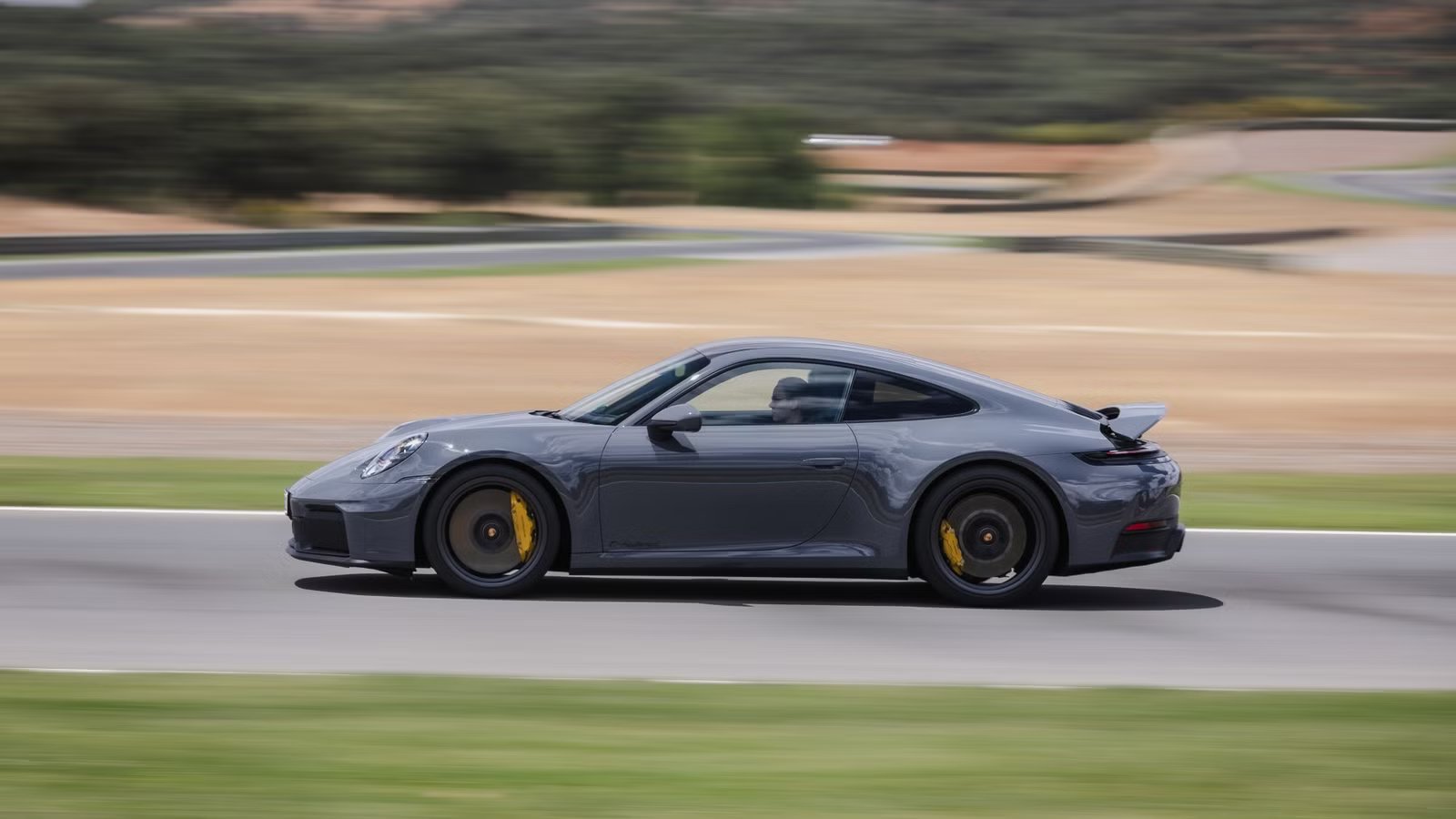
Automakers have been chasing speed and power for over 100 years. When developing a new sports car, these aspects are the benchmarks for success. Auto engineers try to achieve this feat by increasing power, reducing weight, and using just about every other trick in the book to improve a new model’s performance. Today, cars are reaching performance levels that are at the limits of what most humans can handle.
I owned a 2018 Porsche 911 Turbo S, which accelerated to 60 mph in under three seconds, but if I launched it with my wife in the passenger seat, she would get nauseous. With the 2026 Corvette ZR1X being over a second faster than that, this constant chasing of speed and power may have reached a tipping point.
In fact, the value of many classic cars has been rising. While they don’t have the speed and power of the newest cars, they have a unique style and a more analog driving experience that enthusiasts crave. In the future, automakers may focus on these attributes more than just speed and power.
Related
10 Affordable Used Sports Cars That Can Keep Up With A Porsche 911
These 10 affordable used sports cars deliver impressive speed and handling, proving you don’t need a Porsche 911 to experience thrilling performance.
Technology and safety limits
Modern tire and safety tech are already near the practical limits for street use
Credit: Lamborghini
A road car that can achieve race car-like speeds and grip levels might sound exciting, but there are some real-world consequences to consider. If you have ever driven an actual race car, you will notice immediately some stark differences compared to the sports car you drive on the street.
For example, the racing seat is designed to allow the use of a five-point racing harness. There is a rollbar. There is a fire suppression system. And you will be wearing a helmet.
But out on the street, your stock sports car has none of these safety devices. Yet many sports cars today can achieve race car-like speeds. An airbag isn’t going to help you much if you crash into a tree at 180 mph. Modern street cars are safer than ever, but they can’t overcome the laws of physics.
Even the tires on your car are actually far more sophisticated than one might think, from the rubber compound to the tire construction to the tread pattern. Tires require an extreme level of engineering to perform on the street.
Many sports car makers, such as Porsche and Ferrari, work directly with tire manufacturers to develop tires for specific vehicles. The new Corvette ZR1X can reach speeds of 233 mph. At that rate, the tires are under tremendous stress. Tire technology will no doubt continue to improve, but what is a reasonable limit? Do we need tires that can support road cars going 300 mph? At some point, this speed escalation needs to stop.
Related
10 EVs That Depreciate The Most After 2 Years Of Ownership
You should avoid these cars new, but used examples are a bargain.
Sports cars are getting too fast anyway
Traffic conditions and driver limitations are the true barriers of performance
Credit: NetCarShow.com
The 2026 Corvette ZR1X rips to 60 mph in 1.68 seconds on a prepped surface and tops out at 233 mph. That’s astonishing speed, but largely unusable. Most drivers simply don’t have the skill or physical ability to handle performance at that level. At some point, the numbers stop being impressive and start becoming absurd. I think we’re getting very close to that point.
You can’t give cars with Formula 1–level acceleration and grip to untrained drivers and expect it to make sense. This isn’t just about driving talent; it’s about physical limits. F1 drivers train their bodies from childhood to withstand extreme G-forces. The average enthusiast is not built for that kind of punishment.
Even if you are in peak physical condition, where are you actually using this performance? The Porsche 911 GT3 RS has a Drag Reduction System (DRS) for higher speed on long straights, which makes sense at a place like Baku City Circuit. On public roads, however, you’re far more likely to be stuck behind a minivan on the way to Starbucks. There is no street where you’re safely approaching the redline limits of modern sports cars.
When friends go out for a drive, the goal isn’t to disappear over the horizon. The 911 GT3 RS driver isn’t trying to ditch the friend in a 25-year-old Boxster. The point is to enjoy the drive together. And on public roads, those massive performance gaps are largely meaningless. The street normalizes everything.
Related
The 205 MPH American super sedan that embarrasses sports cars
This monstrous machine leaves sports cars in its dust.
Future enthusiasts may not care as much about speed
When all cars are fast, speed and power become less relevant
Credit: Ford
A car with 300 to 500 horsepower is the sweet spot for a street-driven sports car. A zero to 60 mph time in the three to six second range is plenty to have a blast on the street.
Let’s look back 20 years to 2006, when one of the most revered sports cars was the Ferrari F430. A new F430 would cost about $300,000 in 2026 money. Today, a new $50,000 Ford Mustang GT will equal the acceleration figures of that Ferrari. That is how far performance cars have come.
While previous sports cars stood out for speed and power, today, nearly everything has impressive acceleration abilities. Even a Ford Explorer ST can scoot to 60 mph in just over five seconds. So, what happens when everything is fast? If, in the year 2046, every vehicle could hit 60 mph in less than three seconds, what would make anyone want a sports car?
The performance figures themselves aren’t the difference makers as much as how they make them. So, in our hypothetical world, 20 years from now, a sports car buyer might be looking for something with an old-school combustion engine and manual transmission. Sports cars are no longer winning races from light to light, but aggressive styling and an analog driving experience that mainstream cars may lack will help them stand out.
Enthusiasts will desire cars with personality over pure speed
Sports cars can’t get much quicker than they are today. While they have been differentiated from mainstream vehicles by their increased speed and power, that may not be the case in the future. Whether mainstream or sport, all future vehicles will likely have sim speed and power. However, style and a unique driving experience will truly set them apart.
