

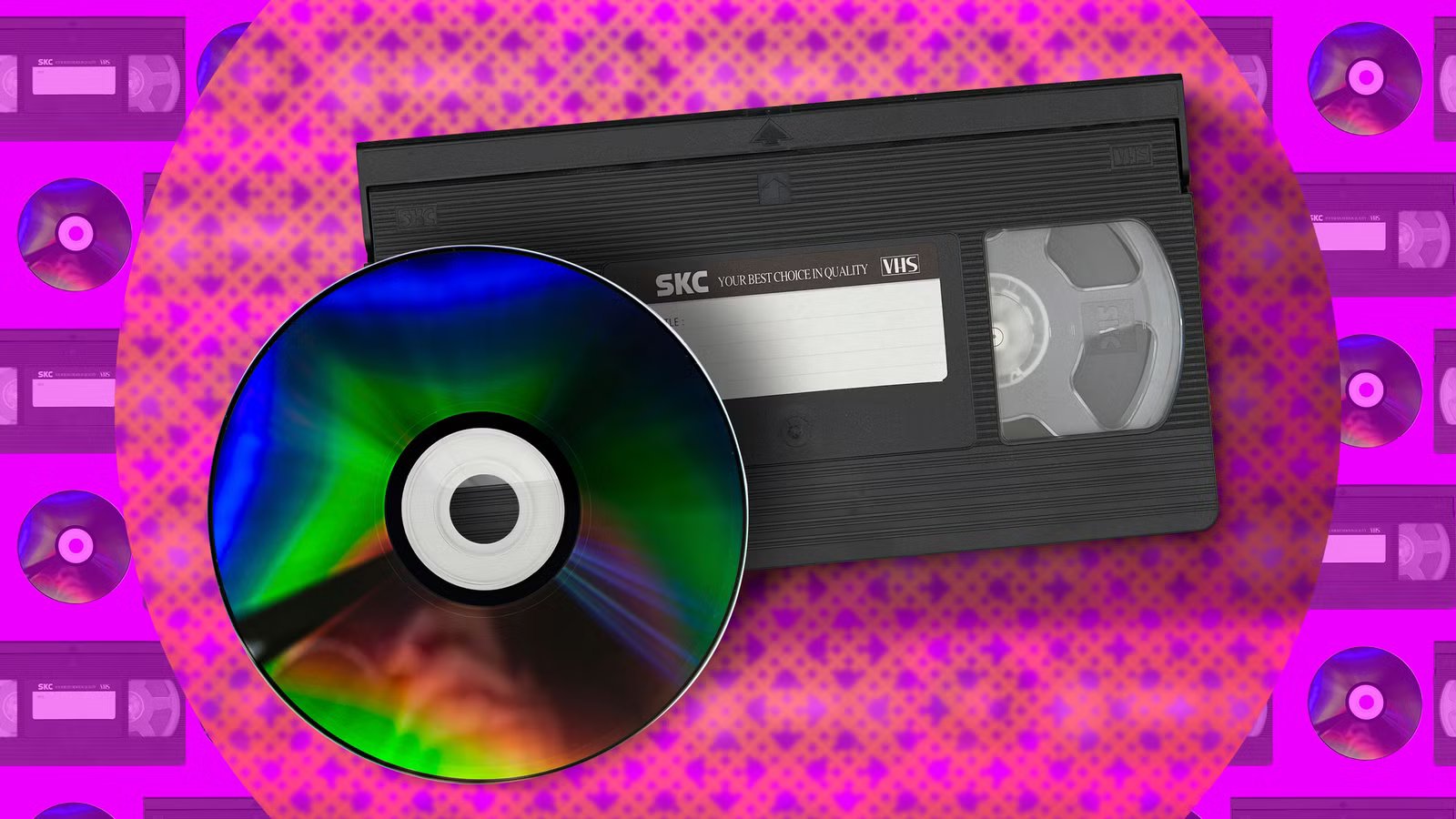
I’ve always been fascinated by LaserDisc technology. Long before I’d ever seen video played from a disc, and not long after I’d heard my first album on CD, I had the opportunity to watch movies on LD.
It was on a home theater system that belonged to my father’s friend, hooked up to a rear-projection TV and a powerful set of stereo speakers that made the floor rumble. Consider that our family TV was a 20-inch model with a mono speaker, and you can imagine why this made an impression on me. But LaserDisc never really went mainstream, and we moved on directly from VHS tapes to DVDs.
LaserDisc was part of a different format war than VHS
But that was its strength
One of my favorite YouTubers, Technology Connections, made a great video on the failure of LaserDisc almost a decade ago.
In it he notes that LaserDisc suffered from poor timing and a public that wasn’t quite ready for what it offered. People didn’t really understand the concept of watching theatrical movies at home. It wasn’t that LaserDisc was super expensive necessarily. He notes that VHS was more expensive than LaserDisc to get into at launch.
What mattered was that LaserDisc was always focused on being the video equivalent of buying a vinyl record. That’s how it was sold to people. VHS, on the other hand, solved the problem of capturing TV broadcasts to watch them later. The idea of buying pre-recorded movies on a VHS that you can’t tape over came later, after the technology’s proverbial foot was solidly wedged in the door.
So, from the beginning, and honestly to this day, LaserDisc is a format that appeals to a niche group of cinephiles, even if its creators had preferred that it become a mainstream hit instead.
It already had “collector culture” baked in
All the goodies hidden up its sleeves
Right from the beginning, movies on LaserDisc were packaged for people who loved movies and were looking for a way to collect them. Up to that point, the only real option was to buy a home projector and get movies on film at incredible expense. If you think building a home theater is expensive now, in the 1960s and 1970s, you’d have to be a bone fide millionaire for this sort of luxury.
LaserDiscs were the start of Criterion Collection films; long before DVDs, you had LaserDiscs with extra features included on bonus discs, with liner notes and commentary. Most people didn’t care about movies as anything other than something to do on a Friday night, but studios bringing their films to this new format clearly had more than an inkling of the intended audience.
Now you could build a film collection the same way people collect books or records. Your own library of entertainment, which you can enjoy in private.
The quality gap actually mattered (for a while)
It’s all relative
Credit: Sydney Louw Butler/How-To Geek
When VHS finally got around to bringing movies home via rental or purchase, the quality gap between the two formats was hilariously big.
I don’t even have to delve into my childhood memories, since I have commercial VHS and LaserDisc movies to watch today. LaserDisc has twice the resolution of VHS and far superior sound, often reaching CD quality. There’s no rewinding, the discs don’t wear down from use, and you can skip directly to the chapter you want.
I even have one of the later players that can play both sides of a LaserDisc without a manual flip! If you took care of your discs, the quality would remain constant, and decades later, it paid off when I analyzed the wear and tear on my VHS titles compared to our LDs.
The collector’s promise for LDs was definitely fulfilled. While disc rot is a rare but real thing, people who bought LaserDisc copies of movies 40 years ago could realistically still watch and enjoy them today. The only reason to move on from LD was that DVD and later Blu-ray offered much better quality. The tech didn’t fail; it was just surpassed.
What vinyl got right that LaserDisc didn’t
Mastering self-delusion
DVDs and BDs are built on the foundation of LDs, in spirit at least, if not technologically. However, they don’t benefit from the (undeserved) mystique of vinyl, which has helped it survive and even thrive among audiophiles. Vinyl fans might be able to plausibly delude themselves into thinking vinyl sounds better than modern high-quality digital, but the same trick won’t work for LaserDisc.
LaserDisc has its charms and a warm analog look and feel, but no sane person could claim that its image quality is somehow better than DVD. So LaserDisc won’t become the video equivalent of vinyl, but it will stick around as the only format some movies are still preserved in, and for those amazing sleeves with art and info that might not exist anywhere else.
