

We’ve been sold a narrative for nearly a decade now: the removal of the 3.5mm headphone jack from smartphones was necessary progress. Thinner phones, better water resistance, the future is wireless, we were told.
While we reluctantly accepted this verdict, deep down, plenty of us knew something didn’t feel right. I use all-wireless tech and hate wires, but audio is one thing where I would like the option to use a wire still. Today, as someone who still reaches out for wired headphones whenever possible, life without the 3.5 mm audio jack is still worse.
One missing port, a dozen daily annoyances
When a “simpler” design creates more friction
I have always carried my wired IEMs with me as a backup. My Sony WH CN720Ns are great, but they’re wireless and batteries can die when you don’t have access to power. Wired headphones just work.
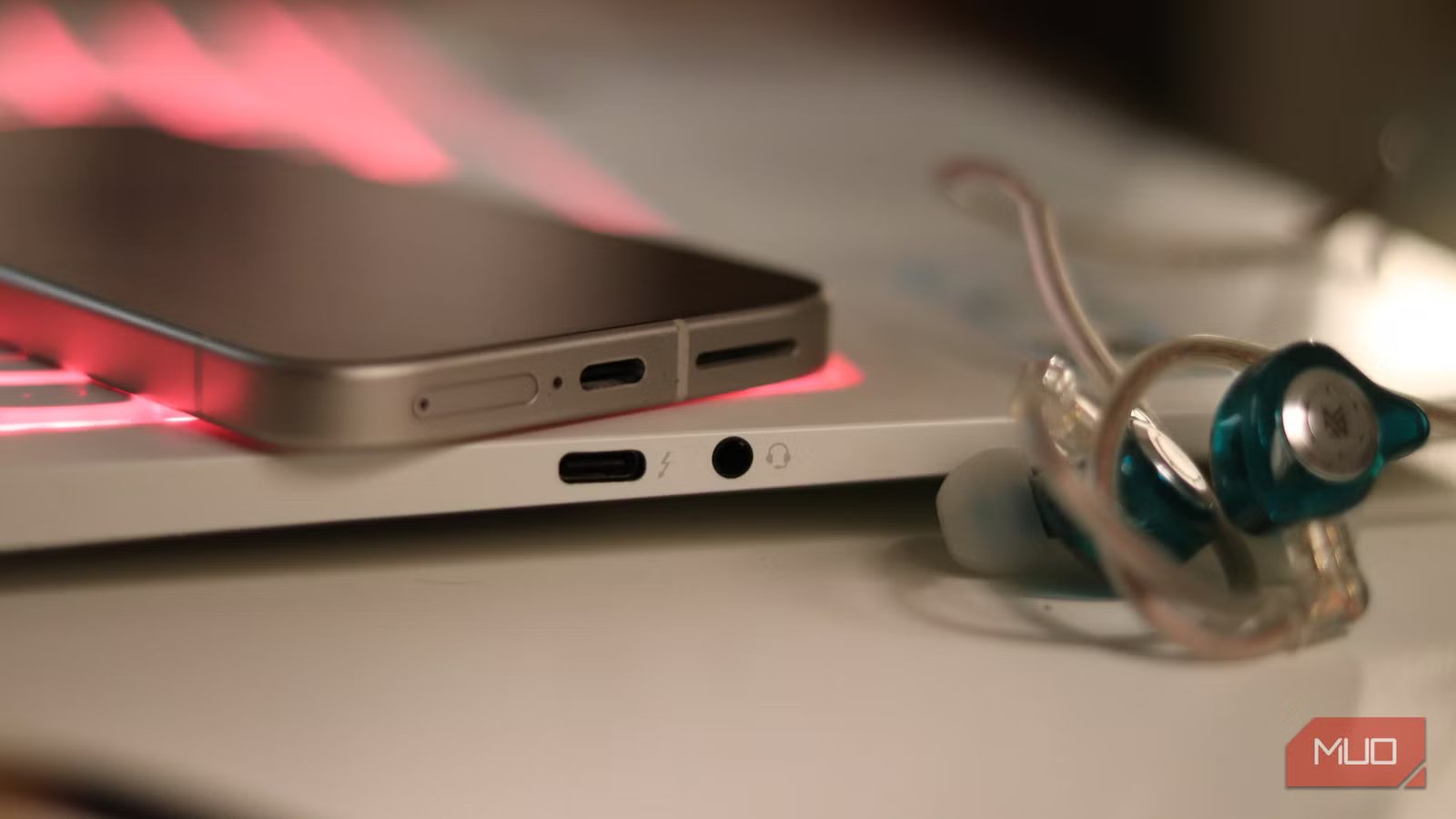
But to use my IEMs with my Pixel 9a, I need an adapter. Not just any adapter, a USB-C to 3.5mm converter which covers the only USB-C port on the phone. So I can either listen to music, or charge my phone.
This is the real problem with the post-jack world: doing two things at once has become absurdly complicated.
The humble 3.5mm jack was never the enemy. It wasn’t taking up meaningful space in flagships anymore—engineering solved that problem years ago. What the jack offered was simplicity. Plug in, listen. No batteries, no pairing, no drama. Yet we traded that for a solution that introduced entirely new problems.
Dongles are still a mess
Fragile, inconsistent, and easy to lose
Yadullah Abidi / MakeUseOfCredit: Yadullah Abidi / MakeUseOf
Yes, there are adapters available for every situation. You’ll find plenty of USB-C adapters that support both audio and charging simultaneously. However, they rarely work as well as advertised and often compromise one thing for the other.
Consider the basic physics of the situation. Every modern smartphone has one USB-C port. That port is now responsible for three jobs: charging your device, transferring data, and outputting audio. But it can only do one thing well at a time.
Want to listen to music on your wired headphones while your battery charges? You’ll need a 2-in-1 adapter that combines both functions. Sounds simple enough, but in practice, these adapters are unreliable nightmares.
Audio cutouts, power drops, hissing, lowered sound quality are all among the most common complaints you’ll hear. Some adapters work with certain headphones and some don’t. Different manufacturers implemented USB-C differently, so compatibility is a coin flip—you might find that the expensive adapter you bought works perfectly with Sony headphones but does nothing for your Audio-Technica set.
Wireless audio is a compromise, not an upgrade
Latency, compression, battery anxiety—pick two
Yadullah Abidi / MakeUseOfCredit: Yadullah Abidi / MakeUseOf
Meanwhile, Bluetooth headphones—the solution we’re supposed to embrace—come with their own problems. They require batteries that degrade over time. They drop connections in crowded airports. They suffer from codec compression that degrades audio quality compared to a direct wired connection. Sure, you can make Bluetooth headphones sound better with audio apps, but that’s added friction and yet another app you need.
Wireless transmission compressed audio data, and no amount of marketing buzzwords can change that fundamental reality. The battery drain from continuous Bluetooth connectivity is so severe that headphones often don’t match advertised battery life.
And then there’s the matter of just losing things. Wireless earbuds are tiny, expensive, and frequently left behind in hotel rooms, taxi cabs, and airplane seat pockets. With wired headphones, the most you lose is the cable, and good wired headphones ship with replaceable ones.
Alvin Wanjala / MakeUseOfCredit: Alvin Wanjala / MakeUseOf
I’m not saying that there aren’t any good Bluetooth headphones or earbuds. Apple, Google, Bose, Sony, Sennheiser are all examples of companies that have shipped some excellent wireless audio solutions and I use many of them daily.
But the price that you pay for the convenience, audio quality, and battery life is quite high, and you can have a much better experience with wired audio. Except that it’s now extremely inconvenient now that there’s no dedicated audio port on your phone. And your expensive wireless headphones will still sound worse on Windows.
The smartphone industry justified removing the jack by claiming it saved space for bigger batteries and better water sealing. Some companies delivered on that promise, others just pocketed the marketing angle and used the extra space for not much.
Regardless, the removal of the jack created a new market. Manufacturers could now sell expensive wireless earbuds as essential accessories. Every flagship launch is now accompanied by a premium earbud release.
Why the 3.5 mm jack still matters
Universal, reliable, and impossible to obsolete
We removed a universal standard that worked for everyone in favor of a fragmented ecosystem that works for almost nobody. The market is slowly realizing what we lost, and some phones do include the 3.5mm jack occasionally. But we’ve accepted the problems that come with Bluetooth and moved on for now.
Related
I Love Earbuds, but They Have These 5 Undeniable Problems
As convenient as earbuds are, they’re certainly not perfect.
The 3.5mm jack wasn’t perfect, but it was honest. It asked nothing of you except to plug in and listen. That simplicity deserves to be remembered—especially when you’re on a road trip, tired from a day’s ride, holding expensive wired headphones you can’t use, because the future turned out to be a lot more complicated than anyone promised.
