

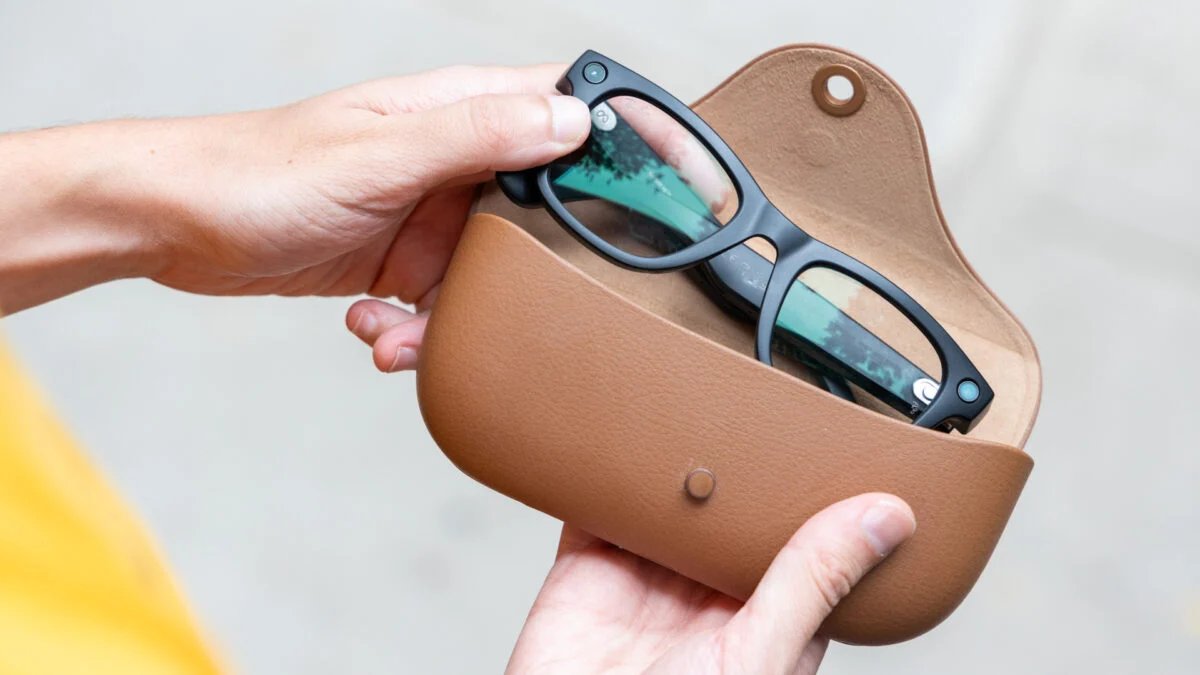
Computer vision might be one of the defining features of Meta’s smart glasses, but that doesn’t mean it works like one. Having used Meta’s Ray-Ban AI glasses at length, I can say with certainty that the ability to use the camera for identifying stuff in your surroundings is very hit or miss—sometimes it gets things right, but just as often it falls flat. According to Meta, an upgrade to that tumultuous experience may be on the way thanks to a new AI model.
Muse Spark, which Meta officially unveiled this week, is what the company is calling the “first in a series” of large language models built by Meta’s Superintelligence Labs. Though it’s not out yet, Meta says it plans to integrate Muse Spark into quite a few of its products, including AI glasses, in the coming weeks. What exactly will it be doing there? Seeing stuff better, apparently.
“When Meta AI powered by Muse Spark comes to our AI glasses, the assistant will be able to better see and understand the world around you,” says Meta in a blog post.
Lots of Muse Sparks’ strengths, in fact, appear to be centered on “multimodal perception,” which is shorthand for seeing stuff in your environment and being able to understand it. According to Meta, one of Muse Spark’s strengths is health. “Meta AI is now able to help you navigate health questions with more detailed responses, including some questions involving images and charts,” according to the company. It also says that Muse Spark excels at “visual coding,” which allows people to “create custom websites and mini-games straight from a prompt.”
Meta notably shows nutrition features on a phone, though that doesn’t mean its AI glasses aren’t also capable of doing the same thing. © Meta
While it doesn’t say either of those abilities is coming to AI glasses necessarily, it’s worth noting that Meta has leaned into health recently, expanding the nutrition coaching capabilities on its AI glasses. Computer vision and AI are still two of the core pillars of Meta’s smart glasses, so I’m going to assume that any way Meta can squeeze Muse Spark into the equation, it’ll try.
How impactful Muse Spark is on the experience of using Ray-Ban Meta AI glasses is still an open question, but even if it makes computer vision less prone to mistakes and hallucinations, it could be a significant improvement. Now, if they could just spend a little time getting their abysmal privacy standards in order…
