

My sister came over last Thanksgiving and couldn’t figure out the living room lights. She kept flipping the wall switch — nothing. The Philips Hue recessed cans just sat there, dark. I’d turned them off with a voice command earlier, so the switch was technically already on — it just feeds constant power to the smart bulbs. She didn’t know that. How could she?
I watched her frustration build, and I quickly explained that flipping a switch wouldn’t work because I’d spoken to a speaker three hours ago. That moment forced me to admit something uncomfortable: my sensors, my automations, all those voice commands I’m so proud of? They only made sense to the four of us who live here. The fix wasn’t removing the smart features I love — it was adding physical controls that make sense to everyone and creating a single command that brings the whole house back to normal.
The problem nobody warned me about
Voice control isn’t intuitive for visitors
Credit: Jonathon Jachura / MUO
Voice assistants handle smart home control remarkably well, and Alexa has earned its spot running my setup. But expecting overnight guests to shout commands at a glowing speaker while half-asleep isn’t hospitality. It’s a tech support ticket waiting to happen.
The frustrations piled up over multiple visits from friends and family. The lights were stuck on the dim purple setting left over from my daughter’s bedtime routine. Wall switches that seem broken because the smart bulbs behind them respond to voice commands, not physical toggles. Kitchen lights that flip on automatically at sunset, startling someone who just wanted a glass of water in peace.
My in-laws gave up entirely — they just ask us to handle the lights now. And that bothered me more than I expected. Watching my sister, a competent adult, standing helplessly in front of a light switch? In my own home? I’d spent years tweaking this setup for my family of four, and somewhere along the way, I’d made it basically unusable for anyone else.
Smart switches that actually behave like switches
Familiar controls with invisible smarts
Credit: Jonathon Jachura / MUO
The solution started with accepting an obvious truth: not everyone wants to learn your house. Some people just want to flip a switch. So I gave them switches that actually work.
Amazon’s smart wall switches replaced the standard toggles in high-traffic areas throughout my home. They look and feel like regular switches — muscle memory works, nothing to explain, and nothing to break. The smart features run invisibly underneath. Guests flip the switch up, and the lights come on. Flip it down, and the lights go off. I kept the Philips Hue color bulbs in my kids’ rooms — they’re obsessed with changing them to purple and blue at bedtime. But most rooms don’t need color options, and switches handle basic lighting better anyway.
Touchscreen dashboards for everything else
Echo Hubs give guests real control
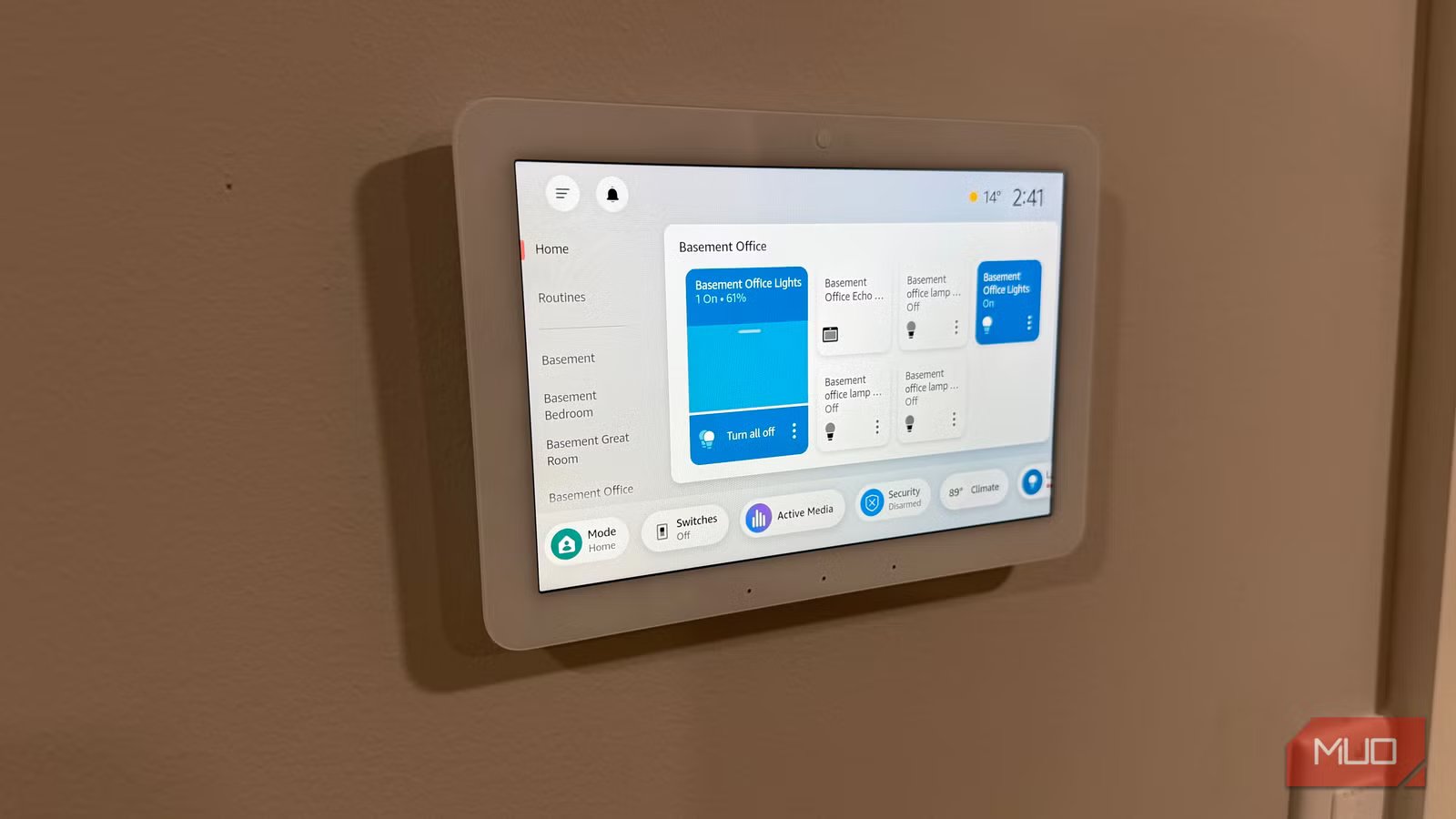
The Echo Hub solved the rest. I’ve got three of them now: the kitchen, the living room, and the main hallway. Each one sits right beside a regular wall switch. You tap a button on the screen to turn lights on or off, and drag a slider to dim them. No app required. No voice commands to learn.
The placement matters.
Putting an Echo Hub directly beside a switch gives guests two options that both make immediate sense. If you prefer touchscreens, tap the button. Prefer physical switches? Flip the toggle. I ran Ethernet and power to each hub location for a clean wall-mounted look, and the professional result justified the extra effort. The touchscreen interface responds instantly, and because these Hubs double as smart home controllers with Zigbee and Matter support, they actually improved my automation backbone while solving the guest problem.
Related
How I set up the perfect guest network for my smart home devices
My smart devices were putting everything at risk. This easy setup protected my home network.
One command that resets everything
Guest Mode brings the house back to normal
Physical controls solved the “how do I turn on the lights” problem. But guests still walked into rooms with bizarre lighting left over from whatever automation ran last. Blue accent lights in the office. Dim warm tones in the kitchen. A single lamp glowing at 15% in the living room because that’s how I like it during movie nights.
So I built a Guest Mode routine in Alexa. One command — or one tap on an Echo Hub — resets every light in the house to 100% brightness and soft white color temperature. All of my motion triggers keep working, but the lights come on full and normal instead of whatever mood setting the previous routine established.
The transformation takes about two seconds. Purple children’s bedroom lights snap to clean white. Dim accent lighting brightens to something actually useful. The house stops feeling like a nightclub and starts feeling like a house again. I trigger it before guests arrive, but the command is simple enough that visitors can use it themselves if something looks wrong.
What surprised me was how much my own family appreciated having this reset option. My wife uses it when she can’t remember which room has weird lighting. The kids trigger it when they want all the lights on for hide-and-seek. Guest Mode became a household tool and a hospitality feature.
A smart home should work for everyone
The gear that makes my daily life easier — motion sensors, bedtime routines, security lighting — none of that went away. It just stopped being the only way to interact with the house.
Guests now have choices. They can flip a switch, tap the touchscreen, or ask Alexa if they want. Whatever feels natural. My sister came back to visit last month. She walked through the house, flipped switches, tapped screens, and never asked a single question. That’s the whole point, really. A smart home should fade into the walls until you actually need it to do something clever.
