

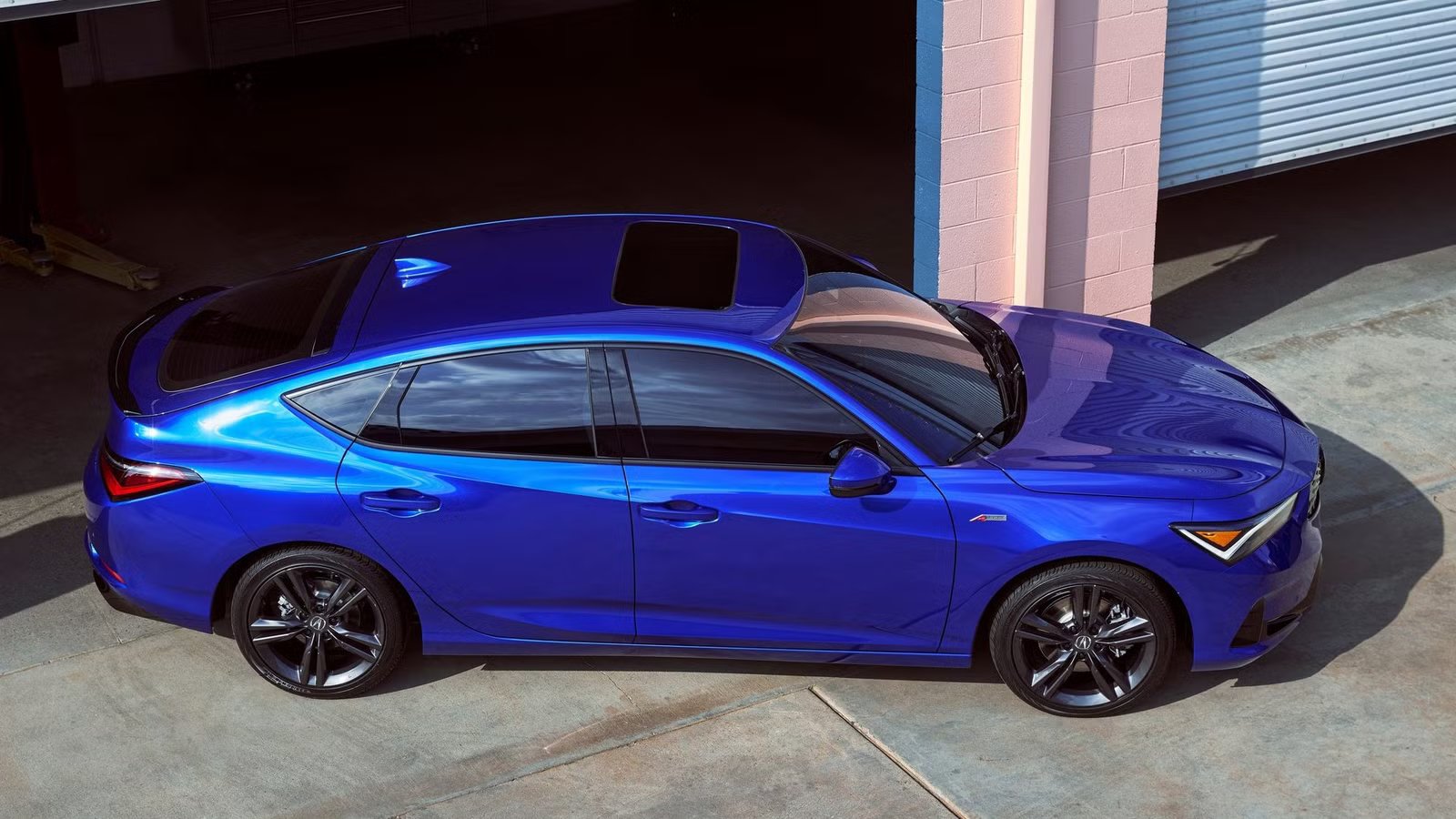
Luxury sedans have traditionally forced buyers to choose between comfort, performance, and fuel efficiency. Most deliver refinement and power, but efficiency usually takes a back seat—especially in gas-powered models. That’s why this particular luxury sedan stands out. It achieves fuel economy figures that rival some entry-level hybrids, all while maintaining the smooth ride, premium materials, and quiet cabin buyers expect from the segment. For drivers who want luxury without frequent fuel stops, it’s in a class of its own.
What makes this efficiency so impressive is that it comes without major compromises. The powertrain is tuned for real-world driving, delivering performance and relaxed highway cruising rather than chasing headline horsepower numbers. Combined with smart engineering and aerodynamic design, it allows this sedan to stretch every gallon farther than any other gas-only luxury rival currently on sale.
In this article, we break down how this luxury sedan achieves such remarkable efficiency, what it means for long-term ownership costs, and why it challenges the assumption that hybrids are the only path to fuel savings. It’s proof that traditional powertrains can still deliver standout results when done right.
In order to give you the most up-to-date and accurate information possible, the data used to compile this article was sourced from various manufacturer websites and other authoritative sources, including the EPA.
Related
10 Luxury Sedans That Offer the Best Value for Your Money
Blending premium comfort, performance, and features at prices that make sense.
Acura’s Integra is the most efficient gas-powered luxury sedan in 2025
Credit: Acura
If you’re looking for something plush and efficient, but you’re not yet willing to make the move to something hybrid-powered, then there are few options that really save you money at the pump. It’s not a surprise that it’s a small Japanese sedan that comes out ahead of its competition in this department. Acura’s Integra takes the cake as the most efficient new luxury sedan on the market that doesn’t make use of electrification.
2026 Acura Integra fuel economy
Model
City
Highway
Combined
Auto
29 MPG
37 MPG
32 MPG
Manual
26 MPG
36 MPG
30 MPG
Type S Manual
21 MPG
28 MPG
24 MPG
Acura comes out ahead of all of its core rivals by delivering 32 miles per gallon in its most efficient form. The EPA estimates that you’ll save $1,250 on gas over five years by driving this Integra compared to the average new car. Opting for the manual transmission does reduce efficiency by a notable amount. If efficiency is one of your core goals, we’d avoid the high-octane Type S model.
It is worth noting that while the Integra is the most efficient luxury sedan on the market, there are a couple of rivals that do come close. The Mercedes-Benz C-Class, for instance, manages 29 miles per gallon combined. Even closer is the BMW 2-Series Gran Coupe, which gets up to 31 miles per gallon.
Related
The Most Efficient Gas-Powered Car: Honda, Toyota, or Hyundai
We compare three of the thriftiest cars to see which offers the bes value.
As well as being the most efficient, it is also the most affordable
Not only will this Japanese hatchback save you some extra cash at the pump, but it is also the most affordable option in its class. It undercuts just about every one of its rivals by thousands of dollars. Despite this, we think that it comes exceptionally well-equipped and delivers a genuinely luxurious experience on the inside.
2026 Acura Integra trims and pricing
Model
Starting MSRP
Base
$33,400
A-Spec
$35,950
A-Spec w/ Technology
$39,200
Type S
$53,400
The subcompact luxury segment may be smaller than most, but there are some pretty strong players here. The Audi A3, Cadillac CT4, Mercedes-Benz CLA, and BMW 2-Series Gran Coupe offer some good competition. However, all of these start thousands of dollars more expensive than the little Integra.
If you’re looking for the best bang-for-your-buck, we would take a look at the A-Spec with Technology trim. While it may reduce efficiency by a bit, we think that this car was built to be driven with a manual transmission. It also comes with a sportier aesthetic and some additional features. We wouldn’t blame you for being seduced by the fantastic Type S either, though.
Related
The Best Entry-Level Luxury Cars You Can Buy in 2025
Smooth rides without the premium price tag.
This little Japanese luxury sedan is as fun as it is efficient
Credit: Acura
While the Integra might not be as quick as some of its core rivals off the line, it does have a lot to offer in the fun department. It is based off of the Honda Civic, pulling a lot of parts from the fantastic Civic Si. If you do think that the efficiency losses are worth the extra performance, the Type S is essentially a more comfortable version of the Civic Type R.
2026 Acura Integra performance specs
Engine
1.5-liter turbocharged inline-four
2.0-liter turbocharged inline-four
Transmission
6-speed manual or CVT
6-speed manual
Horsepower
200 HP
320 HP
Torque
192 LB-FT
310 LB-FT
Driveline
FWD
FWD
0-60 MPH
7 seconds
5.1 seconds
Top speed
135 MPH
167 MPH
Most Integras come equipped with the 1.5-liter turbo-four pulled from the Honda Civic Si. A CVT is your only option on the Base and A-Spec models. The A-Spec with Technology, however, can be equipped with a slick six-speed manual. The Type S gets its engine from the Honda Civic Type R, along with a number of other performance parts. This model comes exclusively with a manual transmission. Every 2026 Integra is front-wheel drive.
Acura’s small sedan may not be as quick as some of its rivals, but its lively chassis is the star of the show. The Integra always feels like it wants to be pushed to the limit. The CVT does dampen the fun a little, which is why we’d upgrade to the manual. Manual models also get a limited-slip differential and a rev-match system.
The Type S kicks things up more than a couple notches. It features a larger, more powerful engine along with a number of other upgrades. While the Civic Type R is definitely the more focused performance machine, the Acura offers a better balance between track days and daily driving.
