

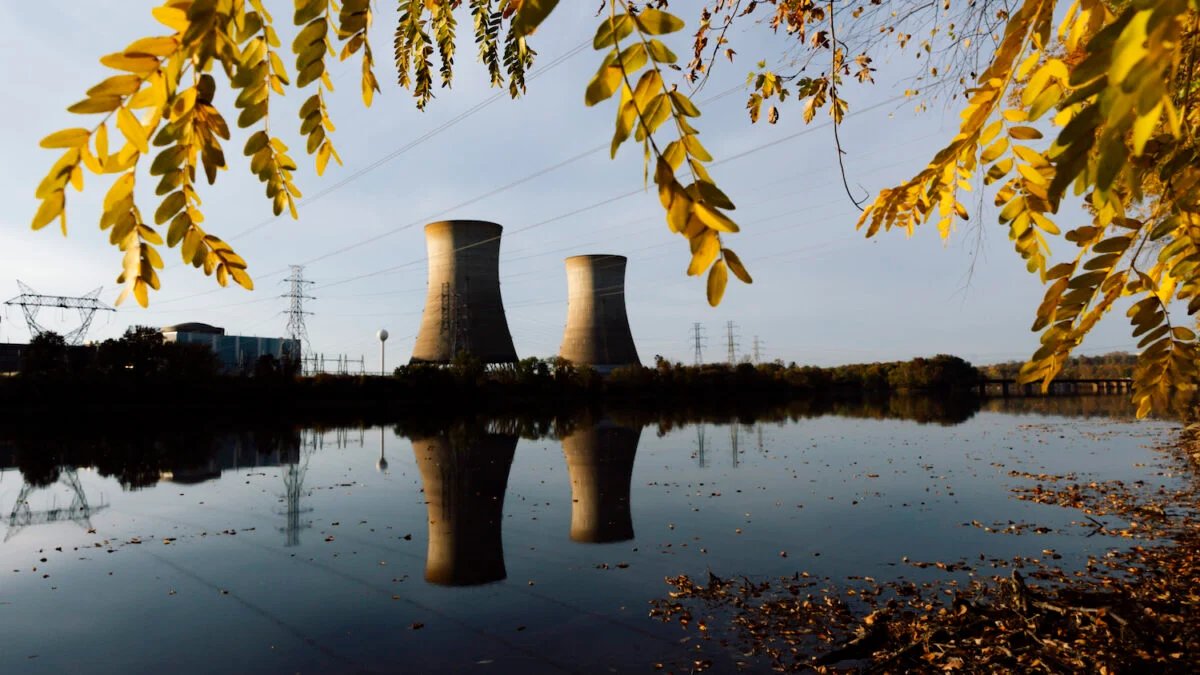
Nuclear power was once an environmental boogeyman, but not anymore. Somehow, despite shedding its reputation for creating Blinky the three-eyed fish on the Simpsons, and despite convincing AOC to like it, nuclear power is still managing to be right-coded in the year 2026. Nuclear’s sketchiness is just mutating into a new form—smearing it with the same cultural muck as crypto and AI.
In September of last year, when Trump negotiated tariffs with Japan, Japan’s end of the bargain required its government to invest $550 billion in the U.S. That deal is creating a giant pool of Japanese money for American businesses to pitch proposals to, and potentially receive giant capital injections via the Trump administration.
Politico just profiled one such company called Entra1 Energy, which purports to set up nuclear power. Entra1 is under consideration for $25 billion from the fund, but it doesn’t sound like a super reliable way for Japan to see a return on its investment.
According to Politico, Entra1:
- Was founded about three years ago
- Is based out of a Houston WeWork office
- Has five or fewer employees
- Has never brought a nuclear project online
Citi investment analyst Vikram Bagri told Politico that, “generally, we see names of the leaders, evidence of proof, what they’ve executed on. Generally, we see what projects they’ve worked on, which is missing, and that’s the genesis of the questions.”
Entra1 gave statements to Politico in defense of its record. It claimed it has, over many years, “conducted due diligence and analysis on the various nuclear technologies that have been under research and development phases and recognized the need for a partner to support their commercialization phases.”
This “partner” line refers to a larger company called NuScale that plans to collaborate with Entra1 on the project. Politico’s reporting here seems to stem largely from the concerns of about six anonymous NuScale investors fretting about the company’s involvement with NuScale.
The CEO of Entra1, Wadie Habboush, formerly ran his father’s investment company. According to another investigation from 2019, by Citizens for Responsibility and Ethics in Washington, that father, named R.W. Habboush, made a million-dollar donation to Trump in 2017, and within weeks, Wadie Habboush was granted access to Trump and other powerful figures.
According to the Entra1 website, the company “is NuScale’s exclusive global strategic partner commercializing the NuScale SMR Technology.” SMR stands for small modular reactor.
In most ways, nuclear power is a great alternative to fossil fuels once the plants are built, but global nuclear energy peaked in 2006. Most of the world has largely moved on, especially China, which gets its low-carbon energy from renewables, although it occasionally embarrasses the U.S. by doing things like putting innovative nuclear reactors online that we can’t seem to pull off. China and its next-door neighbor Russia are the only countries with small modular reactors.
Needless to say, the U.S. doesn’t have any SMRs. The last time any new nuclear reactor went online in the U.S. was in 2023, but construction on that project started in 2009. Before that, the last time a nuclear reactor had gone online was in 2016—a construction project that had begun in 1973. Those are the only two new nuclear reactors in the U.S. in the 21st century.
For whatever reason (largely this one guy named Michael Shellenberger) people in the U.S. have become convinced that nuclear power is the sane person’s modern energy solution, rather than pie-in-the-sky renewables. Todd Abrajano, CEO of the U.S. Nuclear Industry Council claimed in the Hill a couple weeks ago that private finance is falling in love with the possibilities of nuclear. “Gone are the days in which governments alone financed and brokered new nuclear projects,” he wrote.
Maybe, but there’s very little nuclear energy on the grid right now feeding AI data centers—which are using technologies like gas turbines to make up for the unmet demand. And meanwhile the Trump administration is funneling money into businesses like Entra1, and performing PR stunts on behalf of the nuclear energy, like airlifting a tiny nuclear reactor from one state to another as a proof of concept for…something.
In another part of its statement to Politico, Entra1 said it brings “finance, project development and deal execution management expertise to our projects.” I’m hesitant to predict the future, or speculate wildly, but in the year 2036 do you suppose that through the power of “deal execution management expertise” Entra1 will have brought any nuclear reactors online? And in that same year, do you think Wadie Habboush will still be rich?
