

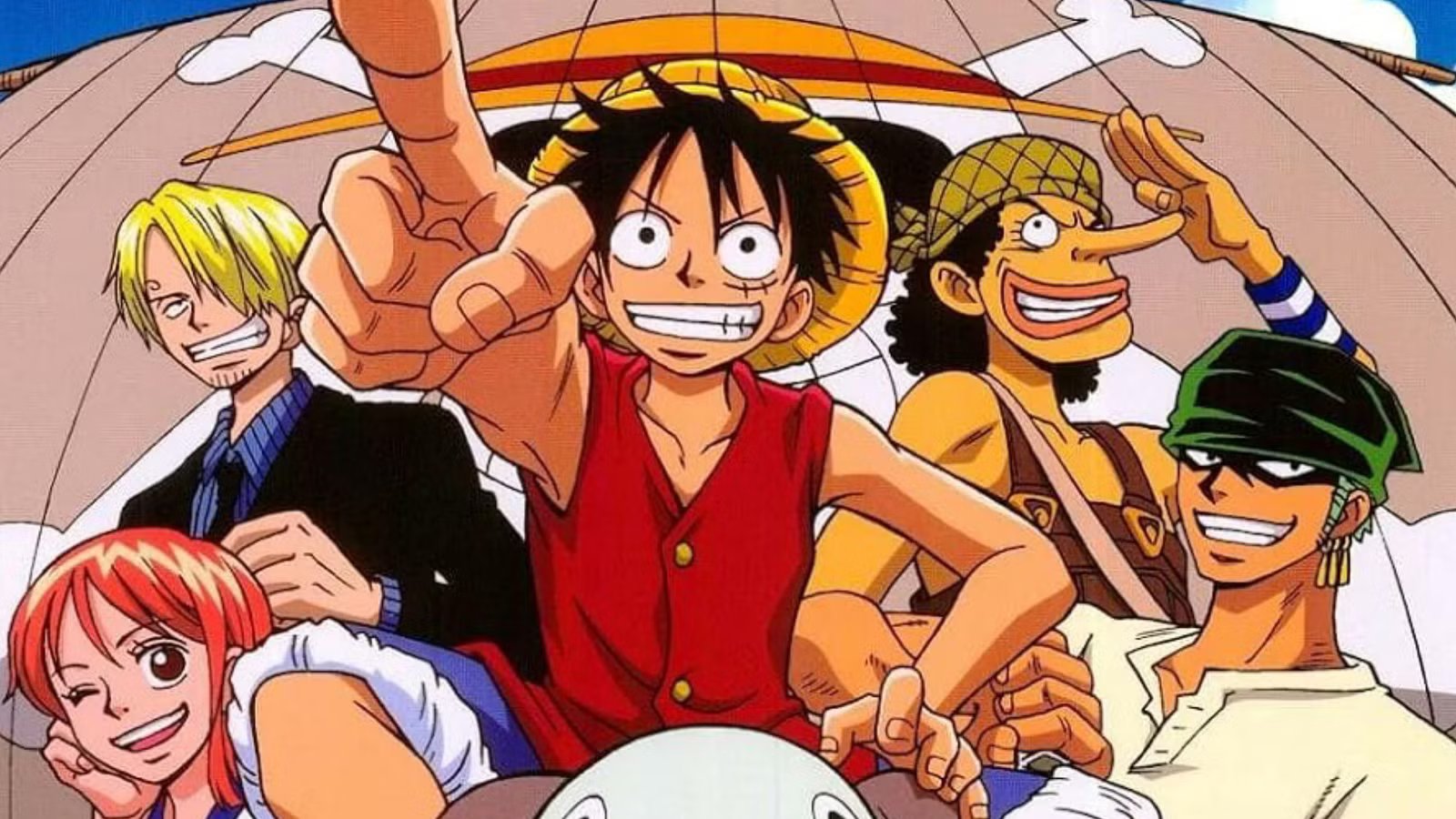
For almost 27 years, One Piece fans have joined Monkey D. Luffy on the voyage of a lifetime as he searches for the fabled treasure of Gol D. Roger. The long-running animated adaptation of Eiichiro Oda’s beloved manga series has been a mainstay of the medium, surpassing 1100 episodes, releasing 15 movies, and now having been brought into the realm of live-action with a hit Netflix adaptation in 2023. If you love anime, One Piece is instantly recognizable, no matter whether you have seen the series or not.
Despite its massive successes, the Straw Hat Pirates can’t evade the changing state of the anime medium. In 2025, the main run of one of the most iconic anime series finally came to a surprising close, bringing an end to an era of anime enjoyment.
One Piece’s “First Season” has come to a close
Since its first broadcast in October 1999, new episodes of One Piece have been released consistently every week, save for brief hiatuses between story arcs and for certain holidays. Fans have been able to see new chapters of the manga brought to life at a rate that averaged 40–50 chapters behind the source material. This approach has been applied across 21 arcs and 1,155 20-plus-minute episodes, to varying degrees of success.
However, in December 2025, the ending of the Egghead story arc brought an end to this consistent production schedule, as One Piece began a four-month hiatus that will last until April 2026. When it returns, Toei Animation will instead be animating 26 episodes per year instead of a year-long release schedule. These seasons will be split into two courses that will be released throughout the year.
The long-running series anime production model has offered mixed results
One Piece‘s surprising production shift marks the end of the era, as Monkey D. Luffy’s tale now more closely adheres to the more widely held standard of the industry today. Between the 1990s and 2000s, popular ongoing franchises, including Dragon Ball Z, Naruto, Bleach, and One Piece, had a consistent ongoing release strategy that saw each series release for several years in a singular, largely uninterrupted run.
While this strategy may seem ideal and allow us to have more of the series we love on the surface, it does not mean that this execution was ideal, even if many of the previously mentioned series were tentpole titles of their time. For the production companies and their employees, the long-running model brought strain to the animators that could compromise their health and the quality of the final product. There was also a consistent risk of the television series running too close to catching up to its source material, leading to the production requiring anime-original chapters or “filler” arcs to allow the source material’s authors to lay the groundwork for further episodes.
One Piece has found itself the victim of many of these previously mentioned hurdles. While only 94 of its 1155 episodes can be considered filler by fans, I have felt at times during my watching experience that the series has regularly had to grapple with animation flaws due to budgetary constraints and uneven pacing. I understand how it’s shifted fan reception across several major arcs.
Release Date
October 20, 1999
Network
Fuji TV
Directors
Hiroaki Miyamoto, Konosuke Uda, Junji Shimizu, Satoshi Itō, Munehisa Sakai, Katsumi Tokoro, Yutaka Nakajima, Yoshihiro Ueda, Kenichi Takeshita, Yoko Ikeda, Ryota Nakamura, Hiroyuki Kakudou, Takahiro Imamura, Toshihiro Maeya, Yûji Endô, Nozomu Shishido, Hidehiko Kadota, Sumio Watanabe, Harume Kosaka, Yasuhiro Tanabe, Yukihiko Nakao, Keisuke Onishi, Junichi Fujise, Hiroyuki Satou
Mayumi Tanaka
Monkey D. Luffy (voice)
Kazuya Nakai
Roronoa Zoro (voice)
Akemi Okamura
Nami (voice)
The anime industry has shifted its priorities from longer ongoing series
Another reason why anime production structures have been drastically altered is due to the advent of the streaming age. Established mainstream platforms and more focused services, such as Crunchyroll, have enshrined anime into the mainstream global pop culture landscape and shifted the prioritization of companies.
No longer do production companies have to consider only how a series will be released on Japanese network television and on home media, but also how they will debut globally on streaming services where typical advertising models do not apply. The series may not earn the typical financial return they once did from these previous models, making the risk for any series a greater factor, and meaning companies will opt for a safer set amount of episodes rather than the riskier commitment of a longer ongoing run.
Related
The Anime Boom Proves Disney Made a Huge Mistake
As anime surges in global popularity, this animation giant’s misstep comes into sharp focus.
While this shift in strategy may have seen a decrease in the production of longer-running anime series when compared to what came before, it doesn’t mean that longer-running stories haven’t been successfully brought to the screen through these chapters. Attack on Titan and My Hero Academia are notable recent examples of series that were able to completely adapt their source material across several seasons.
Meanwhile, Demon Slayer: Kimetsu no Yaiba, Jujutsu Kaisen, Black Clover, and Chainsaw Man are still finding ongoing success in adapting either previously concluded or ongoing serialized manga. Even Bleach was able to return to prominence with its adaptation of “The Thousand Year Blood War” arcs on Disney+, proving that a previously concluded ongoing series can find new life in this format.
The future of One Piece is still exciting
One Piece’s annual episode output is decreasing, but the franchise remains one of the biggest anime series that shows no sign of stopping. Even as Oda has teased that the main manga is coming to a close, the series is set to return to screen in March in the form of Netflix’s One Piece live-action series’ second season, with a third season in development that will dive into the highly anticipated Arabasta saga. Meanwhile, Netflix will also host a remake of the main anime animated by Attack on Titan‘s Wit Studio, retelling the Straw Hats’ journey from its earliest chapters.
As such, there is no shortage of One Piece for us fans to enjoy in the meantime. Newcomers, such as myself, who have been brought in by the success of the live-action series have over 1000 episodes to catch up on, and longtime fans can look forward to retellings of beloved stories. Even though the core series is slowing down, the love for Luffy’s journey will keep the franchise going for many years to come.
Subscription with ads
No, all ad-free
Simultaneous streams
1, 4, or 6
Live TV
No
Price
Starting at $8/month
