

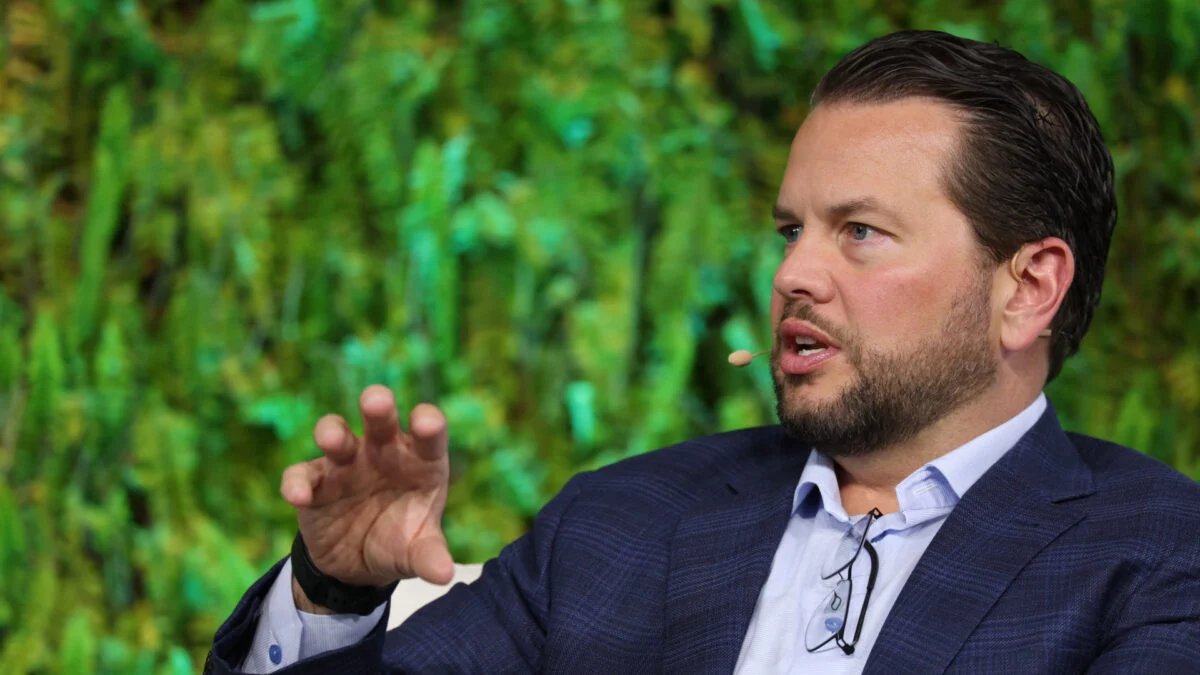
Pinterest CEO Bill Ready is supporting the global regulatory wave of social media bans targeting underage users.
“As both a CEO and a parent, I believe we need to be honest: social media as it exists today is not safe for kids under 16,” Ready wrote in a LinkedIn post. “We need clearer rules, better tools for parents, and more accountability across the tech ecosystem.”
In an opinion piece published by TIME Magazine on Friday, Ready criticized the engagement-focused design of social media platforms and the growing incorporation of AI chatbots, claiming that the practices are having a negative influence on the well-being of kids using these platforms.
He likened social media companies to the tobacco executives of the last century who did not act “in the public’s best interest” and “had to be shamed and sued into submission.”
“Our industry has had years to mitigate these harms, but has time and again failed. The time for self-regulation has passed, and if tech companies don’t change, then the path should be obvious to lawmakers,” Ready wrote. “We need a clear standard: no social media for teens under 16, backed by real enforcement, and accountability for mobile phone operating systems and the apps that run on them.”
Australia was the first country to ban under-16s from social media in a landmark decision that went into effect in December 2025. Since then, a wave of countries has begun following in Australia’s footsteps, with various social media ban plans being introduced by legislators around the globe, particularly in Europe.
The ban aims to address the serious mental health outcomes and the threat of online sexual predators that plague children and teens with unrestricted social media access.
According to the latest World Happiness Report from the University of Oxford’s Wellbeing Research Centre, high rates of internet use correlate with lower life satisfaction for young people, with the effect especially visible in girls. Data coming out of Latin America also showed that algorithmically curated content was worse for user mental health than communication-focused social media platforms. And social media use in the Middle East and North Africa, where it’s among the highest in the world, correlated with higher stress and more depressive symptoms
The report, published on Thursday, also cites leading social media critics who argue that there is “overwhelming evidence” of sextortion and cyberbullying and “compelling evidence” of social media-linked depression and anxiety in young people.
The leading scientists cited in the study also claim that social media use is not “reasonably safe for children and adolescents” and that the “rapid adoption of always-available social media by adolescents in the early 2010s” was “a substantial contributor to the population-level increases in mental illness that emerged by the mid 2010s in many Western nations.”
But critics of social media bans say the measures are ineffective at keeping children off social media, and some claim that the age verification requirement could create mass surveillance systems that are ripe for abuse by bad actors.
Pinterest has removed social features for teens, as Ready shared in the article, making every account run by a user under 16 completely private with no discoverability, messaging, likes, or comments from strangers. Still, Gen Z makes up over 50% of Pinterest users, according to the CEO.
“Our experience shows that prioritizing safety and well-being doesn’t push young people away; it builds trust,” Ready wrote. “The cost of inaction is a generation of young people overwhelmed by anxiety and depression. Right now, adolescence is being played out inside a global social experiment run by tech companies.”
Pinterest specifically backs the App Store Accountability Act, which was recently approved by the House Energy and Commerce Committee and will make its way to the House floor. The act proposes that app stores institute age verification and link the devices of minors to parents or guardians to require parental consent.
Similar device-level age restrictions have gained traction in state legislatures across the country, as well.
