

🌘
Subscribe to 404 Media to get The Abstract, our newsletter about the most exciting and mind-boggling science news and studies of the week.
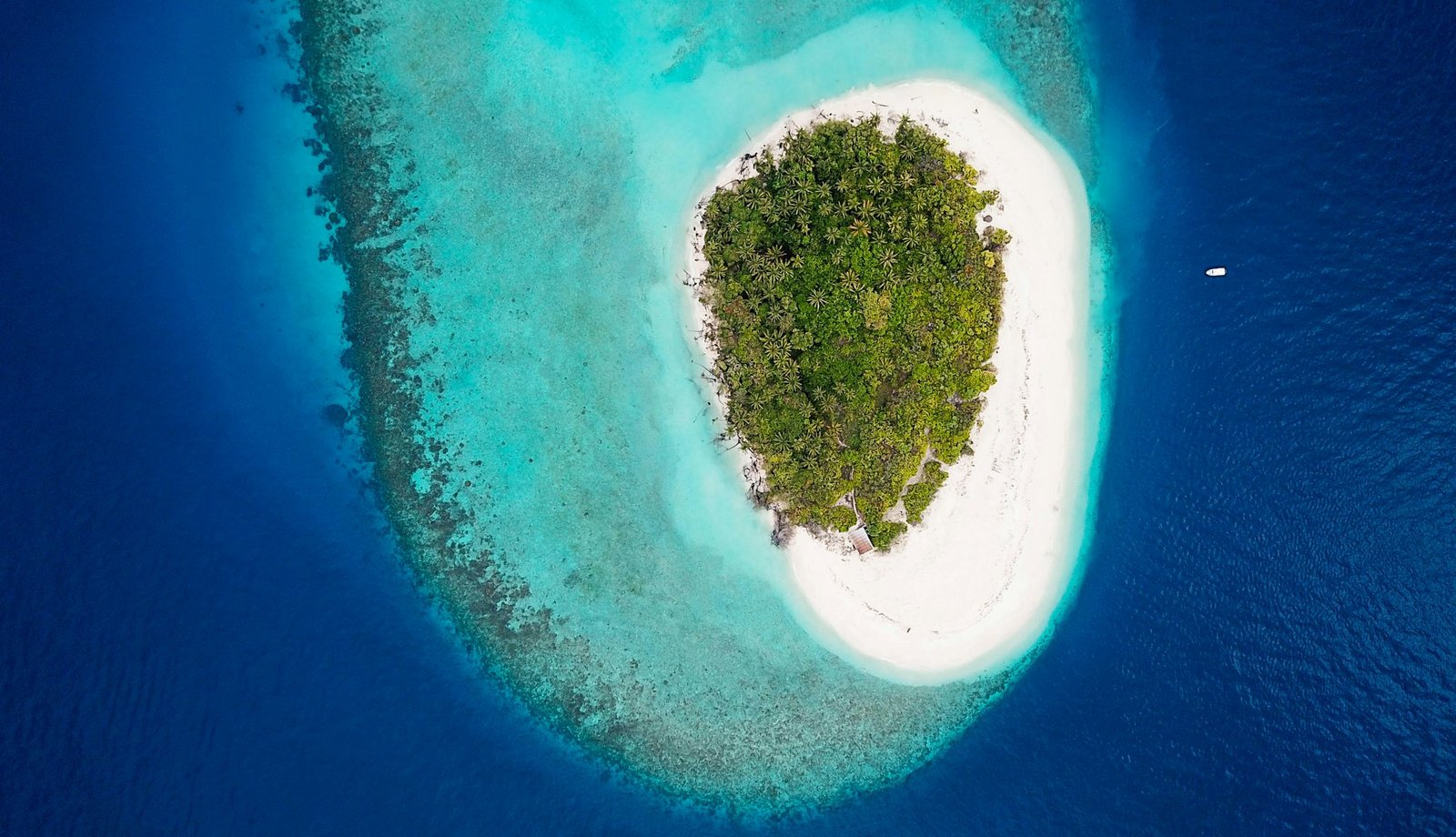
Tiny remnants of long-lost continents that vanished many millions of years ago are sprinkled around the world, including on remote island chains and seamounts, a mystery that has puzzled scientists for years.
Now, a team has discovered a mechanism that can explain how this continental detritus ends up resurfacing in unexpected places, according to a study published on Tuesday in Nature Geoscience.
When continents are subducted into Earth’s mantle, the layer beneath the planet’s crust, waves can form that scrape off rocky material and sweep it across hundreds of miles to new locations. This “mantle wave” mechanism fills in a gap in our understanding of how lost continents are metabolized through our ever-shifting planet.
“There are these seamount chains where volcanic activity has erupted in the middle of the ocean,” said Sascha Brune, a professor at the GFZ Helmholtz Centre for Geosciences and University of Potsdam, in a call with 404 Media. “Geochemists go there, they drill, they take samples, and they do their isotope analysis, which is a very fancy geochemical analysis that gives you small elements and isotopes which come up with something like a ‘taste.’”
“Many of these ocean islands have a taste that is surprisingly similar to the continents, where the isotope ratio is similar to what you would expect from continents and sediments,” he continued. “And there has always been the question: why is this the case? Where does it come from?”
These continental sprinkles are sometimes linked to mantle plumes, which are hot columns of gooey rock that erupt from the deep mantle. Plumes bring material from ancient landmasses, which have been stuck in the mantle for eons, back to the light of day again. Mantle plumes are the source of key hot spots like Hawai’i and Iceland, but there are plenty of locations with enriched continental material that are not associated with plumes—or any other known continental recycling mechanisms.
The idea of a mantle wave has emerged from a series of revelations made by Brune’s team, including a 2023 study that identified evidence of similar dynamics occurring within continents. By studying patterns in the distribution of diamonds across South Africa, the researchers showed that slow cyclical motions in the mantle dislodge chunks off the keel of landmasses as they plunge into the mantle. Their new study confirms that these waves can also explain how the elemental residue of the supercontinent Gondwana, which broke up over 100 million years ago, resurfaced in seamounts across the Indian Ocean and other locations.
In other words, the ashes of dead continents are scattered across extant landmasses following long journeys through the mantle. Though it’s not possible to link these small traces back to specific past continents or time periods, Brune hopes that researchers will be able to extract new insights about Earth’s roiling past from the clues embedded in the ground under our feet.
“What we are saying now is that there is another element, with this kind of pollution of continental material in the upper mantle,” Brune said. “It is not replacing what was said before; it is just complementing it in a way where we don’t need plumes everywhere. There are some regions that we know are not plume-related, because the temperatures are not high enough and the isotopes don’t look like plume-affected. And for those regions, this new mechanism can explain things that we haven’t explained before.”
“We have seen that there’s quite a lot of evidence that supports our hypothesis, so it would be interesting to go to other places and investigate this a bit more in detail,” he concluded.
🌘
Subscribe to 404 Media to get The Abstract, our newsletter about the most exciting and mind-boggling science news and studies of the week.
