

Exclusive: CEO Mohit Kumar on engineering around Oura’s patent—and his vision for the next decade
Ultrahuman is officially returning to the US smart ring market, opening pre-orders for its Ring Pro after receiving crucial clearance from the Customs and Border Protection (CBP).
The clearance marks a major breakthrough for the company, which was hit by an import ban on its Ring Air last October stemming from a patent dispute brought by market leader Oura.
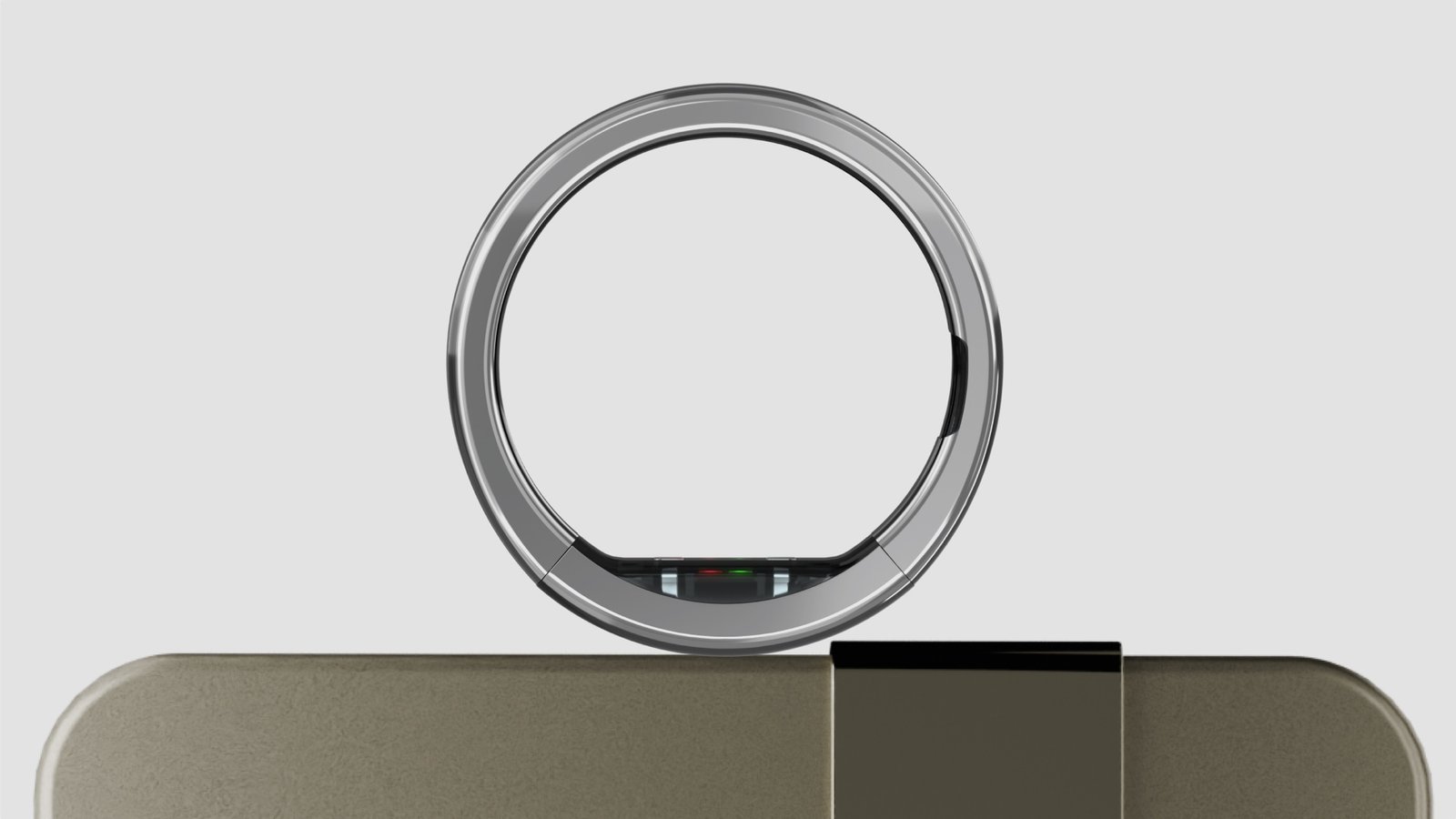
Now, the Ultrahuman Ring Pro—announced last month—is ready to enter the scene, offering 15 days of battery life and advanced health features without a mandatory subscription.
The new device will begin shipping in the US on May 15, with early-bird pricing starting at $349 (instead of the typical $479) for the Ring Pro bundled with the new charging case (which extends the battery life to over 45 days, and is otherwise sold separately for $100).
Engineering vs. legal engineering
In an exclusive interview with Wareable, Kumar detailed the significance of the CBP approval, explaining that the Ring Pro’s newly designed unibody architecture was key to navigating around Oura’s patent.
“Essentially, what Customs proved was that because of the unibody design that we have, the ‘178 patent’ on this design does not really apply, from an infringement perspective,” Kumar told us.
Advertisement
The clearance, then, effectively allows Ultrahuman to bypass the legal barrier that has defined the smart ring industry for the last 18 months.
Kumar characterized the core of the dispute as Oura strategically acquiring a patent to “block everyone in this space”—demonstrated by the latter’s case brought against Samsung, Reebok, Zepp Health, and Nexxbase last November.
The Ultrahuman Ring Air received the US import ban in October (Image credit: Wareable)
He noted that the strategy has forced companies with fewer resources to spend them on legal defense rather than product iteration, which is ultimately “bad for consumers”.
Ultrahuman is the only competitor to have stuck to its guns over the last year, with other rivals—such as RingConn and Circular—negotiating royalty agreements with Oura to continue US sales.
Kumar, though, expressed confidence in the company’s engineering-first philosophy, emphasizing that Ultrahuman’s “natural DNA was never to first compete on legal grounds” but to build a better product.
Advertisement
“We believe that in this category, the right thing will prevail eventually… we believe that eventually engineers are going to win in this category versus engineering versus legal engineering”.
How the unibody design unlocks more than just US approval
The Ring Pro’s approval may be tied directly to its new unibody design, but it’s also more than just a creative solution to overcome the patent issue. Kumar explained how it delivers key engineering advantages.
The improved design is centered on battery efficiency and on-device computation, with the Ring Pro achieving its claimed industry-leading battery life in part by enabling the device to enter a “significantly deeper sleep state” when not actively sensing.
This efficiency, combined with a larger-capacity battery, enables much more on-chip machine learning and AI. And Kumar says the on-chip compute power also enables the device to become a true health screener, moving beyond standard metrics to enable advanced features, including the lesser-spotted AFib detection.
Ultrahuman’s Ring Pro can be bundled with the all-new Pro Charging Case — (Image credit: Ultrahuman)
Additional features and integrations, which Ultrahuman calls PowerPlugs, include safety monitoring for GLP-1 tracking, Cycle & Ovulation Pro, and Migraine Insights.
Advertisement
The ring now also features ‘ProRelease Technology’, which allows it to be safely cut apart in the event of an injury or finger swelling.
The quest to deliver industry-defining biomarkers
The company now seems ready to put the patent war with Oura behind it, with Kumar suggesting that the brand’s ultimate goal is to deliver an all-new biomarker.
And he believes that the brand’s wider ecosystem—compared to a company like Oura—will prove to be the long-term differentiator in achieving this.
“If we are able to find a new biomarker that changes humanity, I think that would be a game-changer. In the next 10 years, we want to be known as a company that truly discovered a new marker for health that totally changed the industry.
“We are really interested in the lactate molecule and how your muscles behave in different environments. Whether it’s people losing weight through lifestyle changes or medical intervention, monitoring muscle mass will become even more important over time.
“So we’re trying to tap into those signals, and, in the next quarter, you will see an announcement from our side relating to this,” he said.
Advertisement
The Wareable take: The race is on again
By choosing to re-engineer rather than settle, Ultrahuman has—and not without risk, we should add—emerged from the patent wars that have defined the industry in recent times.
However, the real test begins with the May rollout.
On paper, the subscription-free Ring Pro is an incredible alternative to the Oura Ring 4, but Ultrahuman still needs to prove its ecosystem can match its rivals’ holistic, lifestyle-driven guidance. It will no doubt soon have to stave off competition from other smart ring brands that take the same unibody design route, as well.
If the brand can successfully roll out exclusive features like lactate monitoring later this year, though, it will prove itself as the one setting the pace for the entire category.
And that would go a long way to ensuring the smart ring race is finally, properly, on again.
