

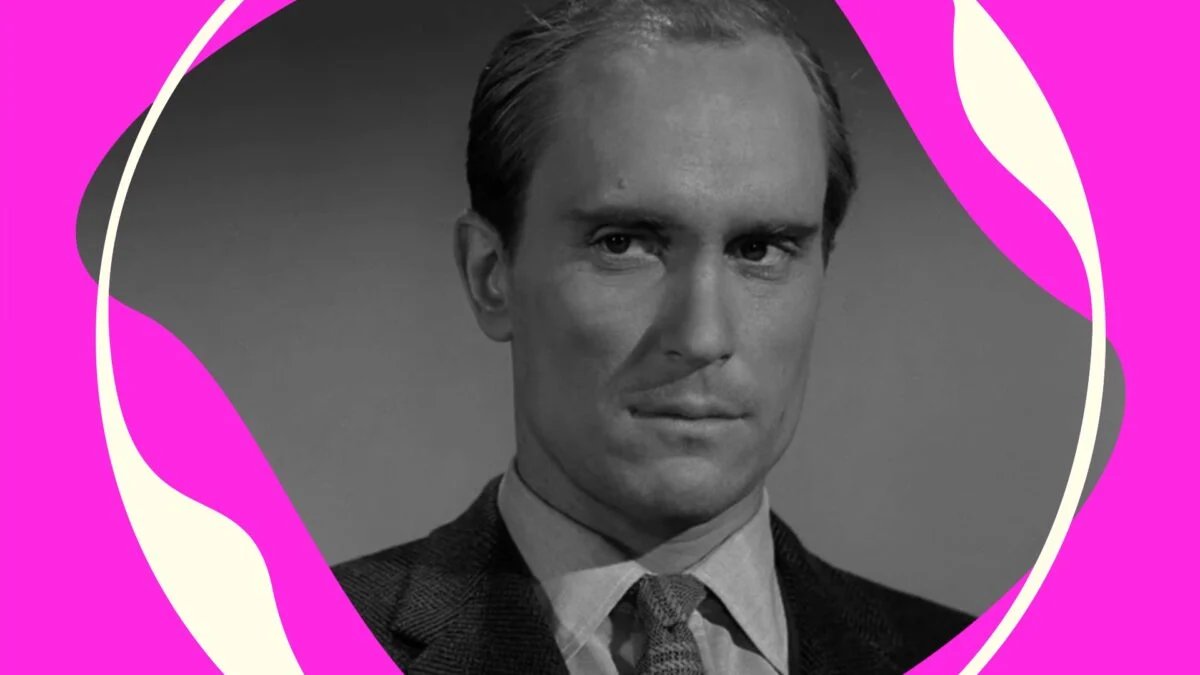
Oscar winner Robert Duvall passed away over the weekend at age 95, leaving behind a body of work that stretched over 60-plus years and included some of Hollywood’s most revered films, including The Godfather and its sequel, as well as an extensive TV career. His final roles came in 2022; his performances made an impact across multiple generations.
Not long after his big-screen breakout as Boo Radley in 1962’s To Kill a Mockingbird, Duvall—who’d spent his very early career on the stage—starred in a poignant episode of Rod Serling’s classic Twilight Zone. “Miniature” was penned by Charles Beaumont, a Twilight Zone regular who also wrote “The Howling Man,” “Static,” “Number Twelve Looks Just Like You,” and several others.
Duvall’s performance as the eccentric Charley Parkes is what makes “Miniature” especially memorable. When we first meet him, he’s toiling at an office job and doing perfectly competent work, but his boss lets him go because he’s a “square peg” who has no interest in being a team player. People feel uncomfortable around him for reasons nobody can exactly articulate.
© CBS
It would be easy to peg Charley’s awkwardness to his home life; he’s a 30-something who still lives with his mother, who babies him. But her treatment of him is more out of habit than because she’s a smothering Norma Bates type. She outright tells him that she’d be thrilled if he moved out and propelled his life toward finding his own family. His sister and her boyfriend are also concerned, in a way that feels genuine rather than pushy.
His sister in particular tries to talk some sense into him and even sets him up on a date with an eager acquaintance. We can tell she’s coming from a place of kindness—as is her boyfriend when he tries to hook Charley up with a new job—but there’s also an undercurrent of constantly trying to force him into a more conventional life.
And Charley, for his part, does try to listen and make an effort, though he has limits. He has other interests, you see.
The Twilight Zone element is introduced early on, when a still-employed Charley takes his lunch break at a nearby museum. He becomes transfixed by a dollhouse set up to approximate a stately Victorian home. To his amazement, the tiny figure of the woman of the house is somehow alive. She plays the piano. She eats. She strides around her perfectly appointed living room.
© CBS
Of course, when Charley asks the security guard—who becomes increasingly involved as “Miniature” progresses—how the museum has managed to animate the figure with such lifelike precision, he’s told the woman is carved out of wood. Just like the rest of the display. The viewer, however, can see the vivid drama in the house play out like a soap opera on TV, the same way Charley does. He becomes obsessed, hovering over the display window and having rambling, one-sided conversations with the object of his fascination.
She, of course, never acknowledges him, but Charley feels moved to intervene when he sees a man doll barge into the home and treat her with cruelty. In this case, that means vandalism, and it also means the security guard must escalate the situation with this very odd character who parks himself next to the dollhouse all day, every day.
Charley is soon placed under the care of a doctor determined to cure him of his delusions. Like the other people in his life, Charley’s doctor really tries to help him. He means well. He even brings the museum figure into his office so that Charley can see it’s really just a wooden carving. But the experience of being hospitalized only makes Charley realize one thing: nobody else can see what he sees. And he’s just going to have to fake his way back to freedom if he ever wants to visit the dollhouse again. It doesn’t take much to convince everyone how fine he is before he hustles back to the one place he’s not supposed to go.
The twist ending is probably one of The Twilight Zone’s least surprising; by some sci-fi wizardry, Charley shrinks down and finds himself inside the dollhouse. The woman is thrilled by the arrival of this stranger—though she never speaks—and an idea born in Charley’s imagination has created a best-case scenario for everyone.
© CBS
Or has it? Charley’s family has no idea what’s happened to him. He’s just gone, despite his mother’s screechy attempts to draw him out. Only the security guard takes notice of the dollhouse’s new inhabitant, but he very reasonably decides to keep that to himself. As Rod Serling reminds us, “He knew what they’d say, and he knew they’d be right too.”
When his Twilight Zone episode aired in 1963, Duvall was already well on his way to expanding far beyond weirdo roles. But there was always a twinkle of something extra in his characters; think of the surfboard-toting Kilgore in Apocalypse Now or even Duvall’s eerie cameo as the swing-set-riding priest in Invasion of the Body Snatchers.
In “Miniature,” you can see the versatility of his talent. Charley’s an unhinged misfit, sure, but his meek exterior masks an inner life so against the grain he wills himself into an impossible new reality.
All five classic Twilight Zone seasons—including season four, episode eight, “Miniature”—are streaming on Tubi and Paramount+.
Want more io9 news? Check out when to expect the latest Marvel, Star Wars, and Star Trek releases, what’s next for the DC Universe on film and TV, and everything you need to know about the future of Doctor Who.
