

Why you can trust Android Central
Our expert reviewers spend hours testing and comparing products and services so you can choose the best for you. Find out more about how we test.
In a recent interview, Samsung’s co-CEO, TM Roh, admitted that Samsung was “no longer chasing specs” with its newest phones. This news came as no revelation to anyone who has been paying attention to smartphone technology over the past few years. Still, it may be a surprise to non-techy folks who might expect Samsung to be the one pushing the envelope. This phone is called the “Ultra,” after all.
Instead, Samsung is laser-focused on hardware that “supports intelligent software.” Despite launching a phone with a very clear hardware trick, One UI is very much the star of the show here.
Today’s best Samsung Galaxy S26 Ultra deals
To get the basics out of the way, the Samsung Galaxy S26 Ultra went on sale on March 11, 2026, and retails for $1,299 for the model with 12GB of RAM and 256GB of storage. Upgrading to 512GB of storage will cost you $1,499, while the highest-end model comes with 16GB of RAM and 1Tb of storage for $1,799. Notably, the base model didn’t get a price increase, but those other two models sure did.
Swipe to scroll horizontally
Category
Samsung Galaxy S26 Ultra
Display
6.9-inch QHD+ Dynamic AMOLED 2X, 120Hz
Processor
Qualcomm Snapdragon 8 Elite Gen 5 for Galaxy
Memory
12GB, 16GB (1TB model only)
Storage
256GB, 512GB, 1TB
Front Camera
12MP, f/2.2
Rear Camera 1
200MP (wide), OIS, f/1.4
Rear Camera 2
50MP (ultrawide) f/1.9, FOV 120˚
Rear Camera 3
10MP (telephoto), OIS, f/2.4, 3x Optical Zoom, FOV 36˚
Rear Camera 4
50MP (telephoto), OIS, f/2.9, 5x Optical Zoom
Battery
5,000 mAh
Charging
60W (wired), 25W (Qi wireless), 4.5W (reverse wireless)
Connectivity
5G, LTE, Wi-Fi 7, Wi-Fi Direct, Bluetooth 6
Biometrics
Ultrasonic Fingerprint Scanner, Face Recognition
Ingress Protection
IP68, Corning Gorilla Armor 2 (front glass), Corning Gorilla Glass Victus 2 (rear glass), Aluminum
Dimensions
78.1 x 163.6 x 7.9 mm
Weight
214 grams
Software
One UI 8.5 w/Android 16
Colors
Cobalt Violet, Sky Blue, Black, White
Online exclusive: Silver Shadow, Pink Gold
(Image credit: Nicholas Sutrich / Android Central)
Out of the gate, Privacy Display is the most exciting display feature we’ve seen in a decade, the last of which I would argue was glasses-free 3D displays on products like the Nintendo 3DS. Ironically, Privacy Display works a bit like a 3D display, as it shines light in different directions and can shut off pixels in specific directions to hide on-screen content from shoulder surfers.
Samsung went two steps further by making this a feature you can toggle on or off, as well as one you can customize in several other ways. The entire screen can dim at any angle, can dim for only a handful of apps (like banking apps), or dim only on-screen objects like notifications or sensitive text.
From a purely spec standpoint, the Galaxy S26 Ultra’s display isn’t even remotely impressive. It doesn’t support the brightest nits, doesn’t have the highest resolution or refresh rate, has a horrendously low PWM rate and lack of eye care features, and it’s years behind in color science with an 8-bit color output. However, it prioritizes privacy over everything else, and that’s something people may care more about.
Image 1 of 2
(Image credit: Nicholas Sutrich / Android Central)(Image credit: Nicholas Sutrich / Android Central)
But, as I pointed out in my Galaxy S26 Ultra display review, Samsung continues to lag far behind the competition in eye comfort. It’s not just a strongly strobing display with low-frequency PWM dimming at all times, but Privacy Display is also causing discomfort for a new group of people who aren’t sensitive to PWM dimming.
The running theory is that the multi-angle pixels are causing focusing problems for these users, resulting in a headache and, ultimately, an unusable display. We’ll have to see just how many people this affects.
It’s a technology that doesn’t come without tradeoffs. You’ll lose brightness, viewing angles, and see more glare on this screen than on the S25 Ultra’s, but you might not care since other people can’t see anything on your screen.
(Image credit: Nicholas Sutrich / Android Central)
Meanwhile, the Galaxy S Ultra’s design has often been a point of contention. Whether you think it’s too square or too round, there always seems to be a group of people who are unhappy with it. I’ve been very happy with Samsung’s rounder design, which feels better in my palms when one-handing it. Likewise, my fingers are no longer threatened with being sliced now that Samsung isn’t using a razor-sharp edge along the left and right sides of the S26 Ultra.
But the rounded corners now mean the S Pen has a prominent curve at the end, so it’s possible (once again) to insert the S Pen the wrong way. The company also opted for a thinner phone instead of packing Qi2 magnets inside, a decision likely made because magnets can interfere with the S Pen.
As it is, the phone is just annoyingly thin enough that the camera sensors now protrude from the body even more than they did before. Even adding a case to the phone doesn’t fix the off-balanced design here. Thinner can sometimes be better, but Samsung would have been smarter to opt for a bigger battery.
(Image credit: Nicholas Sutrich / Android Central)
Samsung didn’t push the battery capacity for this release, but it did finally opt for faster charging. Using this 67W charger, I was able to charge the phone from 0-80% in just 30 minutes, a huge improvement over past Samsung phones and something that’ll help eliminate battery anxiety so long as you have the right charger (or power pack) with you.
The reality, though, is that Samsung desperately needs to increase battery capacity. This $1300-1800 phone only has a 5,000mAh battery, while the higher-end-specced OnePlus 15 sells for just $900 and has an over-7,000mAh battery, all without being thicker or heavier.
(Image credit: Nicholas Sutrich / Android Central)
In our lab tests, the Galaxy S26 Ultra took 16 hours and 10 minutes to drain a full charge. That sounds very good until you put it next to the OnePlus 15, which took over 25 hours to drain during the same test. In real-world use, my S26 Ultra barely made it to the end of the day, whereas I would never even think about battery life when using a OnePlus 15.
Now, back to that camera island. The physical size is deeper than last year, but only the telephoto sensors have changed. Strangely enough, the 3x lens got a sensor downgrade and shares the paltry 1/3.94-inch sensor found on the rest of the S26 line. That’s the tiniest telephoto sensor on any flagship phone, but it’s also really just an intermediary sensor to help with zoom until you reach the 5x level.
Image 1 of 8
(Image credit: Android Central)(Image credit: Android Central)(Image credit: Android Central)(Image credit: Android Central)(Image credit: Android Central)(Image credit: Android Central)(Image credit: Android Central)(Image credit: Android Central)
The 5x telephoto lens isn’t using a new sensor, but it is using a new All Lens on Prism design that ironically is designed to make lenses smaller and reduce distortion. Clearly, the first part didn’t come to fruition, but it definitely does a better job of providing cleaner zoomed-in photos than previous generations.
My biggest issue with Samsung’s sensors and lenses is that the images lack the depth found in some other high-end Android flagships. The examples of food photos above illustrate what I’m talking about. Without using portrait mode, these photos have natural depth and appeal, while Samsung’s images often look flat.
On the positive side, Samsung seems to have improved motion capture a bit this time around, as I found I could pretty easily get clear photos of my son and my pets with this phone.
(Image credit: Nicholas Sutrich / Android Central)
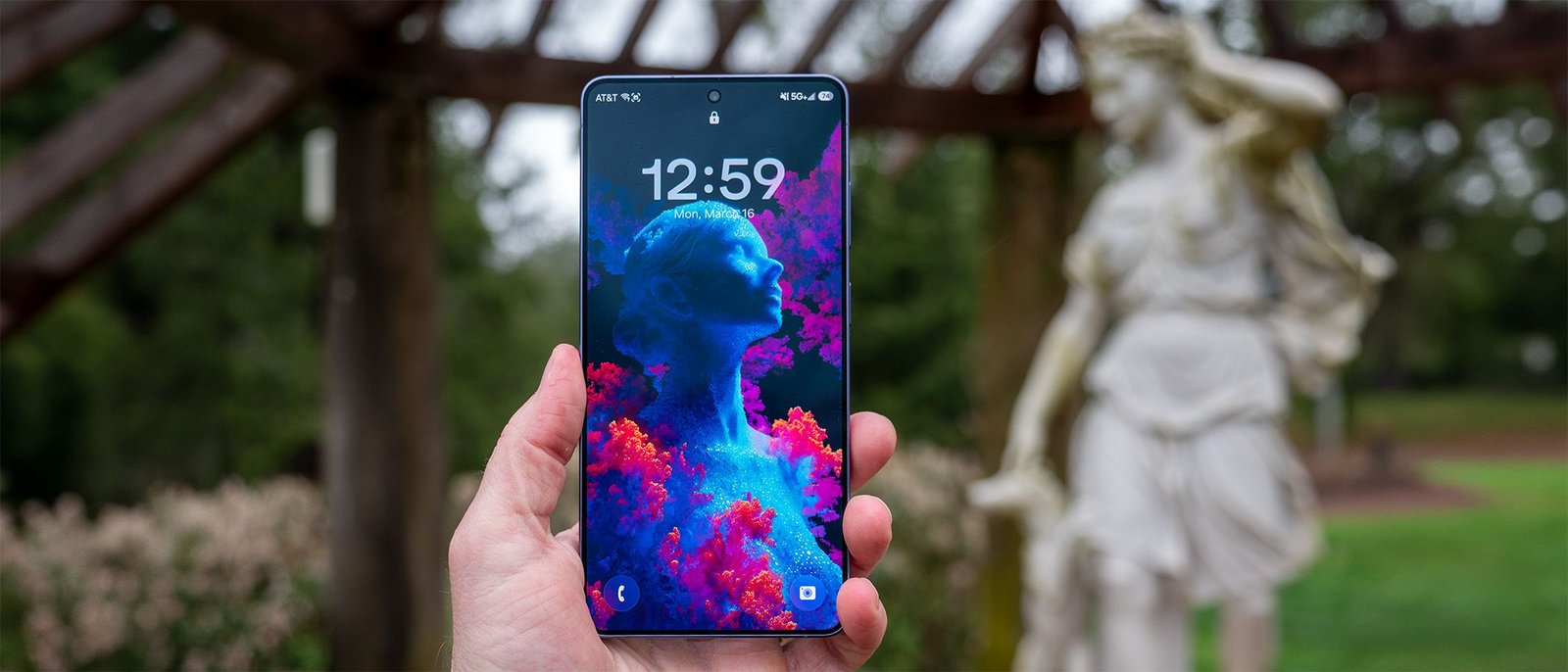
But if Samsung understands one thing, it’s software. One UI is the absolute best OS in the smartphone industry, and it’s not even close. You might have a specific feature or UI design preference from another phone, but no other company matches Samsung’s overall software excellence.
Part of this is the sheer number of truly useful features packed into One UI. Privacy Display’s granular options are just a sampling of what I’m talking about, too. If we dig in a little further, several other new and upgraded options stand out, as well.
Direct Voicemail is a phenomenal new feature that arrived with no fanfare and lets you completely skip the garbage carrier voicemail system for something far better. The camera’s new Horizon Lock feature records ultra-stabilized video, even when you turn the phone upside down.
Not to mention new Gemini features that appeared here first, like the impressive screen automation that can order food for you using apps like Uber.
(Image credit: Nicholas Sutrich / Android Central)
When I use One UI, my critiques about the Galaxy S26 Ultra’s hardware not being “ultra” enough mostly melt away. It looks good, feels good to use, and will be actively updated and improved for years to come. You can be sure that, no matter what the hardware may be lacking for the price, the software will almost certainly make up for its shortcomings.
It’s also hard to argue with the ecosystem Samsung has built. I’m not just talking about the gajillion electronics products Samsung makes that all work incredibly well together. I also mean the third-party ecosystem that exists because Samsung sells so many phones. If you’re a person who loves buying accessories and cases for your phones, there’s no other Android phone that’ll give you a wider variety of choices, and that’s all because Samsung is going to sell a lot of Galaxy S26 Ultras.
(Image credit: Nicholas Sutrich / Android Central)
Ultimately, the reality is that Samsung is charging too much for a phone that’s often behind on a spec sheet. The massive price increase on the 512GB and 1TB SKUs this year makes them impossible to recommend without some kind of deal, and the fact that I’m recommending the base model at all is down to two main advantages.
The first is obvious: Privacy Display. No other phone on the market has this, and no other phone will have this for a long time to come. The second is One UI, and while it’s not exclusive to this phone, it’s hard to argue with the handful of new or mostly exclusive features in the latest Samsung software update.
If you want the best display specs, you can look elsewhere and actually save money in the process. Samsung isn’t keeping up with the Joneses, but is still charging like it is. If it’s just about specs or value for your money, this isn’t the best flagship phone, but the software and unique support system behind it — cases, accessories, compatibility, and even repair support — might make the high price worth it in the end.
The Samsung Galaxy S26 Ultra’s Privacy Display and impressive OS outshine the pack, giving you plenty of reasons to choose Samsung’s latest flagship.
Samsung Galaxy S26 Ultra: Price Comparison
