

What you need to know
- A report citing an interview with Samsung’s vice president of hardware for Samsung’s MX business, Moon Sung-hoon, says it may put Exynos in more devices.
- Moon states that the company is working on a “mid to long-term strategy” for developing new APs (chips), and it may bring future Exynos chips to even more Galaxy devices in its ecosystem.
- The Exynos 2600 is the world’s first chip on the 2nm process, and Samsung touted major jumps in performance and efficiency over the 2500.
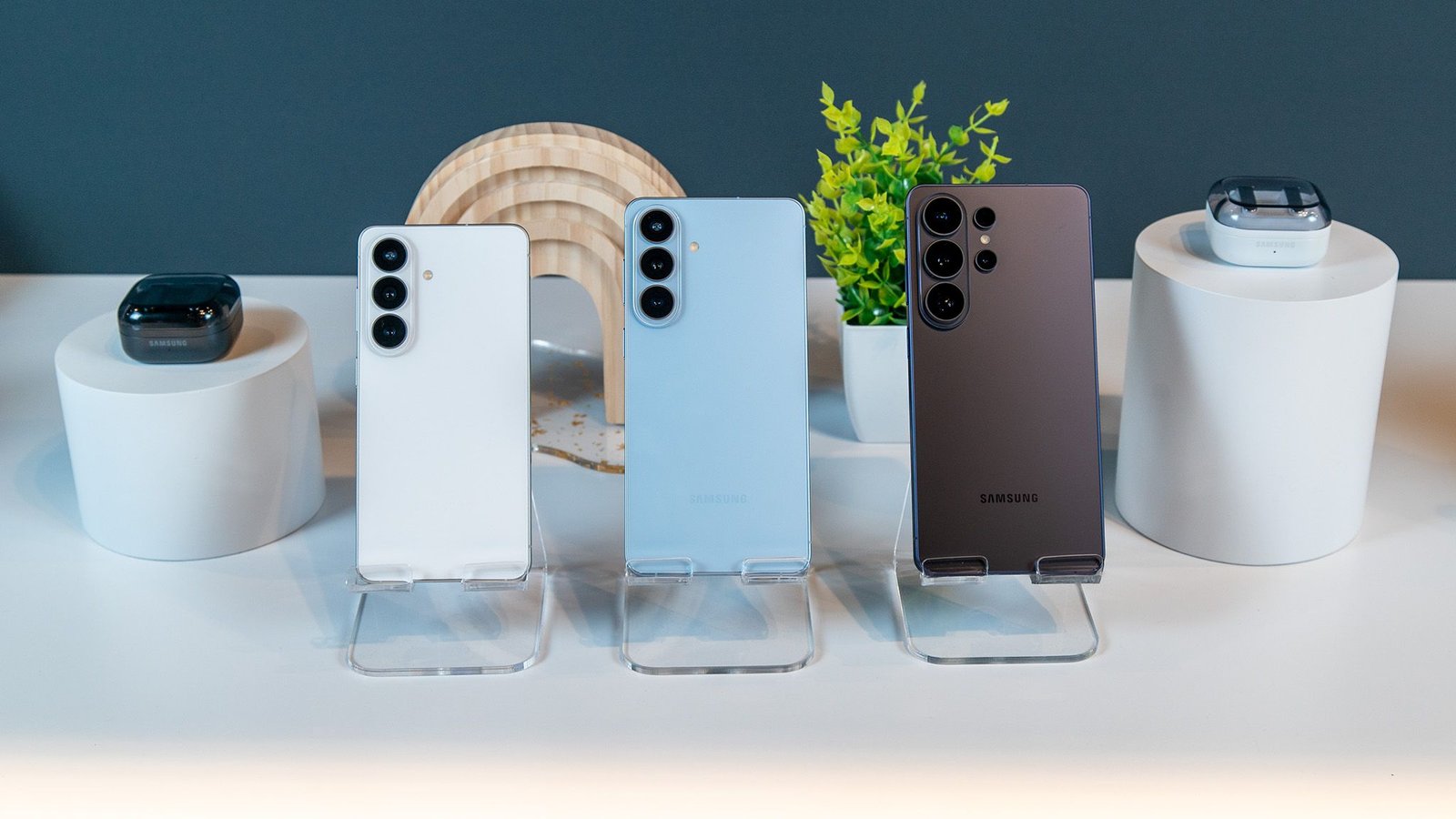
Reports are surfacing again about Samsung’s supposed interest in pushing its Exynos chipset more prominently across its Galaxy line.
Galaxy Unpacked in February was the first of Samsung’s announcements; however, an interview between DealSite and a company exec shed light on its plans for Exynos (via SamMobile). The publication spoke with Moon Sung-hoon, the vice president of hardware for Samsung’s MX business, about its outlook on Galaxy hardware. Moon Sung-hoon reportedly informed DealSite that Samsung is looking into a “mid to long-term strategy” regarding its AP (chip) development.
For its Galaxy series, what this means is the company is interested in spreading its future Exynos chip development and final product to more devices. Moon confirms this, adding, “We hope to see Exynos chips incorporated into all our lineups in the future. We will continue to explore the AP that best suits us.”
You may like
The Samsung exec says that developing APs is a complex, “difficult” process that requires rigorous work over “several years.” However, despite that, Samsung is seemingly committed to taking that daunting process more seriously. Moon stated that the Exynos 2600 “received passing marks in many ways.” With that, it seems that Samsung is looking to ride that high and continue with its Exynos chip series, but in a way that may place it in more devices.
Android Central’s Take
I’m glad that Moon Sung-hoon spoke about the Exynos 2600’s reception. There was some hesitancy surrounding this chip, simply due to Samsung’s track record. However, when the chip was launched, it seemed like the company poured more of what consumers need and want into it. More on that in a moment.
It remains to be seen how Samsung goes about this. It’s not typical for it to use Exynos in its flagship series, such as the Galaxy S26, in regions outside of South Korea. For that, it usually leans on Qualcomm.
A small Exynos takeover
(Image credit: Samsung)
If we take a step back and look at Samsung’s Exynos 2600 history, we’d remember how the company (allegedly) made a serious, “urgent” push for its development. It was said last year that Samsung created a “Task Force” specifically to oversee the development of the Exynos 2600 to ensure its quality and performance. Samsung wanted to move into better competition with other chipmakers, thus the move into the 2nm process, making it the world’s first.
There was always a concern about Samsung’s Exynos 2600, and even more concern with the 2400 for the Galaxy S24. The company’s chips often fell flat. Either they were underpowered, or they had overheating issues that severely wrecked the Galaxy phone experience for users. That might’ve changed with the Exynos 2600. Its launch seemingly signified a confident leap in its chipset technology for the Galaxy S26 series.
Android Central’s Take
It’s this; this right here that I kept my eye on when it came to the Exynos 2600. Samsung has always had problems with its Exynos series. These were crucial to how consumers perceived it, and even more crucial to its financials in the end. It has made a strong effort to improving in these areas, and the 2600 seems to stand well on its own. Can Samsung keep it up, though? Enough to bring it to more phones and places?
Samsung dropped its low-power cores for a new CPU layout that rocks higher performance and improved efficiency. The company also claimed it sports 39% CPU gains, double the GPU performance over the 2500, and more. Moreover, Korea was the only region to receive the Exynos 2600 version, while consumers in the U.S. and other overseas regions got the Snapdragon 8 Elite Gen 5 from Qualcomm.
