

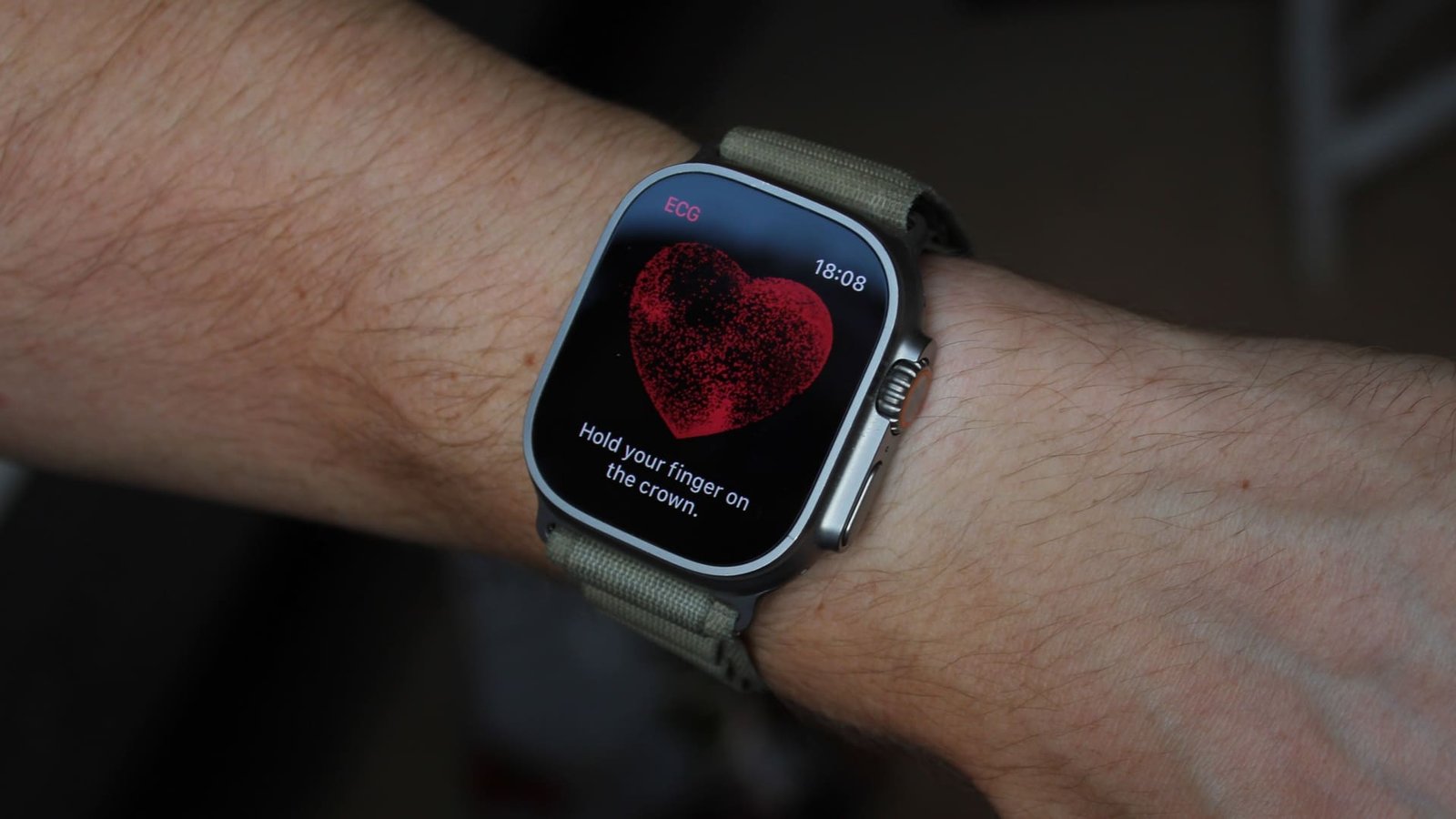
New research suggests Apple’s smartwatch could spot irregular heart rhythms earlier than routine GP visits
A new clinical study suggests the Apple Watch may be more effective at detecting atrial fibrillation than standard medical check-ups.
The randomized study focused on adults over the age of 65 with an elevated risk of stroke. It compared standard care in the Netherlands with Apple Watch use over a six-month period. In total, 437 participants took part, with a median age of 75.
While the sample size is relatively modest, the findings suggest that continuous monitoring can outperform episodic medical visits for certain conditions.
In the research, AFib was detected in 9.6% of participants wearing an Apple Watch, compared with just 2.3% in the control group receiving routine care through GP visits.
The Apple Watch relied on a combination of its ECG function and optical heart rate (PPG) sensor to flag potential issues. This advantage largely comes down to coverage. AFib can be intermittent and often asymptomatic, meaning it may not occur during a short doctor’s appointment—or may go unnoticed altogether.
Advertisement
By contrast, a smartwatch worn for many hours a day dramatically increases the chances of capturing an episode over time.
The study also found that the Apple Watch could identify cases of asymptomatic atrial fibrillation, reinforcing its potential as an early-warning tool rather than a diagnostic replacement. This aligns with Apple’s positioning of its health features as prompts to seek medical advice, rather than medical devices intended to make final clinical judgments.
A different approach to care
The study showed the pitfalls of a device like the Apple Watch, too. Nearly half of the device’s alerts during the study were false positives.
Yet, while these can lead to unnecessary follow-up appointments and anxiety, the researchers note that there are no direct negative health consequences beyond inconvenience—a familiar trade-off in preventative screening.
Ultimately, the study—like many similar ones conducted over the last 5-10 years—adds weight to the idea that wearables can complement traditional healthcare by filling gaps between appointments.
While it’s not a substitute for professional diagnosis, continuous monitoring may prove especially valuable for conditions that are easy to miss in a standard check-up. That’s a space where smartwatches are increasingly finding their footing.
Advertisement
