

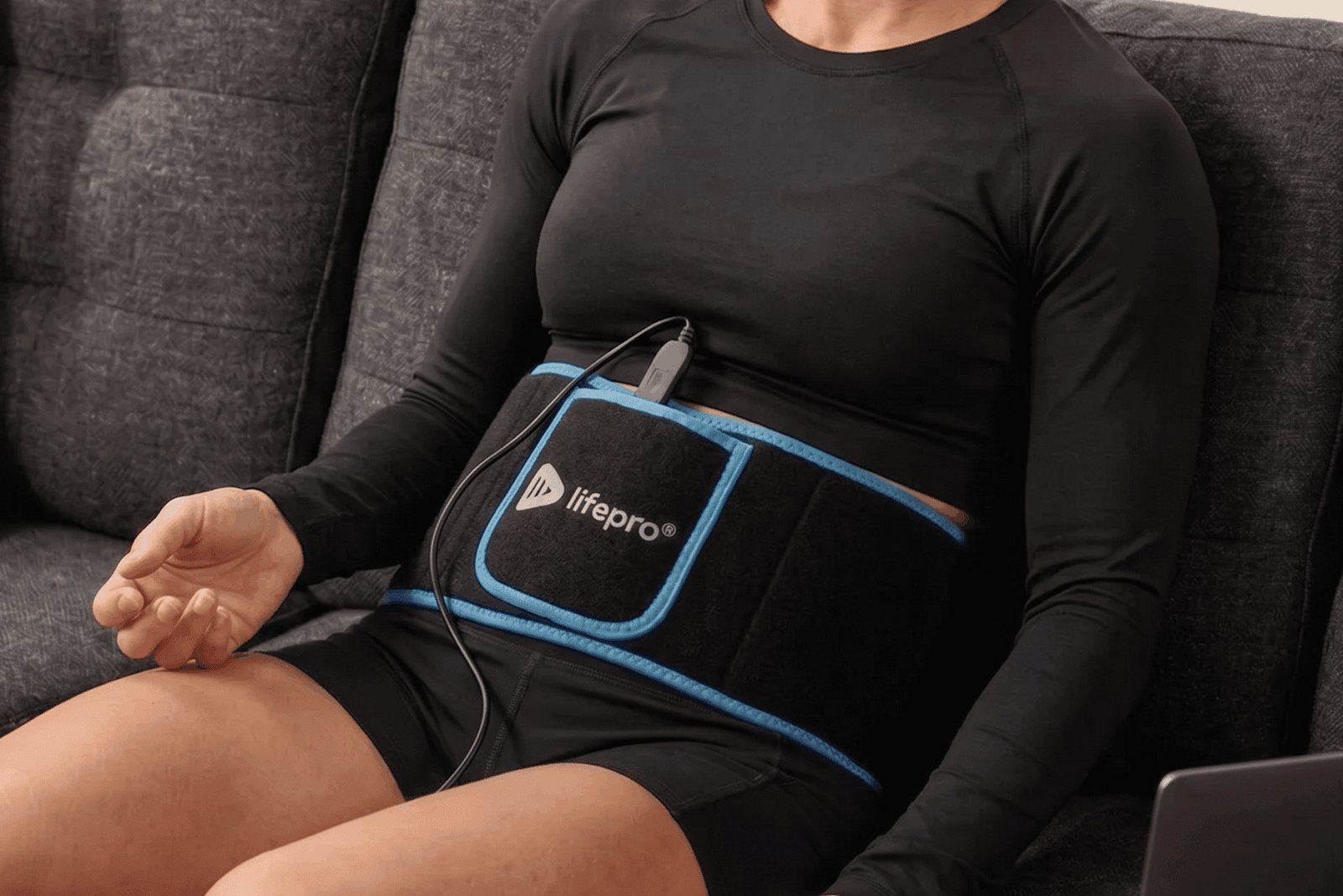
A comfortable at-home red light therapy device for low-effort muscle recovery support
The LifePro AllevaRed light therapy belt is a budget-range RLT device and it provides targeted yet undramatic support for mild muscle soreness. I found the soft, wearable design truly comfortable, which made daily use a realistic part of my recovery routine. However, as it offers only a relatively modest intensity and covers limited targeted areas, it is better suited to localized recovery than to large muscle group treatment. Overall, I found it to be a very solid option for beginners, as using it provided incremental relief from muscle and joint soreness. That said, if you’re a high-level athlete, you may find it simply too weak.
Flexible and comfortable design
Simple controls
Multiple belt color options
Good entry-level option
Power bank sold separately
Mid-level intensity
Limited coverage area
Red light therapy is gaining popularity as an accessible at-home recovery tool, promising improved circulation, reduced inflammation, faster muscle repair, and joint pain relief. The best part is that you can expect it all without ever going to a clinic. However, from my experience, the effectiveness of RLT depends heavily on device intensity, consistency, and coverage.
In my case, the goal wasn’t to replace physio with red light therapy, so I wasn’t willing to invest in a large, supercharged panel system. I wanted something simple and low effort that would fit right into my already existing routine to help manage mild muscle tension I got from sitting at a desk writing reviews and sticking to my workout routine. That’s exactly the spot where wearable red light therapy devices, like the LifePro AllevaRed, come in.
For this review, I set out to find out whether LifePro’s convenience outweighs the trade-offs in power and coverage. After four weeks of testing, the answer is cautiously optimistic, albeit with clear limitations.
Quick glance summary
Product name:LifePro AllevaRed Light Therapy BeltPrice: Budget range (~$200 depending on model)Rating: 4.1/5Verdict:Best budget red light therapy belt for simple at-home useKey specs:Red light (660nm) + near-infrared light (850nm)
Pulsed and continuous light modes
Flexible, comfortable design
Not an FDA-approved medical device
Advertisement
Design and comfort: Lightweight build, secure fit, and practical everyday wear
I appreciate a well-designed product that’s easy to use, so I was glad to find all of these qualities in the budget-range LifePro red light therapy belt. It’s constructed from a soft neoprene-like material with embedded LED panels, molding nicely around the body. Plus, it weighs just around 0.9 lbs (408 grams).
LifePro belt around the waist (Image credit: Wareable)
Unlike most red light therapy belts, even the more expensive ones, the LifePro comes in four different colors—blue, black, grey, and pink. While this may seem like a very small detail, I liked it a lot and thought it could give any user a nice touch of customization.
Overall, I found it highly adaptable to both smaller areas, such as arms, and larger zones, such as the lower back, without feeling restrictive or rigid.
Adjustable fit without excessive pressure
From my experience, a velcro fastening on a belt device is the most comfortable to use, so I was glad to see such a design on LifePro. I liked that it gave a secure fit without a lot of pressure and did not require a lot of readjustment when moving around wearing it or working at a desk. This could also be a huge benefit if you’re having trouble with small straps or hooks.
However, due to its size, the belt was a little bit harder to fit on the narrow parts of limbs, such as forearms and ankles, and I needed to reposition it several times until I got it right. That said, using it on larger areas, such as the lower back and thighs, caused no issues at all. Plus, you can use the added belt extender if needed. I think that here, the LifePro shows great versatility, especially when compared to budget-tier panel-style RLT devices, like the Hooga HG300.
Advertisement
Heat buildup and session comfort
As per LifePro’s recommendations, I kept my red light therapy sessions at around 15 to 20 minutes. During the sessions, the belt generated some warmth, which I found to be mild and consistent, and quite therapeutic.
In my opinion, the warmth added to muscle relaxation a good deal; however, I also noticed that wearing the belt too tightly might become too warm for ultimate comfort. That said, this sensation hugely depends on individual heat tolerance levels.
Build quality and durability
While I couldn’t fault LifePro’s materials or stitching for regular use, they also did not feel premium quality. For example, after a month’s use, my belt’s velcro fastenings showed early signs of wear after repeated use, so I’d say that long-term durability might be verging on average rather than exceptional.
That said, given that LifePro is a budget-tier device, I still found its build and quality to surpass its competition.
Features and usability: Simple controls with moderate therapeutic output
The LifePro belt combines two lights—standard red at 660nm and near-infrared at 850nm. From my experience and our team’s research, both of these wavelengths are commonly used for at-home devices. For you, as a potential user, it means that you can use the LifePro belt for two different purposes:
- Support skin-level issues, such as aging
- Manage deeper tissue problems, such as mild muscle pain
Advertisement
In total, the belt has 105 dual-chip LEDs, producing around 73 mW/cm² level of irradiance. While these numbers might seem high when placed without context, I found that clinic-level devices operate at around 200mW/cm² level of irradiance, so the AllevaRed light therapy belt is actually quite moderate.
Mid-level intensity
In practice, the 105 LEDs with 73 mW/cm² irradiation give a much lower intensity level compared to larger panel systems or clinic-level devices. On one hand, the lower intensity makes the LifePro very safe and comfortable to use, even if this is your first time with red light devices. On the other hand, it meant the results I got with the belt were very gradual and undramatic, particularly for larger muscle groups.
Additionally, the mid-level intensity means you will have to dedicate a bit more time (up to 20 minutes) for your LifePro sessions and really stick to a routine to start feeling improvements.
Simple mode selection
Having tried some more complex red light therapy devices, such as the ATaPa Athena panel, I found the LifePro belt refreshingly easy to use. The belt has three light settings:
- Red light (660nm)
- Near-infrared light (850nm)
- Red and near-infrared combined
Additionally, you can also choose from two light emission settings:
Advertisement
These simple settings meant that I didn’t have to spend a lot of time figuring out how to use the belt, and could jump right into it. In my opinion, this also makes the LifePro RLT belt very beginner-friendly as there’s virtually no learning curve with this device. Additionally, I noticed that most budget-tier devices, while less powerful, are usually much simpler to use than high-powered panels or wearables.
LifePro belt on the thigh (Image credit: Wareable)
For a fair review, I tried both the single light settings and the combined one. The combined light therapy sessions were the ones where I felt my muscles less achy, much faster. Additionally, the combined light gives off the most warmth, which I greatly appreciated for my constantly-tensed shoulders.
Now, as for the continuous and pulsed light, here’s the key difference I found: the continuous light generates more heat, while the pulsed setting is much cooler. So, if I thought a good 20-minute session was due for me, I used the pulsed light, and if I only had the time for a shorter setting, I used the continuous light mode. That way, my longer sessions were cooler without too much heat buildup, while shorter sessions had the benefit of warmth for quicker muscle pain relief.
No advanced customization
Be as it may, the simple mode selections might seem a bit of a downgrade for some users, as there are no app integrations or customizable intensity levels. Again, while this keeps the LifePro belt budget- and beginner-friendly, more experienced users can find the lack of fine-tuning a bit limiting.
Advertisement
Setup and ease of use: Quick to start, easy to stick with
To use the belt, I only had to take it out of the box, wrap it around the area I wanted to use it on, plug it in, and select a mode. That was a very easy starting point, as I did not have to spend a lot of time figuring out what’s what and how to use it.
The wired controller is intuitive, with clearly labeled buttons and no complex settings options. The simplicity worked in my favor, as I usually tend to skip the reading part and want to use the product right away. In my opinion, the simplistic controls may also be appreciated by first-time red light therapy users, too.
The LifePro AllevaRed Light Therapy Belt is a standalone product, and this means there is no dedicated app to connect it to. On one hand, this meant that I did not have to worry about setting up an app to fully use the device. On the other hand, no custom app meant I couldn’t track my sessions so easily or rely on any guided protocols.
Ultimately, while the LifePro offers a higher-level convenience than most budget RLT options, you still have to put in some work into it, too. For example, as there is no guidance and session tracking, you will have to ensure consistent use yourself before you begin to feel the results.
Performance and results: Gradual, localized relief with consistency
To write this review, I used the LifePro red light therapy belt for a month. The first improvements started to kick in at around a week and a half and I felt that my always-tensed shoulders started to feel a bit more relaxed and supple. That said, I found that the best way to target the shoulders was to use the belt cross-body style. This meant I first had to treat one side, and then the other. However, if you’d like to target one area at a time—like the lower back, for example—you wouldn’t need the cross-body approach.
LifePro belt laid out flat (Image credit: Wareable)
Advertisement
Some users might find the LifePro belt not as convenient as large, panel-style devices that can treat almost the entire body all at once, but let’s not forget that LifePro is inexpensive, and the smaller size is one of the trade-offs.
Over the 4-week testing period, I did notice less tension in my muscles, specifically my shoulders, where I used the device the most. Additionally, I felt that my post-workout recovery times were shorter. This might appeal to those with busy schedules, when sometimes the recovery part of a fitness plan gets pushed to some “other time.”
With all that in mind, I must stress that my improvements weren’t overnight, and the longer I used the device, the more noticeable they became.
Limited impact on deeper issues
While I did find the LifePro belt to be a good addition to my recovery routine and the relief of slight muscle tension, I also felt that it didn’t do much for persistent discomfort. One of our Wareable testers, who also helped me review the belt, concluded that after a month’s use, it did not help with her knee problem. So, it may be better to treat the LifePro best as a supplementary recovery tool rather than a primary solution to deeper-rooted problems.
Pricing and positioning: A practical alternative to premium devices
The LifePro AllevaRed Light Therapy belt is a budget-tier device, reasonably priced at $189.99. Overall, compared to other RLT devices in the same category, the LifePro offers a good feature-to-price balance, without inflating the costs or being virtually ineffective.
Naturally, the LifePro is much more accessible than some of its higher-end competitors like the NovaaLab Pad XL, which is priced at around $600. At the same time, I found that LifePro still offers quite good power and irradiance levels, which means it should give you results, just maybe not as fast as the top-tier devices. Additionally, for the cheaper price, you get fewer customization options, but for beginner users they might cause more confusion than benefit anyway.
Advertisement
Larger panel systems and mats—like the ones we reviewed in our article on red light therapy for fat loss—offer much more power and are easier to use if you want to treat larger muscle groups. That said, they’re also much more expensive, with prices closer to $1,000 than LifePro’s $189.99. So, a belt, like the one by LifePro, might be the optimal choice if you’re just starting red light therapy or need a more portable, yet still capable device.
After spending a month testing the LifePro belt, I can confirm that the brand’s claim—convenience first—is exactly the selling point for this red light therapy device. It cannot compete with higher-end devices in the power category, but it does so successfully in convenience and ease of use. That said, this RLT belt offers an affordable introductory device for any beginner user, without sacrificing too much of its effectiveness.
Summary: Should you buy the LifePro red light therapy belt?
After testing and reviewing the LifePro AllevaRed Light Therapy belt, I found that it’s a very practical, easy-to-use budget option for anyone who wants to incorporate red light therapy into their daily routine. A month’s use delivered some improvement in muscle stiffness and shortened my recovery times. That said, real results only started showing later on, as is the case with any at-home red light therapy device.
And while the LifePro is great for beginner users and as a supplementary recovery tool, I found its lower intensity and limited coverage did not replace more powerful devices or clinic-level treatments. That said, as a budget-tier option, it does not promise to replace upscale procedures, so I thought the results matched exactly its market place and promises.
To sum it up, the LifePro AllevaRed Light Therapy Belt may be most suitable for casual, beginner users who prioritize convenience, as here the belt represents great value. But, for deeper issues or stronger therapeutic goals, the LifePro may feel underpowered.
Advertisement
References
- Photomedicine and Laser Surgery. Role of photobiomodulation therapy in tissue repair and regeneration
- BMJ Open. Photobiomodulation therapy combined with exercise improves recovery in musculoskeletal conditions: randomized controlled trial
- Harvard Medical School. Low-level laser therapy: Exploring the evidence
