

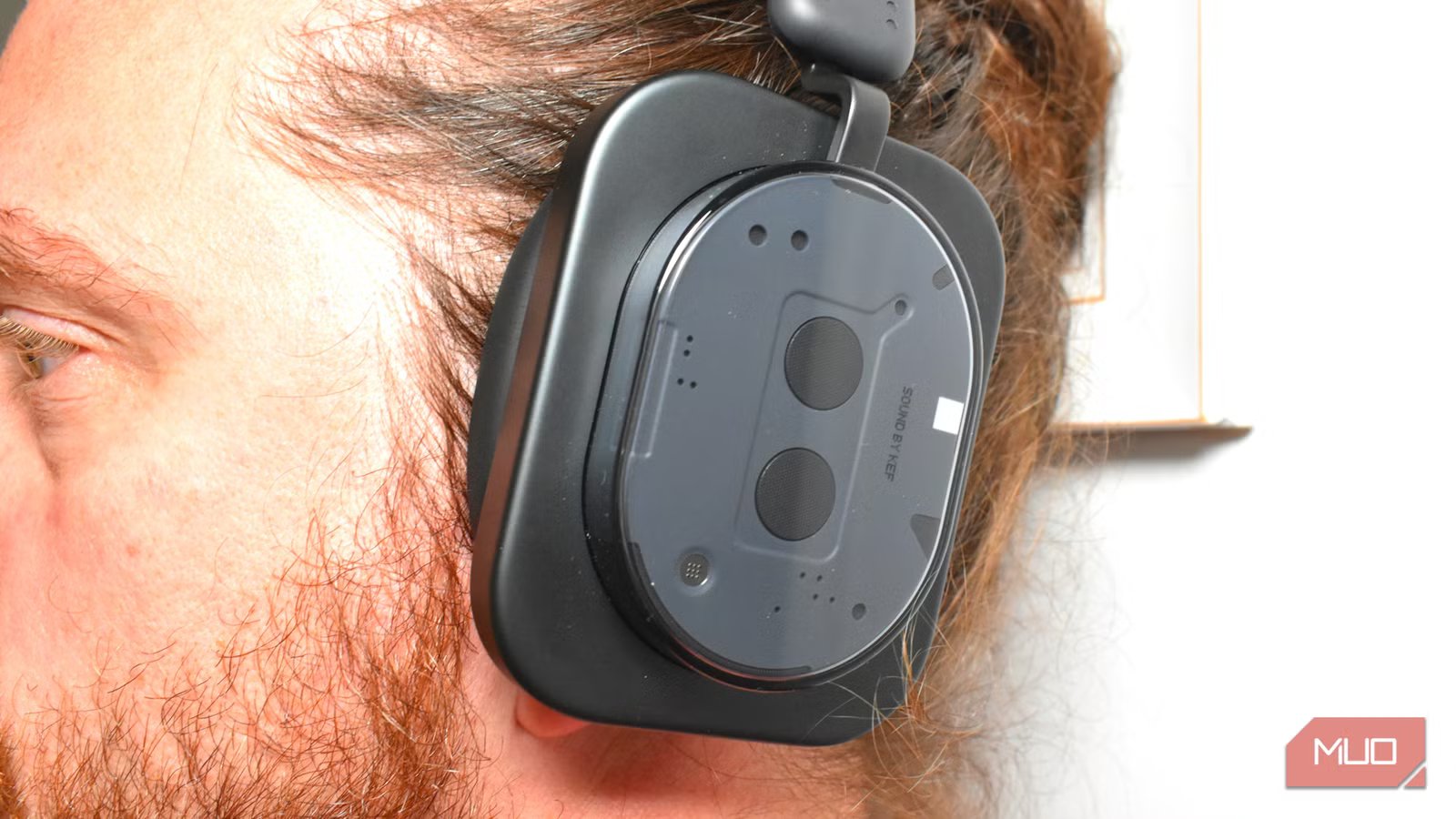
I’ve used noise-cancelling headphones for years, and I always noticed the same strange sensation. Every time I turned ANC on, it felt like my ears were filling with pressure — like being on a plane mid-descent or diving deeper underwater.
I assumed that was how ANC worked for everyone; a slightly pressured feeling that, while not uncomfortable, I could definitely do without.
It turns out I was wrong. That feeling of pressure isn’t normal, and most importantly, it’s not something you have to put up with.
ANC doesn’t actually create, but it can feel like it does
My poor little ears
The feeling of pressure from ANC is fairly common. It even has its own, somewhat odd-sounding name: eardrum suck. I can’t think of many things worse than that, but we’re unfortunately going to have to live with it. Or, as you’ll see, we don’t, but we know that phrase exists.
Anyway, let’s clear up the biggest misconception first: active noise cancellation doesn’t physically change the air pressure inside your ears.
So why does it feel like pressure when I put on certain pairs of ANC headphones and earbuds?
The answer is your brain. It relies heavily on low-frequency sound to understand your surroundings, like distant traffic, air movement, or the hum of a room. When ANC wipes those out, your brain suddenly loses those reference points.
The result is a weird sensory mismatch. Nothing physical has changed, but your brain interprets the silence as pressure or imbalance.
It’s a similar experience if you’ve ever been anywhere unsettlingly quiet, like an anechoic chamber (a chamber designed to absorb sound). The few times I’ve stepped into one of these chambers, I realized that silence really can drive you crazy. I’ve added a video below showing how long people can stand these silent chambers for — it’s never long!
The real cause is low-frequency cancellation
Eardrum suck for everyone
Credit: Christine Persaud / MUO
ANC is most effective at cancelling low-frequency, constant sounds — exactly the kind of noise your brain uses to build a sense of space. Think of things like engine rumble, air conditioning, or distant background noise. These sounds are a core part of how your ears stay oriented in an environment and help you position yourself.
So, when you experience a complete absence of those sounds, your auditory system doesn’t quite know what to do with itself. For some folks, like me, that can turn into the feeling that your ears are being pushed inwards, which is where the “under pressure” feeling comes from.
The big difference is that some people never notice. It’s not something that affects everyone, and even more, sensitivity varies depending on a number of factors. So, if your ears are more tuned to those low-frequency cues, you’re far more likely to feel the effect.
In addition, ANC waveform matching can glitch and eventually end up accidentally amplifying certain frequencies instead of canceling them out, leading to a feeling of pressure.
A 2019 SoundStage!Solo interview explains this phenomenon more eloquently than I could hope to, but the gist of it is that ANC systems deliberately limit how much cancellation they apply at higher frequencies. The result is an uneven sound profile: strong cancellation in the bass, tapering off quickly as frequencies rise.
That imbalance is what creates the sensation. Your brain suddenly loses those low-frequency cues it relies on for spatial awareness, while higher-frequency sounds remain partially intact. The sharper the transition between those two regions — what engineers call the filter slope — the more noticeable the effect becomes.
In short, the more aggressive the ANC, the more likely you are to feel eardrum pressure.
Related
I’ll Only Buy Headphones From These 8 Brands
When it comes to headphones, these are my go-to brands for audio quality, comfort, and more.
Why some ANC headphones feel worse than others
Not all ANC is created equal
The quality of ANC varies massively between devices. That’s why some headphones and earbuds have amazing ANC, while others are basically pointless. This has a real impact on how much “pressure” your ears feel.
Some headphones, especially cheaper models, apply very aggressive noise cancellation with less refined tuning. That can strip away too much environmental sound, making the effect feel unnatural or even disorienting.
Fit also plays a big role. Over-ear headphones tend to create a stronger seal around your ears, which can amplify the sensation. Meanwhile, earbuds can vary wildly depending on the ear tip size and how tightly they sit in your ear canal.
In my case, I noticed the effect far more on certain pairs than others, even though they all had ANC enabled. Stronger cancellation doesn’t always mean better — it often just means more noticeable side effects.
The settings that fixed ANC ear pressure
Eardrum suck be gone
There are actually a couple of ways you can fix the feeling of ANC ear pressure.
The first, and by far the easiest, is to just adjust your headphones. In some cases, putting my headphones on slowly and allowing the air pressure to slowly equalize actually made a difference (despite it not being an air pressure problem, really).
Sometimes, putting the headphones on, letting them get comfy, then lifting the bottom or side of the cup helps alleviate the ANC ear pressure problem, too.
There are ANC settings that can fix ANC pressure, too. I typically use ANC cranked up to the maximum, but realised that when I’m at home in my office, with the kids at school, and it’s just the cats and me, I don’t need it at maximum. Turning down the ANC or switching to Adaptive ANC almost immediately reduced the feeling of ANC ear pressure and kept it that way.
The problem
The fix
What it fixes / why it works
ANC feels too intense or “overbearing”
Switch from full ANC to adaptive ANC
Adaptive modes let some environmental sound through, especially low frequencies, which helps your brain retain spatial awareness and reduces that artificial “vacuum” sensation
Pressure feeling is strongest in quiet environments
Use transparency/ambient mode indoors
In quiet spaces, ANC has very little to cancel, so it can feel unnatural. Letting in a small amount of real-world sound restores balance and removes the sensation
Your ears feel fatigued after long listening sessions
Take short breaks from ANC
Your auditory system can become overstimulated by constant cancellation. Even a few minutes without ANC helps your brain “reset”
The effect feels worse with certain earbuds
Try different ear tips or a looser fit
A tighter seal increases isolation, which can exaggerate the pressure sensation. Adjusting the fit reduces that closed-off feeling
Over-ear headphones feel more uncomfortable than expected
Slightly reposition the ear cups
Small shifts in positioning can change how sound waves interact with your ear, reducing the intensity of low-frequency cancellation
The sensation varies wildly between headphones
Lower ANC strength in the app (if available)
Some headphones allow fine-tuning of ANC levels. Reducing intensity keeps noise reduction while avoiding overly aggressive cancellation
You don’t need to try all of these at once, either. In my experience, just switching ANC modes or slightly adjusting the fit was enough to completely remove that “pressure” feeling.
Related
I Didn’t Realize My AirPods Could Do This—Now I Use Them Differently
Your AirPods can do so much more than you initially thought.
ANC pressure might not be real, but you still feel it
And that’s why you need these fixes
That “pressure” feeling from ANC isn’t real in a physical sense, but the discomfort absolutely is.
The good news is that fixing it doesn’t require new headphones or complicated tweaks. In most cases, it’s just a matter of changing how your ANC works, not whether it’s on or off.
Once you notice it, it’s hard to ignore. But with the right settings, it’s just as easy to get rid of and keep all the benefits of noise cancellation without the downsides.
8/10
Battery Life
Up to 135 hours
Microphones
3
Brand
Nothing
Transducer Size
40mm
