

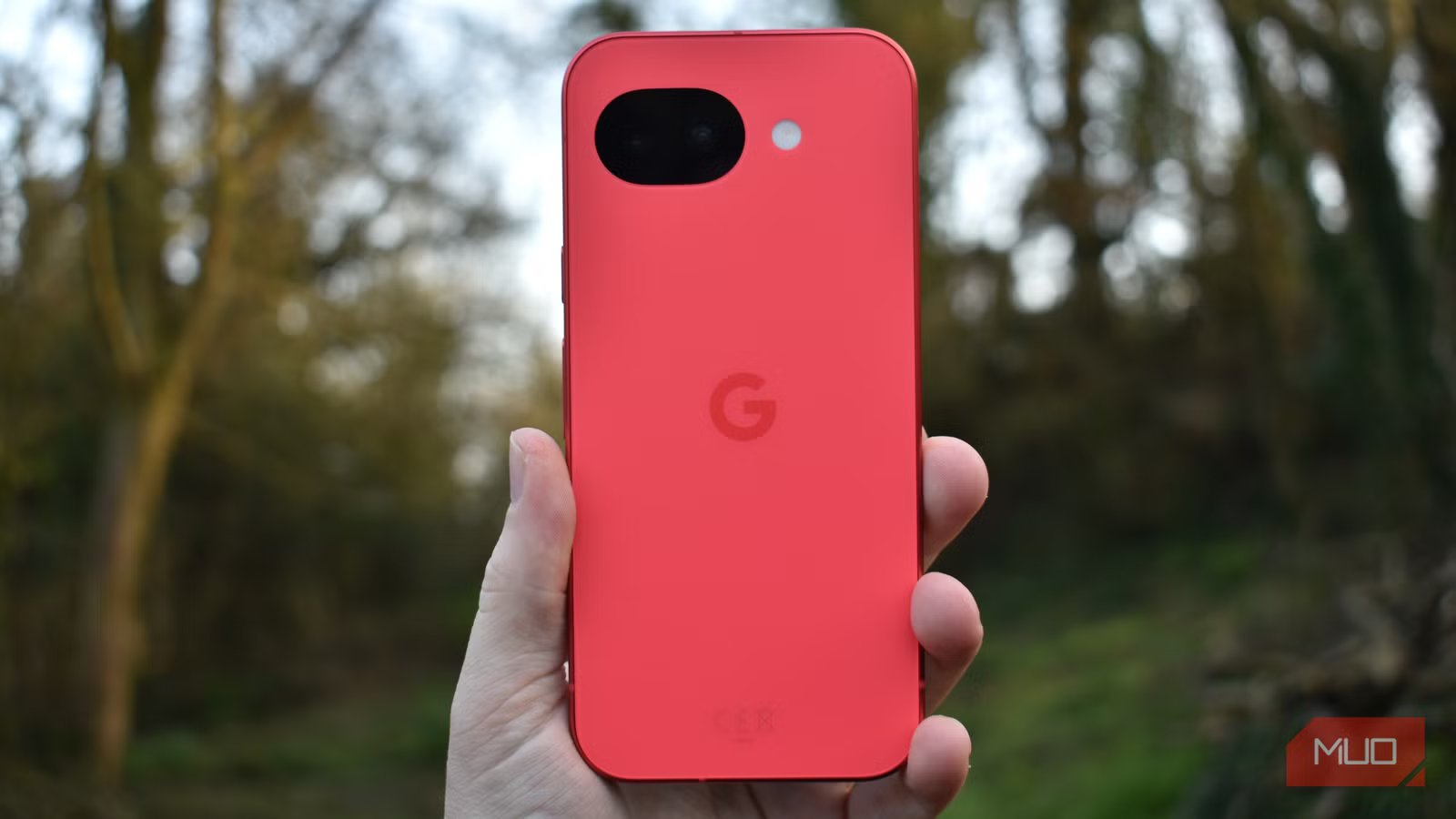
The Google Pixel 10a is a really interesting device. Interesting in that it doesn’t quite do anything that the previous version didn’t do, and yet it still commands a $500 price tag.
Yet for the issues that this creates, I still really quite like the Pixel 10a, because if we’re all being honest, the Pixel 9a was a great phone that was truly fitting of Google’s a branding.
It’s a Google hat-tip acknowledging that it needs to release this device because that’s what it always does, knowing full well that it’s a stepping stone device, the not-quite-an-update that’s enough for another year.
Yet with all that said, the Pixel 10a is a really nice device. I’d hesitate to call it budget-focused, because 500 bucks is still a decent whack. But for a lower-mid range device, it’s a great option.
7/10
SoC
Google Tensor G4
Display
6.3-inch Actua pOLED display, 1080 x 2424 resolution, 60-120Hz, 3000 nits peak brightness
RAM
8GB
Storage
128GB, 256GB
The Google Pixel 10a is a budget-oriented smartphone with a flat back and long battery life. It’s powered by the same Tensor G4 chip as its predecessor, and many key specs are identical to the Pixel 9a. However, you do get a brighter screen, better modem, new software features, and Android 16 with seven years of software support.
Pros & Cons
- Lightweight, smooth design
- No camera bump, flat back
- Decent camera performance for price
- Not really an upgrade
- Same specs as Pixel 9a
Specifications and availability
The Google Pixel 10a is available right now, starting at $500, in Lavender, Berry, Fog, or Obsidian. I have the Berry colorway, and I’m infatuated with it; I wish all smartphones were this bright and eye-catching. It actually makes me not want to keep it safe in a case, as I do with all my other phones.
As with Google phones, there are considerable trade-in benefits depending on your device; you can snag nearly the full device price with the right trade-in unit.
SoC
Google Tensor G4
Display
6.3-inch Actua pOLED display, 1080 x 2424 resolution, 60-120Hz, 3000 nits peak brightness
RAM
8GB
Storage
128GB, 256GB
Battery
5,100 mAh
Ports
USB-C
Operating System
Android 16
Front camera
13MP
Rear camera
48MP wide camera, 13MP ultrawide camera
Dimensions
153.9mm x 73mm x 9mm
Colors
Lavender, Berry, Fog, Obsidian
Weight
183g
Charge speed
23W wired, 10W Qi wireless charging
IP Rating
IP68
Bluetooth
Bluetooth 6
Return of the Pixel
Same same, but different
As you may have gathered, the Pixel 10a isn’t an enormous upgrade. In fact, it features many of the same features as last year’s Pixel 9a: a Tensor G4 processor backed up with 8GB RAM, with either 128GB or 256GB storage.
The Tensor G4 has been around for 18 months at this point, and its specs are completely known; there isn’t anything particularly new or exciting about it. On the flipside, the G4 is a good chipset. The performance is right for the price, and really, unless you’re desperate to play the latest mobile games at 120FPS, you won’t find many faults with it.
It has been upgraded to support the Exynos 5400 modem, which brings satellite SOS support, and as good as that is, it’s somewhat limited in appeal. Still, it’s a proper upgrade in the context of a middling upgrade experience.
The limitations of the Pixel linger. 8GB RAM isn’t completely terrible, but at the very least, it’s going to cause limitations if you’re trying to use the 10a for multitasking, keeping heaps of tabs open, and other types of demanding processing.
It also means that certain AI features that you find on the higher-specced Pixel 10, 10 Pro, and 10 Pro XL don’t appear here. There are some cloud-based workarounds, such as Gemini Live (rather than a full Gemini Nano model), and it largely does the job. Local AI is handy, but there aren’t many moments you’re not connected to the internet.
However, the biggest upgrade of all on the Pixel 10a is support for Android 16’s desktop mode. This is functionally similar to Samsung’s DeX mode, which first rolled out in 2017 with the Galaxy S8. I must admit, I don’t have much use for this, but it was good to see it working without much effort.
Related
Pixel desktop mode is only good with these three tweaks
Here’s how to get the most out of the Pixel’s desktop mode for maximum productivity.
Small, smooth, and wonderfully flat
The Pixel 10a design is nice
Slimline, smooth, unibody. That’s how the Pixel 10a feels. That’s a nice way for a phone to feel. I mean, it feels the same as the Pixel 9a, which felt wonderful for the same reasons. The lack of a camera bump is always welcome, despite what folks say. Who doesn’t want a device that really is completely smooth?
I know this is all about comparing specs to the Pixel 9a, but let’s skip that for a second. It’s still a fantastically sized device, but it feels so much nicer than my current phone, a Nothing Phone 3, and, in fairness, better than my secondary phone, an Honor Magic V5.
Weighing 183g and measuring 153.9 x 73 x 9 mm, the Pixel 10a is on the compact side of smartphone design. Given that it feels easier to buy an absolute unit of a device these days, the svelte-like 10a feels weirdly sophisticated.
There is other good news on the upgrade front: the Pixel 10a screen receives a big upgrade from Corning Gorilla Glass 3 to Gorilla Glass 7i. It makes the 10a’s screen much more durable than the previous generation, though I’m not on the same level as JerryRigEverything when it comes to testing screen quality.
The screen on the Pixel 10a matches the 9a in almost all areas. It’s a 120Hz 6.3-inch pOLED, with a 1080 x 2424 resolution. Small improvements come to the brightness ratings, though, with the 10a hitting 2000 nits in high brightness mode (previously 1800) and 3000 nits peak brightness (previously 2700). Functionally, it’s responsive, and I can’t fault it at this price.
The Pixel 10a features the same IP68 rating, which again, isn’t an upgrade, but I’m really happy to see the consistency follow through to the next gen. The price is the same, but the quality hasn’t dropped.
Battery that’ll keep you going all day
Wireless is good now
The Pixel 10a has a 5,100mAh battery, which is unfortunately the same as the 9a. But the Pixel 10a does have some fun tricks up its sleeve. The Pixel 10a has improved wireless charging, increasing from 7.5W to 10W, but no Qi2 support. Similarly, wired charging jumps from 23W to 30W, which is a handy little boost.
Overall, charging is a plus point. The Pixel 10a went from 57 percent to 54 percent during a 100 percent brightness 1080p video test, while it also went from zero to 24 percent in 15 minutes, and on to nearly 50 percent in 30.
It’s not mind-blowing and doesn’t compare to ultra-fast chargers, but getting a decent whack of charge in a short time is never a bad thing — and it’s specifically an improvement over the Pixel 9a.
It’s the same cameras, too
Is it a bad thing?
I know the theme of this review is that the Pixel 10a is the same as the Pixel 9a, but I was surprised to see that the camera system is exactly the same. Manufacturers usually make at least some effort to upgrade the cameras, as a focal point of any new device.
But this time out, Google has decided that doing nothing is the right decision. This means the Pixel 10a has the same f/1.7 48MP main snapper, with a f/2.2 13MP ultrawide (same apertures, too), and the same 13MP selfie cam on the front.
I’m not truly complaining. The Pixel 9a was a great camera phone for the price, and the Pixel 10a takes essentially the same shots, so it performs well in a wide range of conditions.
There are some compromises, though. For example, while the Pixel 10a is great for general photography, its maximum 8x zoom isn’t of the highest quality, as you can see in my images of St. Michaels Mount below.
Night shooting is also good on the Pixel 10a, with the images not feeling too overprocessed or artificially brightened. Of course, you’re always getting some brightening with a night mode, as that’s literally its job, but the general output of the Pixel 10a is decent. In the following comparison, the standard image is second.
The Pixel 10a camera also does well when compared to smartphones across a broad price range. In the gallery below, the order is Google Pixel 10a, Nothing Phone 3, Honor Magic V5, and Realme 16 Pro+. As you’d expect, the Honor Magic V5 and Realme 16 Pro+ come out on top, but I’m far from disappointed with the Pixel 10a’s overall camera performance.
The camera does come with some upgrades to the software, though. The Pixel 10-Series’ AI-powered Camera Coach is now available on the 10a, as is Auto Best Take. Given these are two of the Pixel camera system’s unique features, it’s good to see them on the budget-focused Pixel option.
Related
How to unlock every AI feature on your new Pixel
Circle to search, AI image tools and more
Should you buy the Google Pixel 10a?
Not convinced by the Pixel 10a? There are a couple of reasons that it’s a much better buy than you’re thinking.
First, the Pixel 10a is still $500 — the same price as the Pixel 7a that launched three years ago. I know, I know; I can hear you saying “That’s not that impressive.” But really, against the backdrop of memory shortages causing price increases and general market inflation, it’s more remarkable than it sounds.
Is flat pricing enticing? Much more than it sounds, that’s for sure, because although the Pixel 10a isn’t a huge upgrade, it’s way better than the 7a released at the same price all those years ago.
The second is that, really, for $500, the Pixel 10a is a great smartphone. It looks fantastic, has great cameras, decent battery life, and some extra features that keep it punching just above its weight.
On that, it’s a good option for anyone who wants to upgrade without spending a fortune, but more specifically, if you’re coming from an older device. Would more substantial upgrades have been nice? Sure. But is it a great option for five hundred bucks? Absolutely.
7/10
SoC
Google Tensor G4
Display
6.3-inch Actua pOLED display, 1080 x 2424 resolution, 60-120Hz, 3000 nits peak brightness
RAM
8GB
Storage
128GB, 256GB
The Google Pixel 10a is a budget-oriented smartphone with a flat back and long battery life. It’s powered by the same Tensor G4 chip as its predecessor, and many key specs are identical to the Pixel 9a. However, you do get a brighter screen, better modem, new software features, and Android 16 with seven years of software support.
