

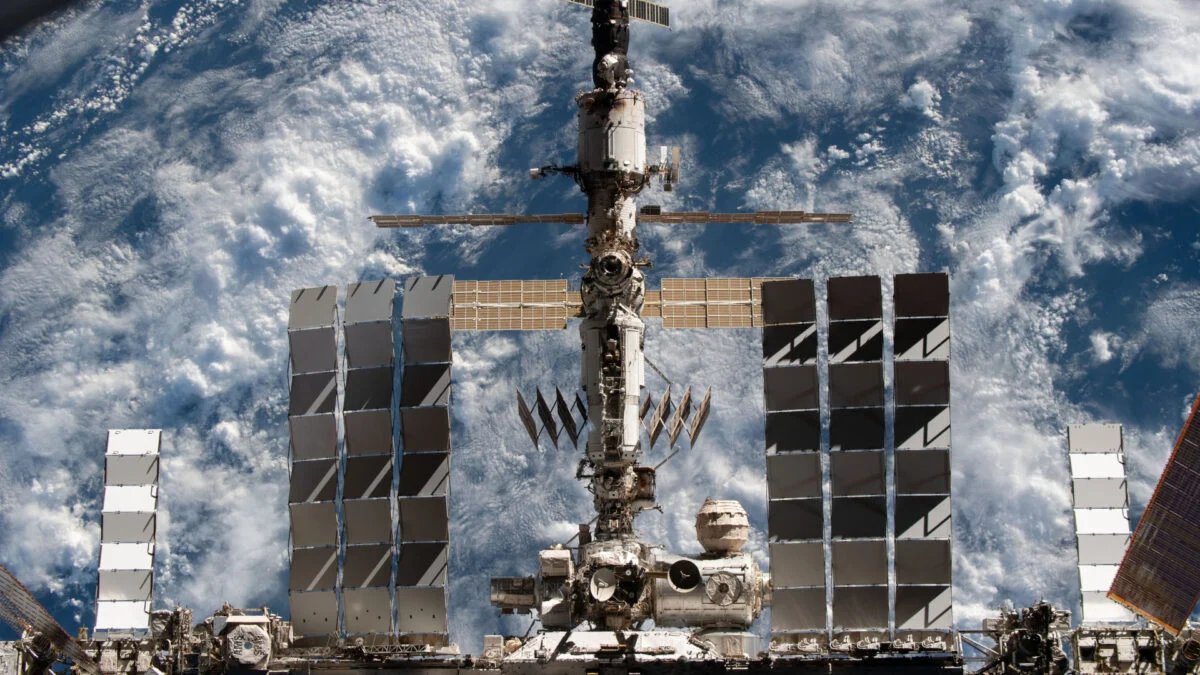
The end may not be so near for the International Space Station (ISS), at least not until a privately owned alternative has filled its orbital shoes.
The U.S. Senate advanced a revised version of a NASA authorization bill, which would delay the retirement of the ISS from 2030 to 2032. The goal of the two-year extension is to “avoid a gap in continuous human presence and capabilities in [low-Earth orbit], thus avoiding ceding leadership to China before commercial stations are ready,” the NASA Authorization Act reads.
Congress added a sense of urgency toward NASA’s plans of maintaining a human presence in Earth orbit by transitioning to the use of commercial space stations. Despite the ISS retirement scheduled in a few years’ time, the space agency has yet to kick off the final round of a competition among industry leaders to develop their own orbital lab. With no clear alternative in sight, U.S. lawmakers are concerned about whether private companies will be prepared to replace the ISS by 2030.
Private replacements
The ISS has served as a home to astronauts in low-Earth orbit for 26 years, but the aging spacecraft is nearing the end of its life. NASA and its international partners are planning on retiring the ISS by 2030, sending the space station to a fiery death through Earth’s atmosphere, where most of it will burn up from the heat of reentry.
In 2021, the space agency created its Commercial Low Earth Orbit Destinations program to develop a replacement for the ISS. Rather than building a space station of its own, NASA wants to be a customer, helping its commercial partners build and operate a space station that its astronauts can use.
In response, companies like Axiom Space, Blue Origin, Vast, and Voyager are finalizing their designs for an orbital space station. The companies are currently waiting for NASA to release a final request for proposals that would specify certain requirements, such as the type of scientific equipment needed on the space station and how long the astronauts should stay on board.
NASA is yet to kick off the second phase of the competition, which would allocate larger amounts of funding to one or two companies to build their space stations.
“NASA has repeatedly delayed the release of a request for proposals for sustained commercial low-Earth-orbit services,” the authorization bill states. “As a result of such uncertainty and delayed procurement action, commercial providers have been unable to scale development and private investment at a pace aligned with the previously articulated NASA objective of de-orbiting the ISS in or around 2030.”
Let the ISS live
The revised authorization bill feeds into the skepticism that private space companies, under NASA’s directive, will be ready to deliver a commercial space station within the next four years.
As such, the bill instructs NASA to maintain ISS operations at its current level for two more years. Additionally, the bill also directs the space agency not to initiate the deorbiting of the space station until at least one of its commercial alternatives is operational.
The bill also requires NASA to release the requirements for the commercial space stations within 60 days and the final request for proposals within 90 days to solicit industry response. Within 180 days, NASA should sign contracts with two or more commercial providers for the space stations, according to the bill.
Until a worthy commercial successor takes its place, the ISS is meant to hold its ground in low-Earth orbit. With its retirement looming, however, the space station has started to show its age. Last year, a safety advisory panel warned that there are growing risks threatening the space station as it nears the end of its use. Hopefully the aging spacecraft can hold on a little bit longer.
