

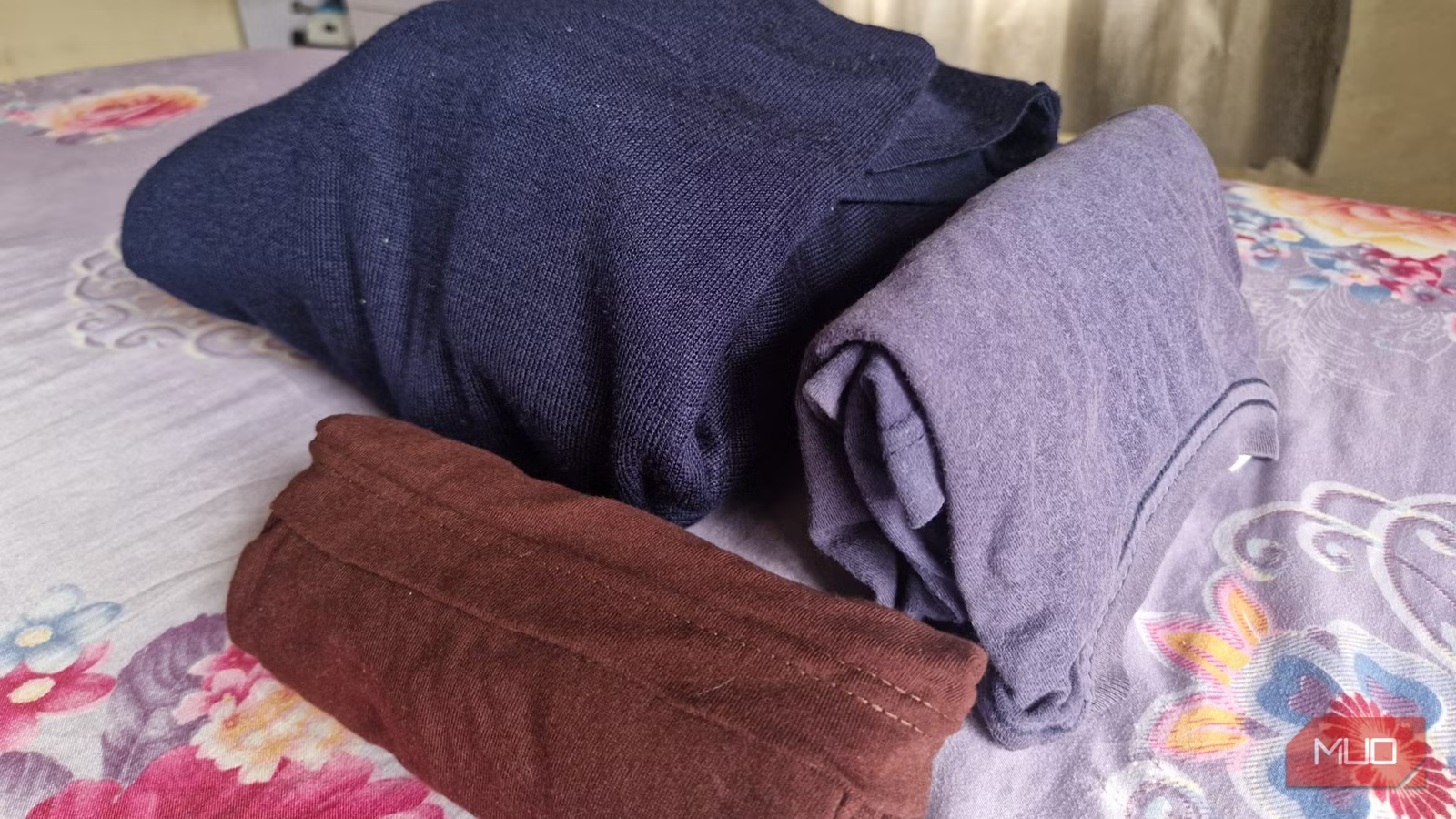
Whether you’re a woman or a man, you’re likely to buy more clothes than you have storage space for, especially if you stay on top of the latest fashion trends. You might need new work clothes, church clothes, winter layers, or just pieces that fit you better than last year’s sizes. There’s almost always a reasonable excuse to bring something new into your closet, but there’s rarely the same justification for buying a bigger dresser. As a result, your drawers turn into a chaotic jumble of shirts, socks, and sometimes fabrics you can’t even identify at first glance. More often than not, the problem is not how much you own but how you fold what you already have.
The way you fold your clothes can either waste half of your drawer’s potential or help you nearly triple its capacity. Since you can’t always buy a bigger drawer, it makes far more sense to learn how to fold in a way that actually works for the space you have.
Fold your clothes like files (the KonMari Method)
Stop stacking them like pancakes
Rather than laying shirts flat on top of each other, where you inevitably destroy the entire pile while digging for the one at the bottom, you fold each item into a compact rectangle that can stand upright on its own. When you store clothes vertically, every shirt becomes visible at a glance, and you can pull one out without disturbing the rest.
Here’s how it works for shirts and tops:
- Lay the shirt flat and fold both side panels toward the center to create a long, narrow rectangle. If the shirt has sleeves, fold each sleeve inward so it fits neatly within its side of the rectangle.
- Then fold the entire strip in half lengthwise, leaving a small gap of about an inch at the bottom edge.
- After that, fold the fabric in half or thirds, depending on its length, until you form a small, firm rectangle.
The shirt should stand upright on its own when you place it in the drawer. If it falls over, the fold may be too loose, or the proportions may not suit that specific fabric.
Related
Yes, I automated laundry tracking with AI — and it suggests clothes to wear
What happens when you mix NFC tags, a local AI model, and a pile of dirty clothes? Surprisingly smart fashion advice.
The steps for pants and jeans aren’t so different:
- Lay the bottoms flat and fold one leg over the other so they align perfectly.
- Fold the pants in half, bringing the leg hems up toward the waistband, leaving a small gap again.
- Then fold the pants in half or in thirds to create a compact rectangle that can stand upright.
- Store them vertically with the spine of the fold facing up, so you can easily identify the pair by its color or fabric.
The goal of this technique is to remove clothes without disrupting everything around them, though items can occasionally topple when you pull out a neighboring piece. To keep your rows standing tall and tidy, you can use small cardboard boxes, repurposed shoeboxes, or inexpensive drawer dividers to support each section. If you fold each piece firmly and consistently, however, you may not need the extra support.
Of course, you might have some clothes that work better stacked than filed, such as socks or underwear. In those cases, place them inside small boxes that act as built-in dividers. Instead of excavating an entire stack to reach the bottom, you can lift the whole box out, grab what you need, and slide it back into place without causing a mess.
Roll your clothes the right way
Smaller fabric burritos, more space
The Ranger Roll is often considered the gold standard for rolling clothes, and it comes straight from military packing traditions where space and efficiency matter. You start by folding the bottom hem of a shirt or the waistband of a pair of pants upward slightly to create a small cuff. You then fold both side panels toward the center to form a long, narrow rectangle. From there, you roll the shirt tightly from the collar down, or the pants tightly from the hem upward. Once you finish rolling, you fold the cuff back over the entire roll to lock it in place. The result is a compact, secure packet that holds its shape and does not unravel when you dig through a bag or drawer.
This method works especially well for travel or drawers that offer little breathing room. That said, rolling extremely tightly for long periods can strain delicate fabrics. The elastic in socks is particularly vulnerable, and an overly tight roll can stretch it out permanently over time.
For everyday drawer storage, aim for a roll that feels firm and structured without squeezing the life out of the material. When you find that balance, you preserve both your space and the lifespan of your clothes, especially if you love to find and collect vintage clothes.
Layer and wrap entire outfits together
For when you want fewer wrinkles
This bundle-wrapping technique works by wrapping several garments, such as shirts, pants, and lightweight jackets, around a soft central core, like a small pouch of underwear or a rolled pair of socks, layer by layer. Instead of folding each piece into separate stacks, you fold each garment inward over the one before it, creating a single, interconnected bundle. Because the clothes stay aligned and are wrapped rather than sharply creased, you minimize wrinkles across multiple items at once.
Here’s how you can create a bundle:
- Arrange your clothes from most tailored to least tailored, placing structured pieces like jackets on the outside and softer items like T-shirts toward the center.
- Lay your most tailored item flat on a surface with the collar side down, and the sleeves extended outward.
- Place the next item on top at a 180-degree angle to the first, so if the first piece lies vertically, the next one lies horizontally. Position each garment so that the collar edges meet near where your central core will eventually sit. In most cases, you should arrange shirts vertically and pants horizontally to create a balanced structure.
- Once you have layered all your clothing, ending with your T-shirts in the center, place a soft, flat central core in the middle of the pile. Choose something non-essential for the core, since it will be the hardest piece to access once everything is wrapped.
- Begin with the innermost layer, then wrap the T-shirts around the core. For each shirt, fold the sleeves over the core before bringing the body of the garment across it. As you wrap each layer, smooth out any gathered fabric to keep it flat and taut.
- Continue working outward, wrapping one layer at a time, until you reach your outermost tailored pieces, such as jackets and pants, which should fully encase the bundle.
Bundle wrapping works best for capsule wardrobes or those on a minimalist journey, where you curate a coordinating few pieces that you plan to wear together. It’s less practical for everyday drawer use when you pull individual items at random, since unwrapping the bundle requires you to handle every garment inside it.
You just need a better folding technique
At the end of the day, drawer organization comes down to setting up a system that supports the way you actually live, so you can find what you need without turning your entire dresser inside out.
Whether you go all in on the KonMari method, adopt a few rolling techniques, or experiment with bundle wrapping, even small adjustments can add up to a more functional drawer. You don’t need to overhaul your entire wardrobe overnight to see a difference. Pick one technique from this list, try it on a single drawer this week, and pay attention to how much easier it feels to keep everything in order.
