

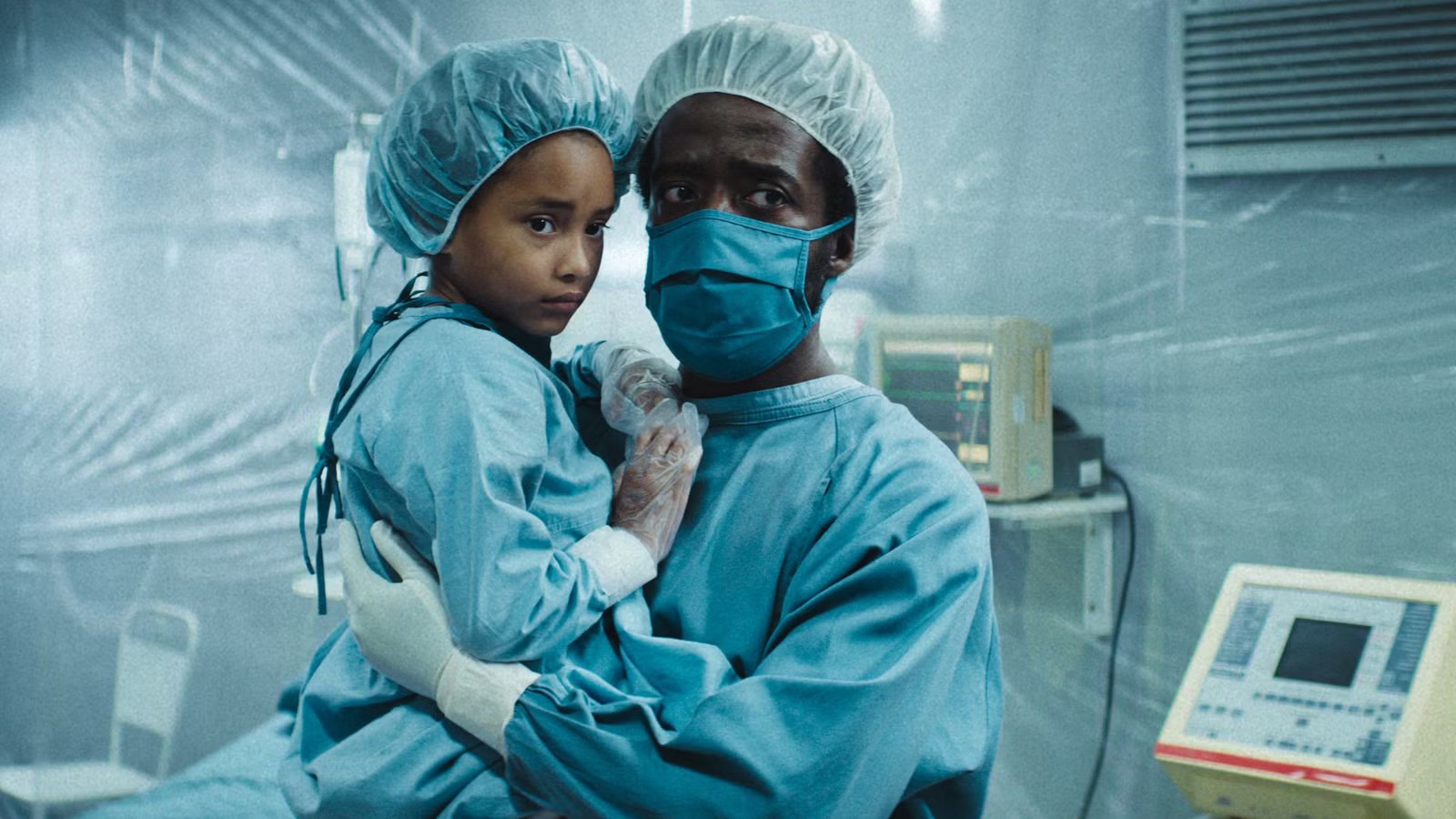
Radioactive Emergency is a new Netflix drama about a real incident that happened in the Brazilian city of Goiânia in 1987, when radioactive material from an abandoned radiotherapy device spread throughout the local community. By the end, four people would be dead, homes would be lost, and over 100,000 people would be checked for signs of radiation contamination.
Radioactive Emergency joins the ranks of gripping TV shows based on true stories, although if anything, the true story of the Goiânia accident is even wilder than what is depicted in the Netflix series.
The true story behind Radioactive Emergency
Historically accurate with a few liberties taken
Radioactive Emergency sticks relatively close to the actual events of the Goiânia accident, but streamlines and compresses things, as these kinds of based-on-a-true story shows so often do. Things start as we see in the show: a pair of scavengers named explore an abandoned, partially demolished radiotherapy clinic and find a radiotherapy device that had been left there when the clinic moved to a new location. There had already been some back-and-forth about the radiotherapy device before the scavengers arrived, with one of the owners of the clinic attempting to remove it four months prior but being stopped by Ipasgo, an insurance organization. While that dispute was being played out, a guard was hired to watch over the premises, but they were not at work when the scavengers explored the building. Radioactive Emergency mostly passes over these details.
Inside the device was a small capsule containing caesium chloride, made with the radioactive isotope caesium-137. The scavengers took the device home, and eventually one of them was able to free the caesium from its protective coating of steel and lead. The caesium was powdery in texture and glowed blue, a bad sign, but he didn’t know that. He sold it to a local scrapyard for scrap. The scrapyard owner, Devair Alves Ferreira, was also intrigued by the powder and took it home, where it showed it to friends and family. He also gave some away, including his brother Ivo, who took it home and showed it to his young daughter Leide, who was fascinated. He then sold some of the parts from the radiotherapy device to a different scrapyard.
People in the area were getting sick around this time, but one of the only ones to draw a connection between the illnesses and the powder was Devair Ferreira’s wife Maria Gabriela, who reclaimed the sold parts from the scrapyard and transported everything to a local health center where she figured the medical professionals could figure out what it was and what to do with it.
While Radioactive Emergency skips over some of these details, by and large it translates things pretty faithfully. The most notable differences are the name changes. The names of the scavengers are changed, Devair Ferreira becomes Evenildo, Maria Gabriela becomes Antonia, and little Leide becomes Celese.
Was Márcio a real guy?
Kind of
The show chooses to focus the show around Márcio (Johnny Massaro), a young nuclear physicist visiting his family in Goiânia when he gets a call to help investigate the strange material that Maria Gabriela had dropped off at the health center. Márcio is based on actual physicist Walter Mendes Ferreira, who really was visiting his family when he was called to help. The show incorporates real moments from the journey, like when Walter turns on a scintillometer (which isn’t generally used to detect radiation, but they weren’t sure what they were dealing with yet), saw it jump as they approached the health center, figured it was defective and had it replaced. In reality, it was working just fine, which was terrible news.
That said, Márcio isn’t precisely based on Walter Ferreira, and is more a composite character of several people involved in the real-life incident, collapsed into one person for the sake of dramatic cohesion. Márcio ends up at the center of pretty much every major event, which stretch the truth somewhat. Still, it’s difficult to sell a tragedy that’s the result of so many different diffuse causes, so giving viewers an anchor helps.
As the show goes on and people become aware of what’s at risk, the public panics. Although it doesn’t keep their names, four people die on the show as in real life: two men who helped open the radiotherapy device for Devair Ferreira, Admilson Alves de Souza and Israel Batista dos Santos, die from contamination. Maria Gabriela, who brought the caesium to the attention of the authorities, also dies. Most tragically, the 6-year-old Leide dies. She was buried in a fiberglass coffin lined with lead, and the scene where rioters object for fear that her body could contaminate the ground is very real.
Assessing the damage
Radioactive Emergency exposes the past
Credit: Courtesy of Netflix
The show keeps going like that, sticking mostly to the facts but changing things for the sake of expediency, with interpersonal drama added in to give viewers characters they can sympathize with.
Radioactive Disaster does a good job of giving viewers an idea of the scale of the damage, including a panic about potentially irradiated cardboard sent to recycling companies in the state of São Paulo before the nature of the danger was clear. In the actual story, contamination was found on three buses, 42 houses, 14 cars, five pigs, and fifty thousand rolls of toilet paper.
Further watching
Radioactive Disaster obviously recalls Chernobyl, another tight drama you may find so gripping you’ll finish in a night. But while Chernobyl is based on a very famous radioactive disaster, Radioactive Emergency tells a story far fewer people know about, which makes it more surprising and perhaps even more important. The idea that just 93 grams (3.3 oz) of radioactive material distributed in an urban area could cause this much fear and pain is frightening.
And if Radioactive Disaster is too much of a stressful watch, there are other completed Neflix series to check out.
Release Date
March 18, 2026
Network
Netflix
Directors
Fernando Coimbra, Iberê Carvalho
Cast
Paulo Gorgulho
Dr. Benny Orenstein
Ana Costa
Antônia “Tininha”
Bukassa Kabengele
Evenildo
