

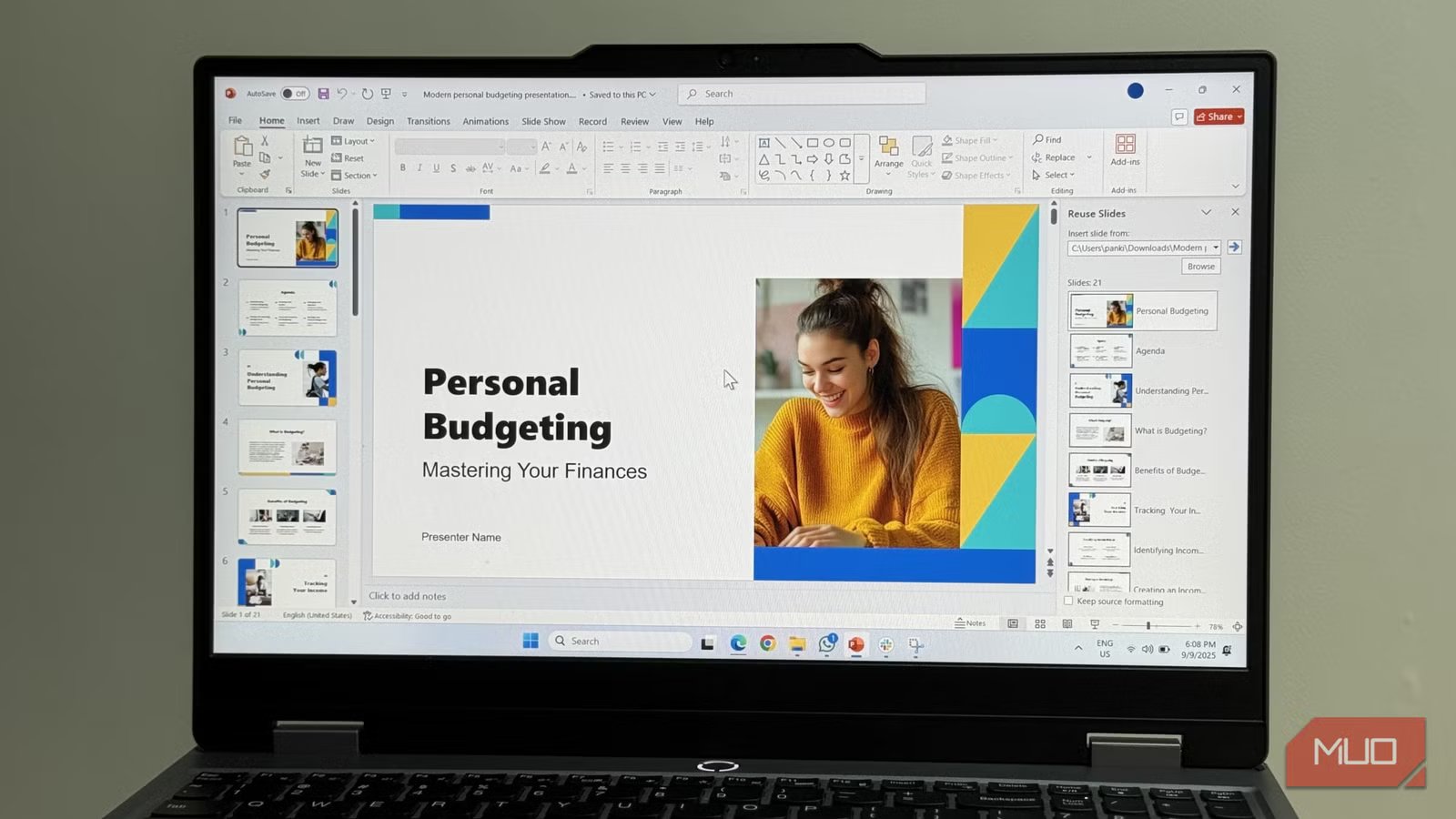
I’ve sat through more than my fair share of presentations, via Microsoft PowerPoint or Google Slides, and nothing derails my focus faster than inconsistent spacing in a slide deck. I notice text boxes that are so tight beside ones with generous spacing on the same slide. Likewise, I’ve seen bulleted lists with unreasonable gaps between points, no space after paragraphs, or unreasonable distances between the bullet and the text. Instead of following the message, I just find myself fixating on the tight line spacing, uneven margins, and inconsistent gaps between the elements.
The good news is that this is entirely avoidable. Once you know where to look, you can bring consistency to your slides without much effort.
Template and master slide configuration
Start at the source
The biggest spacing mistake you can make is trying to fix everything one slide at a time. I’ve seen how quickly that turns into a losing battle, with small inconsistencies creeping in no matter how careful you are. Instead, you should define your spacing rules at the template level, so every slide inherits them automatically and stays consistent without constant manual adjustment.
In PowerPoint, go to the View tab, find the Master Views group, and select Slide Master. In Google Slides, the equivalent is Theme Builder, which also sits under the View tab. From there, you can set your line spacing and paragraph spacing for text placeholders once, and every new slide built on that layout will respect those rules by default.
Even if you’re working with a deck that has gone off track, you wouldn’t need to start over. Just look for the Reset button in PowerPoint, usually near the New Slide option in the Slides group. When you click Reset, it’ll force the slide’s elements back into alignment with the master, clearing out any inconsistent formatting that has crept in.
You can also save yourself future frustration by locking in your preferred text box settings. Once you’ve created and formatted a text box exactly the way you want it, right-click its edge and choose Set as Default Text Box. From that point on, every new text box you create will follow those same settings.
Fine-tuning paragraph and line spacing
Get precise with your paragraph adjustments
The default spacing settings in most presentation tools come from word processors like Microsoft Word and Google Docs, and what works in a document doesn’t always translate well to slides. Slides need more intentional spacing, which means you’ll often need to override those defaults. In PowerPoint, you can do this by expanding the Paragraph group on the Home tab, while in Google Slides, you’ll find the same controls under the Format tab.
Start by adjusting the Before and After paragraph spacing fields. If you want clean, predictable line breaks without unexpected gaps every time you press Enter, set both values to zero. This keeps your text blocks consistent and prevents spacing from shifting as you edit. For line spacing, the standard presets like single or double rarely look right on slides. Instead, choose Multiple so you can enter decimal values such as 1.4 or 1.25, which gives you much finer control over how dense or open your text appears depending on your font and layout.
When you want to move to a new line without creating a new paragraph (and the extra spacing that comes with it), use Shift + Enter instead of just Enter. This inserts a line break within the same paragraph, which helps you keep your spacing tight, predictable, and under control.
You should also keep an eye on AutoFit. It automatically shrinks text or adjusts spacing when a text box becomes too full, and while that can be useful in some cases, it often works against you when you’re trying to maintain consistency across a deck. Since most Office apps enable it by default, it’s worth turning it off in PowerPoint so it doesn’t override your manual settings and introduce inconsistencies. Click File -> Options -> Proofing -> AutoCorrect Options… and uncheck the AutoFit options.
Managing formatting when importing text
Don’t let pasted text bring its baggage
Screenshot by Ada
A major source of spacing inconsistency in slide decks comes from the text you paste into them. Text copied from Word documents, emails, or web pages typically carries hidden formatting (things like line spacing values, paragraph rules, and spacing multipliers) that clashes with your slide’s template. You can’t avoid copying and pasting, but you can control how that content behaves once it lands in your deck.
Instead of using the default paste option, always choose Keep Text Only or Paste without formatting. On a Windows machine, the Ctrl + Shift + V shortcut makes this quick and removes the need to dig through right-click menus. When you paste this way, you strip out any hidden formatting and allow your slide’s predefined spacing rules to take over, which keeps everything consistent.
Bullet lists also need a bit of extra attention. In Google Slides, especially, applying bullets can sometimes act as a local override that ignores your template’s spacing. If your bullets still look off after pasting as plain text, select the text, head to the Format tab, and choose Clear Formatting. This usually resets the list and brings it back in line with your theme’s settings.
Related
PowerPoint Is Better, but I Still Use Google Slides More—Here’s Why
Sometimes, convenience beats features.
Spacing is the bedrock of great slides
You might not view spacing as important as color palettes or typefaces, but it determines how polished your slides look and how easily your audience can follow along. When your spacing is inconsistent, it throws off the entire presentation, no matter how good the content is.
If you set your spacing at the template level, take control of your paragraph settings, and stay disciplined about stripping formatting when you paste text, you’ll remove most of the common problems before they even show up. Do that consistently, and your slides will look clean and intentional, allowing your audience to stay focused on the message you’re there to deliver.
