

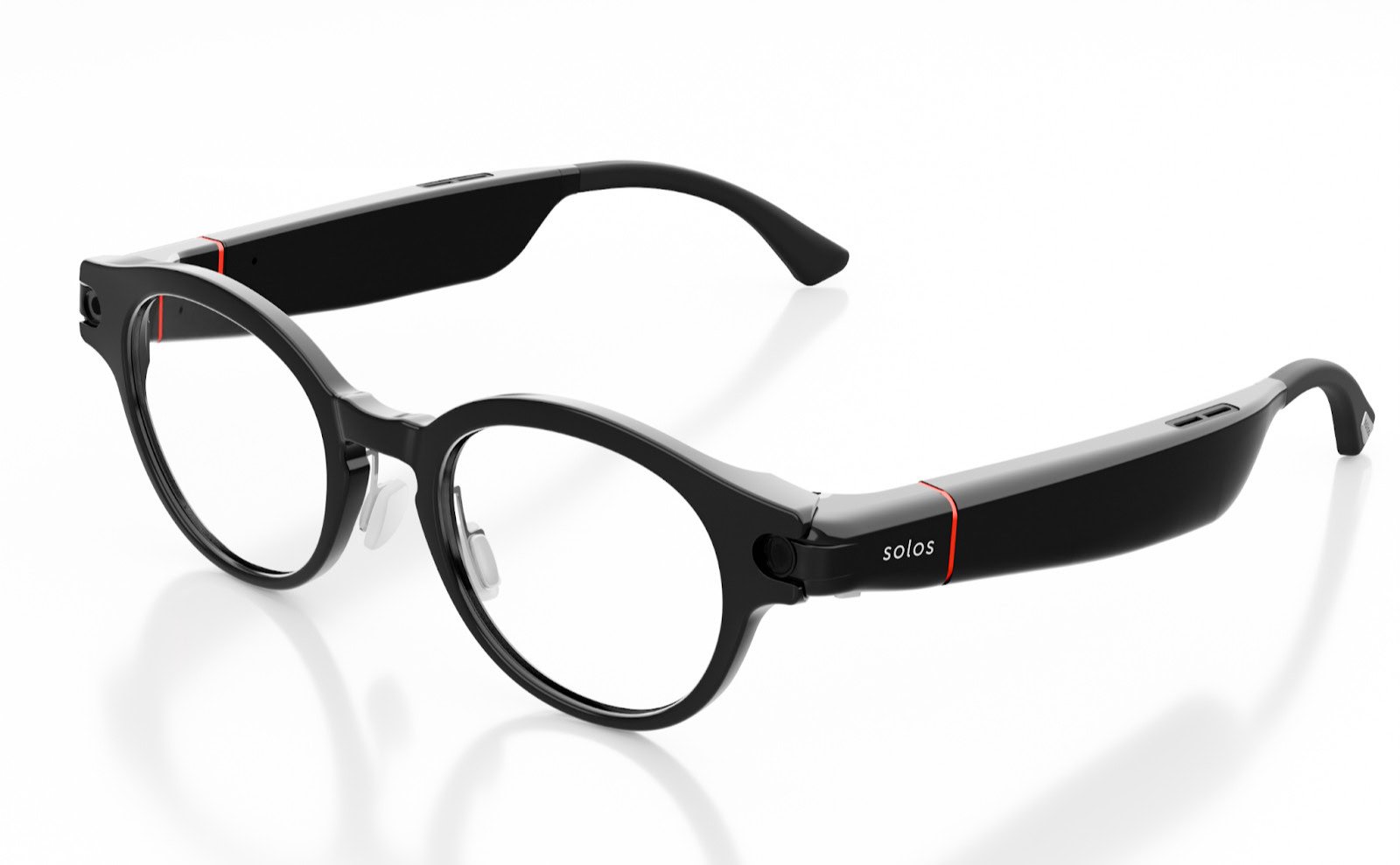
The ongoing CES 2026 has already introduced a variety of interesting wearables. Now, the new Solos AirGo V2 comes into play trying to enhance a key factor: utility. These smart glasses aim to replace the constant habit of pulling out a smartphone by integrating a high-resolution camera with multimodal AI that can “see” and “hear” alongside the user.
Solos AirGo V2 smart glasses feature a 16MP camera to power multimodal AI
The most significant hardware change in this second generation is the ultra-slim 16MP camera. Equipped with electronic image stabilization (EIS), it captures photos and Full HD video while the wearer is in motion. The company also worked on adding an important segment to these devices: battery life. Previous iterations of smart eyewear often struggled with battery drain during media capture. However, the AirGo V2 uses a low-power Wi-Fi architecture specifically designed for live video streaming.
This camera isn’t just for recording memories; it acts as the “eyes” for the built-in AI. Through the SolosChat 3.0 platform, the glasses can cloud connect to several major AI models. The list includes ChatGPT, Claude, Gemini, and DeepSeek. This allows users to look at an object, sometimes in a foreign language, or a complex document and ask for a translation or explanation in real time.
Modular design with swappable batteries
Solos retains its signature “SmartHinge” design for these glasses. This means that owners will find a high degree of customization. They can swap the front frames to change their style or even choose frames that make the camera less obvious depending on the setting. The temples—the “arms” of the glasses—house the battery and directional speakers. In another pro-battery life decision, these temples are swappable, meaning you can keep a spare on hand for longer days.
The company also previewed a new 1,100mAh portable charging case at the show. This case follows the same modular logic, allowing users to charge one set of battery temples while wearing the other, effectively stretching the device’s utility across multiple days. It is clear that autonomy was a key factor when designing this wearable.
Real-world applications
Solos is also positioning the AirGo V2 as a tool for accessibility and professional workflows. Through a partnership with Envision, the glasses can assist the blind and low-vision community by identifying objects and describing scenes via voice. On the professional side, a collaboration with Deutsche Telekom explores how these glasses can be used in secure enterprise environments to automate tasks hands-free.
The interaction model feels more natural than previous versions. It uses wake-word activation and supports back-and-forth dialogue. This makes the glasses feel less like a computer on your face and more like a quiet assistant.
Pricing and availability
The Solos AirGo V2 have a starting price of $299. While additional frame styles are sold separately, the base price puts it in direct competition with other mainstream smart glasses. The new portable charging case is expected to follow in the second quarter of 2026. As the market for wearable AI grows, the AirGo V2 wants to win over the public by solving everyday problems and boosting battery life.
