

Arresting supporters of Palestine Action is “censoring” their free speech and “does more harm than good”, a Trump administration official has said.
Sarah Rogers, the US undersecretary for public diplomacy, was asked in an interview with the news platform Semafor whether the British government should allow supporters of the proscribed terror group to protest.
“I would have to look at each individual person and each proscribed organisation,” she said. “I think if you support an organisation like Hamas, then depending upon whether you’re coordinating, there are all these standards that get applied.
“This Palestine Action group, I’ve seen it written about. I don’t know what it did. I think if you just merely stand up and say: ‘I support Palestine Action,’ then unless you are really coordinating with some violent foreign terrorist, I think that censoring that speech does more harm than good.”
MPs voted to proscribe Palestine Action as a terrorist organisation in July 2025, despite concerns the move could risk criminalising legitimate protest, after the pro-Palestine group broke into RAF Brize Norton and vandalised planes.
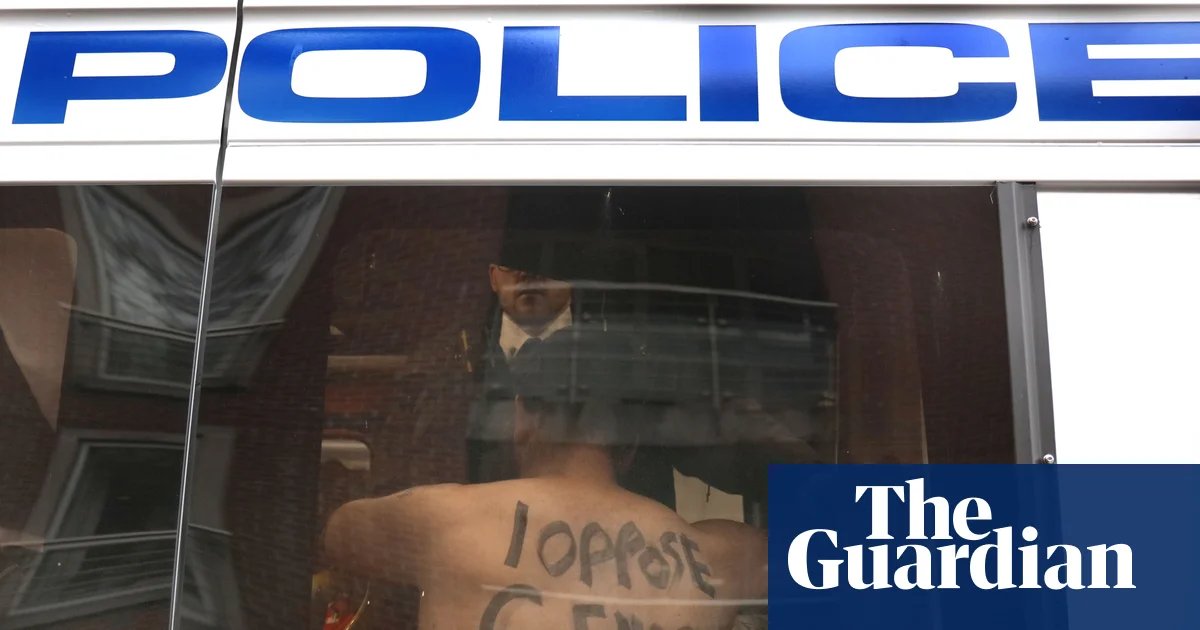
More than 2,000 people have been arrested for expressing support for Palestine Action since, many for holding signs reading: “I oppose genocide, I support Palestine Action.”
Donald Trump’s administration has been heavily criticised for launching an unprecedented assault on free speech in the US, including by arresting Mahmoud Khalil, a former Columbia University student and permanent resident who led pro-Palestinian protests in the US.
The president has said TV networks that cover him “negatively” could be punished by the government and proscribed antifa as a “domestic terrorist organisation”.
Rogers, along with senior members of the White House such as the vice-president, JD Vance, has been a persistent critic of a perceived lack of free speech in the UK. She recently compared Britain under Labour to Vladimir Putin’s Russia after Keir Starmer said Elon Musk’s X could be banned over its AI tool Grok being used to edit pictures of real people to show them in revealing clothes such as bikinis.
In the interview, she was accused by a Semafor journalist of being “silent” on “the most widely censored form of political speech in Europe”, namely “pro-Palestinian speech”.
“I haven’t been silent on that,” she said, adding that she was once asked by a London radio station whether she agreed that the phrase “globalise the intifada” should be banned. “I said I don’t find it acceptable. I’m from New York City where thousands of people were murdered by jihadists,” she said, referring to the 9/11 terror attacks.
“I don’t want an intifada in New York City, and I think anyone who does is disgusting, but should it be legal to say in most contexts? Yes. You and I have uttered that phrase on this programme, and hopefully even the British government doesn’t want us arrested.”
In December, the Metropolitan police and Greater Manchester police announced they would arrest anyone chanting the words “globalise the intifada” or holding a placard with the phrase on it.
In a joint statement at the time, the Met commissioner, Mark Rowley, and the GMP chief constable, Stephen Watson, said: “The words and chants used, especially in protests, matter and have real-world consequences. We have consistently been advised by the CPS [Crown Prosecution Service] that many of the phrases causing fear in Jewish communities don’t meet prosecution thresholds. Now, in the escalating threat context, we will recalibrate to be more assertive.”
