

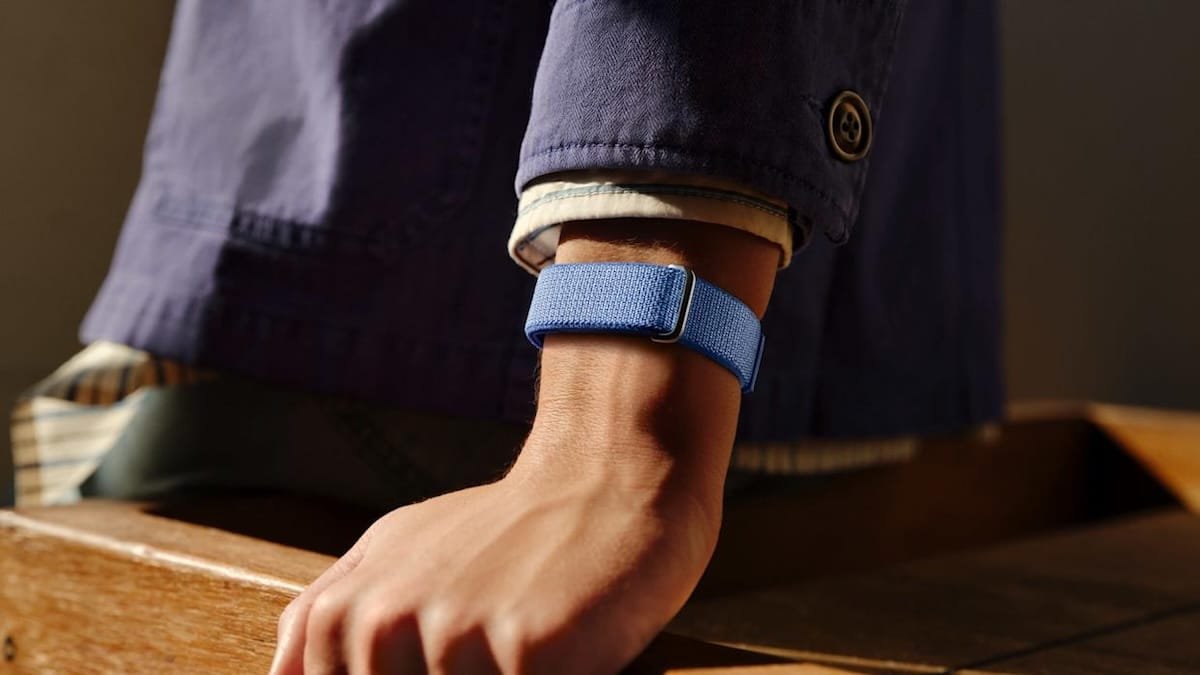
Fitbit Air looks like a cheap WHOOP rival, but that only tells part of the story. As someone who has worn WHOOP for a few years, I see Google’s $99 tracker as a very different kind of product, simpler, lighter and built around optional Premium rather than a full recovery subscription.
Fitbit Air vs WHOOP 5.0 at a glance
Fitbit Air
✓Lower $99.99 upfront price
✓No required subscription for core tracking
✓Lighter 5.2g pod
✓Seven day battery life
✓Optional Google Health Premium
✓Better fit for simple passive health tracking
WHOOP 5.0
✓Deeper recovery platform
✓Longer 14 day battery life
✓26Hz heart rate sampling
✓More wear locations
✓145+ supported activities
✓Better fit for serious training and recovery
You can check Fitbit Air on Amazon, while WHOOP is available from the WHOOP website.
Price and subscription
The price difference is the easiest part of this comparison to understand. Fitbit Air costs $99.99 upfront and core tracking works without a required subscription, while Fitbit Premium remains optional at $9.99 per month. It also comes bundled with Google AI Pro and Ultra plans, so that’s something to be aware of.
That paid layer adds Google Health Coach and extra Premium features, but it is not needed just to keep the device useful. This gives Fitbit Air a cleaner entry point for people who want passive tracking without signing up for another annual payment.
WHOOP 5.0 takes the opposite route. The hardware has no upfront cost, but membership is required and starts at $199 per year, with higher tiers going up to $359 per year.
That changes the long term maths quickly. Over three years, Fitbit Air can stay close to $100 if you skip Premium, while WHOOP lands between $597 and $1,077 depending on the membership tier.
Design and comfort
Both devices remove the screen, so the phone app does most of the work. That means no glancing at stats on the wrist, no widgets and no on-device workout controls in the traditional fitness band sense.
But Fitbit Air is the lighter device. Its pod weighs 5.2 grams, which makes sense for something designed to sit in the background during the day and overnight.
Fitbit Air
WHOOP 5.0 is heavier at around 10 grams and its pod is also larger. But it gives users more flexibility. It can sit on the wrist, bicep, calf or inside WHOOP apparel, which is useful for gym sessions, contact sports or anyone who dislikes wrist tracking during workouts.
This is a clear split. Fitbit Air wins if you want the smallest and least intrusive option. WHOOP wins if placement flexibility is part of the reason you want a screenless tracker. Granted, Fitbit may over time introduce other wearing options.
Whoop 5.0
Sensors and health tracking
As far as sensors, a big technical gap is heart rate sampling. WHOOP 5.0 samples heart rate at 26Hz, while Fitbit Air sits around 0.5Hz, or roughly once every two seconds.
That does not automatically mean WHOOP will always be more accurate in every situation. Fit, placement and algorithms still count. But on paper, WHOOP is clearly built for denser continuous heart rate capture.
Fitbit Air still covers the main health metrics. It tracks heart rate, SpO2, skin temperature, sleep and readiness style data. It also includes PPG based AFib alerts and Cardio Load.
WHOOP covers heart rate, SpO2 and skin temperature too, but its platform leans harder on interpretation. ECG and blood pressure insights belong to WHOOP MG, so they should not be treated as standard WHOOP 5.0 features. But they are there is you opt for this version of the device.
Fitness and recovery
Fitbit Air supports more than 40 auto detected activities. That should cover normal users who want workouts recognised without building their life around training metrics.
WHOOP 5.0 supports more than 145 activities and has the more developed recovery system. Its core experience revolves around Strain, Recovery, sleep coaching, WHOOP Age and Pace of Aging.
Fitbit Air should not be dismissed as basic though. Cardio Load uses a TRIMP based approach, which gives Fitbit’s training load system a stronger foundation than many people may expect from a small screenless tracker.
The difference is how far each platform goes. Fitbit Air gives users useful health and fitness context. WHOOP tries to turn that context into a daily recovery and training plan.
But you can get more with the Fitbit. Air brings Readiness, Cardio Load and Google Health Coach through Premium, so Google is clearly moving in the same direction. But Gemini based coaching still needs to prove itself in daily use.
Sleep
Sleep tracking is one of the closer parts of this comparison, but WHOOP does more with the data after the night is over. Fitbit Air covers the basics with sleep stages, sleep score and Smart Wake, while WHOOP 5.0 adds sleep need, sleep debt, sleep consistency and bedtime targets tied directly to recovery.
That is the important difference. Fitbit can tell users how they slept and fold that into readiness style insights. WHOOP tries to calculate how much sleep a person needs, how much they missed and what that means for recovery the next day.
WHOOP connects sleep need, strain, recovery and bedtime guidance into one system. If you train harder, sleep badly or build up a deficit, the app adjusts the recommendation around how much sleep you should aim for and how ready your body is to perform.
Battery and charging
Battery life is one of WHOOP 5.0’s stronger hardware advantages. It lasts up to 14 days, while Fitbit Air is rated for up to seven days.
Fitbit Air still looks practical for normal use. Google says a five minute charge gives around one day of battery life, so a short top-up should be enough if you forget to charge it overnight.
WHOOP has the better charging setup for continuous tracking. Its slide-on PowerPack lets users charge while still wearing the device, while Fitbit Air uses USB-C charging and needs to come off the wrist.
Which one makes more sense
Fitbit Air makes more sense if you want a screenless tracker that covers the basics but don’t want to fork out a lot of cash. It is lighter, simpler and easier to recommend to someone who wants passive health tracking without a full recovery platform.
WHOOP 5.0 makes more sense if recovery is the reason you are buying. The longer battery life, more frequent heart rate sampling, broader wear positions and deeper coaching system give it a clear edge for serious training.
So the split is fairly clean. Fitbit Air wins on price, weight and subscription flexibility. WHOOP 5.0 wins on battery life, wear options, sampling rate and recovery depth.
That makes Fitbit Air a real threat, but not because it beats WHOOP at its own game. It makes screenless health tracking cheaper and easier to try, while WHOOP remains the more complete option.
You can check Fitbit Air on Amazon, while WHOOP is available from the WHOOP website.
Tech specs comparison
Feature
Fitbit Air
WHOOP 5.0
Release
May 2026
April 2025
Hardware price
$99.99 once
$0 upfront with subscription
Subscription
Optional, $9.99 per month, bundled with Google AI
Required, from $199 to $359 per year
Display
None
None
Built in GPS
No
No
Sensors
PPG, SpO2, skin temperature, gyroscope
PPG, SpO2, skin temperature, ECG on MG
Heart rate sampling
About 0.5 Hz, every 2 seconds
26 Hz
AFib detection
PPG based alerts
FDA cleared ECG on MG only
Blood pressure
Not supported
Daily estimates on MG only
Battery life
Up to 7 days
Up to 14 days with PowerPack
Charging
USB-C, 5 minutes gives 1 day
Wireless slide-on PowerPack
Charging while wearing
No
Yes
Water resistance
50 metres swim proof
10 metres for 2 hours
Weight
5.2g pod only
About 10g pod only
Activities tracked
40+ auto detected
145+ supported
Wear locations
Wrist only
Wrist, bicep, calf, apparel
Core focus
Passive health tracking
Recovery and performance coaching
