

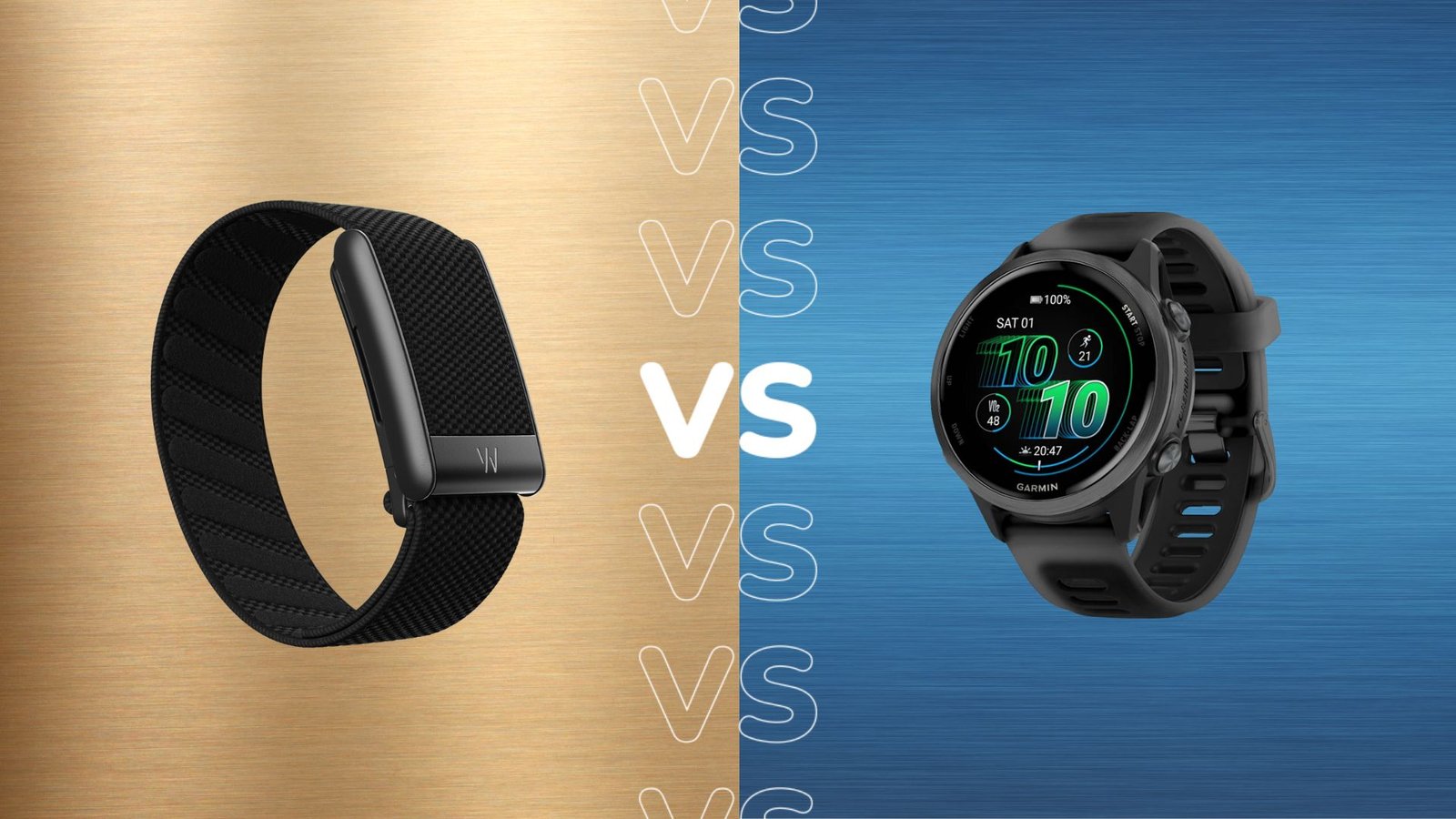
Deciding between a Whoop strap and a Garmin smartwatch can feel like a tough job, as both promise accurate tracking capabilities. That’s where we at Trusted Reviews come in.
We’ve reviewed countless Garmin smartwatches alongside many Whoop straps, and we’ve compared our experiences and answered key questions about both brands below.
Think an Apple Watch might suit you better? Our Whoop vs Apple Watch and Garmin vs Apple Watch guides can help iPhone users decide which wearable to go for. Otherwise, our list of the best Garmin watches and best fitness trackers is bound to have an option for you.
Price and Subscription
Buying a Whoop is a totally different experience from buying a Garmin tracker. Whoop operates as a subscription model, whereby to access the app and supporting features, you’ll need to pay an annual membership fee.
There are three memberships to choose from: One, Peak and Life. We’ll discuss the overall differences here, but for a more in-depth look, visit our Life vs Peak vs One guide.
Advertisement
One is the cheapest with a starting price of £169/$169 for a 12-month subscription, and includes a Whoop 5.0 device, charger and a Jet Black CoreKnit band.
Peak is the mid-range offering, with a starting RRP of £229/$229 for 12 months. This plan also comes equipped with a Whoop 5.0 device but also includes a wireless PowerPack and an Obsidian SuperKnit band.
The most expensive of the three subscriptions is Life, which starts at £349/$349 for 12 months and comes with an upgraded Whoop MG device, a wireless PowerPack, and a Titanium SuperKnit Luxe band. We’ll mention both straps throughout this article, but for more information, check out Whoop 5 vs Whoop MG.
Finally, at the time of writing, Whoop is offering a one-month trial for anyone who wants to try the service before committing to a full 12 months. This trial includes a new or certified pre-owned Whoop 4.0 device, wireless battery pack and a new SuperKnit band.
Although there is a subscription available for Garmin, Connect Plus, it isn’t a necessity when using any smartwatch. Otherwise, Garmin offers a huge range of different smartwatches and fitness trackers, starting from £129.99/$149.99 up to £1099.99/$1199.99.
Advertisement
SQUIRREL_PLAYLIST_10207858
What does Whoop give you that Garmin doesn’t?
Whoop bands are lacking one significant feature that’s found in all other Garmin smartwatches and trackers: a screen. While this may seem like a surprising omission, Whoop explains this design should mean you can focus on your health and not get distracted by constant notifications.
Whoop MG. Image Credit (Trusted Reviews)
Garmin smartwatches boast some of the best battery life found in wearables, with the likes of the Fenix 8 boasting up to 29 days of life in smartwatch mode, while others like the Instinct 3 come equipped with a Solar display that keeps the device topped up with solar power. However, once it does come time to fully recharge the device, you’ll need to take it off, which means you’re losing some data tracking.
Garmin Forerunner 970. Image Credit (Trusted Reviews)
Whoop is different. Instead, you can use the wireless Power Pack (which is either sold separately or comes with both Peak and Life subscriptions) to recharge your device without removing the strap. This means you won’t miss a minute of data collection, giving you a truly uninterrupted tracking experience.
Advertisement
Is a Garmin better than a Whoop?
Whether a Garmin is better than a Whoop, or vice versa, boils down to your individual needs and wants from a wearable. If you don’t want to be distracted by a screen showing endless notifications while working out, then the Whoop is an easy recommendation as it’s completely screen-less. On the other hand, if you want a smartwatch that’s almost an extension of your smartphone, then you’ll definitely prefer a Garmin.
Aside from design, there are many factors that could determine whether a Garmin or Whoop strap is better for you. Firstly, Whoop is designed to provide a more in-depth look at your health and fitness, while offering your personalised insight into your data. However, Whoop isn’t equipped with built-in GPS, which could be an issue for those who want to accurately track their routes without needing to have their phone to hand. That’s where Garmin shines.
Garmin route tracking. Image Credit (Trusted Reviews)
Many of the latest Garmin wearables are equipped with multi-band GPS which offers accurate route tracking, regardless of whether you’re surrounded by skyscrapers or in an open field. With this in mind, Garmin is likely the better choice for runners, hikers, mountain bikers and the like.
Otherwise, remember you can track most sports and workouts with either a Garmin or Whoop. It’s worth noting that although Whoop is generally an accurate tracker, and provides useful insights, it doesn’t always pick up when you’ve done a lighter workout. Of course, you can manually start an activity, and add one after the fact, it would be better if it was more reliable for lighter exercises.
You can manually add or start an activity via the Whoop smartphone app
Advertisement
Is Whoop or Garmin more accurate?
It’s worth noting that we’ve found both Whoop and Garmin trackers to be impressively accurate when providing data. However, the lack of screen with the Whoop might be an issue for some, as you can’t see your real-time data without looking at your phone.
We also found with Whoop MG in particular that, while it does offer automatic exercising tracking, it can be rather hit-and-miss, as we noted that it often misses periods of low- to mid-effort exercise.
Plus, as we touched upon earlier, remember that Whoop doesn’t have built-in GPS, so all location tracking is down to your paired smartphone. Considering Garmin’s latest multi-band GPS, which is found in the likes of the Forerunner 970 and Instinct 3, was hailed by us as being the best and most accurate tracking performance available on a smartwatch, the lack of GPS on a Whoop seems a shame.
Garmin Fenix E map. Image Credit (Trusted Reviews)
Otherwise, when it comes to receiving general health, wellbeing and sleep metrics, both Whoop and Garmin trackers do a great job at providing accurate measurements.
Is Whoop the most accurate tracker?
In terms of accuracy, both Whoop and Garmin have proved themselves to offer reliable tracking results across the board. However, both ranges offer a different approach to such tracking.
Advertisement
Whoop offers three scores: sleep, recovery and strain, all of which assess your metrics and give you a score that correlates with how you’ve performed during the day. For example, with the recovery score, factors such as HRV, body temperature and even your daily habits can all contribute to your score.
Whoop Sleep, Recovery and Strain data. Image Credit (Trusted Reviews)
This is similar to Garmin’s morning and newly introduced evening report, which provides wearers with a general yet reliable overview of their sleep, recovery and HRV status while advising whether they should prioritise a workout or rest.
We found Whoop’s sleep tracking capabilities to be among the most accurate, as the score directly correlates to how we felt the following morning. Plus, unlike other trackers, it automatically tracks when we’ve fallen asleep, rather than just lying down in bed.
Specifically with the Whoop MG, there’s also the ability to take blood pressure readings from the device; however, it infers its readings based on heart rate data, which means it isn’t quite as accurate as a traditional blood pressure monitor.
Whoop Blood Pressure reading. Image Credit (Trusted Reviews)
Advertisement
Where Whoop isn’t quite as accurate or reliable is with exercise tracking. As mentioned earlier, we found the automatic exercise tracker was hit-and-miss, while overall functionality is pretty basic for such a pricey tracker.
In fact, many Whoop users, including us during our review, wear Whoop alongside another smartwatch which offers more exercise functionality and advanced metric tracking.
Garmin Vivoactive 6. Image Credit (Trusted Reviews)
With all of this in mind, it’s probably not as clear-cut to hail Whoop as the most accurate tracker, as there are undoubtedly shortcomings to keep in mind. If you’d prefer both health and fitness tracking tools, then we’d suggest a Garmin smartwatch, even one of the cheaper options like the Vivoactive 6, which is “capable of delivering reliable continuous data”.
Having said that, Whoop is still a solid health tracker, so if this is more of a concern for you, then a Whoop band remains a good choice.
Advertisement
How accurate is Whoop’s VO2 max?
VO2 Max is a measure of the maximum amount of oxygen your body can take in and move through your bloodstream during exercise, with the higher the number, the better your cardiovascular fitness is.
Whoop is able to estimate VO2 Max levels through a “proprietary algorithm” that includes a wide range of data points, from physiological metrics, activity and demographic information. Whoop explains that an individual’s results are a “highly personalised estimate that is tailored to your unique physiology and lifestyle”.
While it’s difficult to determine just how accurate Whoop is, it explains that it has developed an algorithm to ensure a VO2 Max reading meets “stringent accuracy requirements”.
Similarly, many more premium Garmin smartwatches, like the Instinct 2, also offer VO2 Max readings, which provide an estimate by analysing performance data during activities like running and walking.
Garmin Instinct 2 VO2 Max reading. Image Credit (Trusted Reviews)
Verdict
Essentially, we’d advise that before you splurge on either a Whoop or one of the best Garmin watches, you should seriously consider what you actually want from a wearable. If you’re looking for a smartwatch that allows you to keep on top of your notifications and has built-in (and extremely accurate) GPS, then a Garmin watch is one for you. Plus, as Garmin has such a varied range of devices, there’s bound to be one that best suits your needs. For example, if you don’t like big and bulky watches on your wrist, then opt for a sleek Venu 4 rather than the rugged Fenix 8 Pro.
Advertisement
On the other hand, if you want a simple yet seriously clever wearable that may not sport the bells and whistles of some of the best smartwatches but is easily one of the best fitness trackers you can buy, then a Whoop has our vote.
The lack of screen allows you to quietly track and monitor your health and fitness, without getting distracted or bogged down by notifications. However, if you do want to check how you’re performing in real-time, then you can simply check your smartphone app instead. Personally, I think it’s better to not constantly track your movement and metrics when exercising, however I know that comes down to individual preference.
