

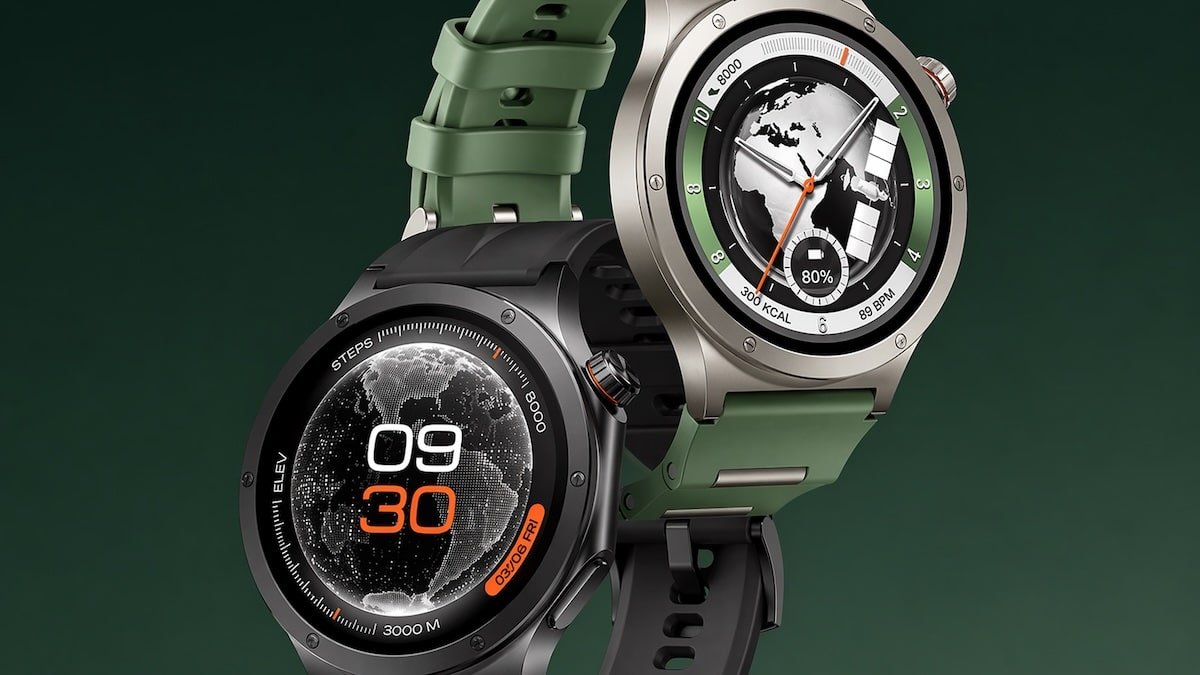
OnePlus Watch 4 arrives with a titanium alloy case, a brighter 3000-nit display mode and Wear OS 6, but after spending time with both versions of OnePlus Watch 3, the upgrade path feels less obvious than the spec sheet suggests. The newer model looks like the better buy for first-time buyers, but a much harder sell for existing owners.
That is because OnePlus already got a lot right with Watch 3. In my OnePlus Watch 3 review and OnePlus Watch 3 43mm review, battery life was strong, GPS performance was reliable and the dual-chip setup avoided many of the usual Wear OS frustrations. Watch 4 improves the package, but it does not reinvent it.
Design is more premium, but size still matters
Let’s start with design.
OnePlus Watch 4 moves to a full titanium alloy case, while the bigger 47mm Watch 3 uses a stainless steel body with a titanium bezel. It sounds like a small detail, but it helps explain why Watch 4 drops to 43g for the main body, compared to around 50g on the older 47mm model.
It is also slimmer at 11mm thick, versus 11.75mm on Watch 3. Again, that does not sound huge, but on your wrist it makes a difference, especially if you wear the watch overnight for sleep tracking or during longer training sessions.
OnePlus Watch 4
At the same time, Watch 3 still has something Watch 4 does not: options. OnePlus eventually released a 43mm version of Watch 3, and for a lot of people that was the better watch simply because it fit better. It kept the same general experience but felt less bulky and easier to wear all day.
Watch 4 goes back to a single larger size. So if the 43mm version was the reason you bought Watch 3 in the first place, the newer model may not actually feel like an upgrade.
OnePlus Watch 3 47mm vs 43mm
The screen upgrade is one of the best changes
Both Watch 4 and the larger Watch 3 use a 1.5-inch round display with 466 x 466 resolution, so sharpness is basically the same. But brightness is where Watch 4 pulls ahead.
Watch 3 tops out at 2200 nits peak brightness. Watch 4 pushes that much further with 600 nits normal brightness, 1500 nits in strong sunlight and up to 3000 nits peak brightness during official sports modes.
That is not just marketing fluff. If you run, cycle or hike outdoors, screen brightness is one of those things you notice immediately. Being able to glance down and read stats without fighting reflections is genuinely useful.
The smaller 43mm Watch 3 sits lower here, with a 1.32-inch display and 1000 nits peak brightness. It is perfectly fine for normal use, but clearly not on the same level outdoors.
OnePlus Watch 3 – 43 and 47m versions
Same chip, newer software
As far as hardware, Watch 4 still uses the Snapdragon W5 platform paired with the BES low-power chip. That is basically the same setup as Watch 3.
So this is not a huge performance jump. Apps should feel familiar, responsiveness should stay strong and battery life remains one of the better parts of the experience. That was already true on Watch 3.
The bigger change is software. Watch 4 launches with OxygenOS Watch 8 and Wear OS 6, plus Gemini replacing the older assistant setup. It is a more current setup, but not dramatically different.
The problem for upgrade buyers is simple: Watch 3 is also expected to get Wear OS 6. So if software is your main reason for upgrading, it probably makes more sense to wait.
OnePlus Watch 3 – 43 and 47m versions
Bigger battery, but not dramatically longer battery life
OnePlus increased battery capacity from 500mAh on the 47mm Watch 3 to 646mAh on Watch 4. You would expect a big battery jump to mean much longer battery life, but officially the numbers stay almost the same.
Both are rated for up to five days in smart mode, three days with heavier use and up to 16 days in power saver mode. That probably means the brighter display and newer software are using up the extra headroom.
That is not a bad thing because Watch 3 already had strong battery life for a Wear OS watch. It just means Watch 4 is not suddenly becoming a two-week smartwatch in full smart mode.
The 43mm Watch 3 is the compromise option here. Its 345mAh battery gives around 60 hours of standard use and seven days in power saver mode, which is fair for a much smaller device.
Durability does improve, though. Watch 4 keeps IP68, 5ATM water resistance and MIL-STD-810H certification, while also adding IP69. The bigger Watch 3 misses that extra layer, and the 43mm version drops the military-grade certification completely.
Health tracking depends on what you care about
All three watches cover the basics well. You get heart rate tracking, blood oxygen, sleep tracking and dual-frequency GPS across the board. But there are a few meaningful differences.
The bigger Watch 3 includes ECG and vascular health tracking, plus snoring risk assessment. For users who care more about deeper health monitoring, that is still a strong reason to stick with it.
Watch 4 moves more toward safety and general wellness. It adds fall detection, emergency rescue and the newer 60s Wellness Overview. ECG is there too, but availability depends on regional approval.
The 43mm Watch 3 is simpler. It drops ECG and wrist temperature tracking, but still keeps the core experience strong enough for most people.
Should you upgrade?
If you are buying your first OnePlus smartwatch, Watch 4 is the easy recommendation. Better materials, brighter display, stronger durability and newer software make it the strongest overall package.
If you already own the 47mm Watch 3, it gets harder. The improvements are real, but they feel like polish rather than a major leap. Better, yes. Necessary, probably not.
And if you own the 43mm Watch 3, the answer may be even simpler. Since Watch 4 still has no smaller version, sticking with the watch that actually fits your wrist best might be the smartest move.
Tech specs comparison
Feature
OnePlus Watch 4
OnePlus Watch 3 (47mm)
OnePlus Watch 3 (43mm)
Release date
April 2026
February 2025
July 2025
Case / materials
Titanium alloy case, PA + fiberglass bottom case, sapphire crystal, fluororubber or mixed fluororubber strap
Stainless steel case, plastic bottom, 2.5D sapphire crystal cover plate, titanium bezel, fluororubber strap
Stainless steel case, plastic bottom, fluororubber strap
Buttons
Rotating crown + flat action button
Rotating crown + flat action button
Rotating crown + flat action button
Size
47.4 x 47.4 x 11.0 mm
47.6 x 46.6 x 11.75 mm
43.2 x 43.2 x 11 mm
Weight
43g main body, 68g with strap
50g without strap, 81g with strap
38g without strap, 67g with strap
Display
1.5 inch LTPO OLED flexible display, 466 x 466, 310 PPI
1.5-inch AMOLED, 466 x 466
1.32-inch AMOLED, 466 x 466
Brightness
600 nits default, 1500 nits sunlight mode, 3000 nits peak in sports mode
Up to 2200 nits peak
Up to 1000 nits peak
Processor / memory
Snapdragon W5 + BES 2800, 2GB RAM, 32GB storage
Snapdragon W5 + BES2800BP, 2GB RAM, 32GB storage
Snapdragon W5 + BES2800BP, 2GB RAM, 32GB storage
Operating system
OxygenOS Watch 8 + Wear OS 6
Wear OS 5 + RTOS
Wear OS 5 + RTOS
Battery capacity
646mAh
500mAh
345mAh
Battery life
Up to 5 days smart mode, 3 days heavy use, 16 days power saver
Up to 5 days smart mode, 3 days heavy use, 16 days power saver
Up to 60h standard use, 36h heavy use, 7 days power saver
GPS / satellite
Dual-band L1+L5 (Beidou, GPS, Galileo, GLONASS, QZSS)
Dual-band L1+L5 (Beidou, GPS, Galileo, GLONASS, QZSS)
Dual-band L1+L5 (Beidou, GPS, Galileo, GLONASS, QZSS)
Connectivity
Bluetooth 5.2, Wi-Fi 2.4G/5G, NFC
Bluetooth 5.2, Wi-Fi 2.4G/5G, NFC, 802.11 a/b/g/n
Bluetooth 5.2, Wi-Fi 2.4G/5G, NFC, 802.11 a/b/g/n
Calling / media
Bluetooth calling, Google Wallet, no eSIM
Bluetooth calling, microphone, speaker, music storage, Google Wallet
Bluetooth calling, microphone, speaker, music storage, Google Wallet
Sensors
Heart rate, SpO2, wrist temperature, accelerometer, gyroscope, geomagnetic, ambient light, air pressure
Accelerometer, gyroscope, heart rate, SpO2, geomagnetic, wrist temperature, ECG, light sensor, barometer
Accelerometer, gyroscope, heart rate, SpO2, geomagnetic, light sensor, barometer
Sports tracking
100+ sports modes, 6 auto-recognised activities, advanced pro metrics
100+ sports modes, 11 professional sports modes
100+ sports modes, automatic activity detection
Durability
5ATM, IP68, IP69, MIL-STD-810H
5ATM, IP68, MIL-STD-810H
5ATM, IP68
Colours
Midnight Titanium, Evergreen Titanium
Obsidian Titanium, Emerald Titanium
Black Steel, Silver Steel
Typical price
$350 (Not confirmed)
$350
$300
Subscribe to our monthly newsletter! Check out our YouTube channel.
And of course, you can follow Gadgets & Wearables on Google News and add us as a preferred source to get our expert news, reviews, and opinion in your feeds.
