

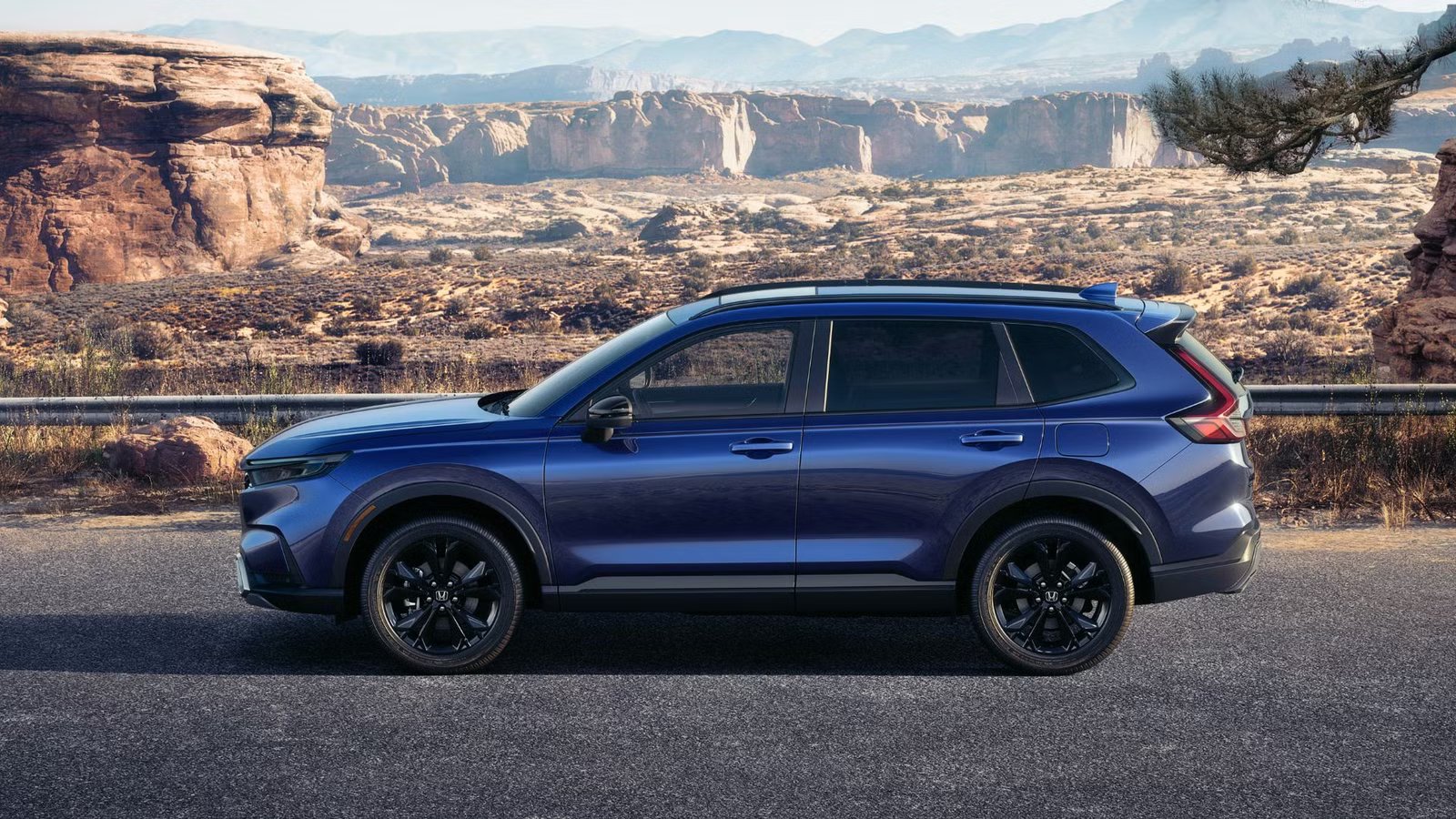
Today’s SUV shoppers want it all: good fuel economy, proven reliability, and a price that doesn’t feel like a financial commitment for the next decade. With costs climbing everywhere else, buyers are paying closer attention to what their vehicle will save them over time—not just what it costs up front.
Compact SUVs have become the sweet spot for drivers who want practicality without the bulk or the fuel bills of larger models. They’re expected to handle daily commutes, road trips, and family duties while staying efficient and dependable year after year.
That’s exactly where the Honda CR-V shines, combining strong fuel economy with the kind of long-term reliability Honda has built its reputation on. It’s a straightforward formula that continues to make the CR-V one of the most appealing SUVs in its class.
In order to give you the most up-to-date and accurate information possible, the data used to compile this article was sourced from Honda and other authoritative sources, including CarEdge, the EPA, RepairPal, and TopSpeed.
Related
10 Honda SUVs You Should Buy Used
These 10 used Honda SUVs offer great reliability, value, and performance for budget-conscious buyers.
Why compact SUV buyers won’t settle for less anymore
Efficiency and reliability are now the top priorities for drivers
Credit: Kia
The priorities for SUV buyers have changed a lot over the past decade. Compact SUVs used to be little more than a practical step up from a sedan, offering extra space and a higher driving position without the bulk of something bigger.
Back then, buyers often put up with average fuel economy and questionable reliability just to get that added practicality. These days, expectations are much higher.
Modern compact SUV shoppers want efficiency, strong reliability, and ownership costs that won’t spiral over time. Above all, they expect a vehicle that can keep up with busy daily life without making them compromise.
Credit: Nissan
There are a few reasons behind this shift. Longer commutes have become the norm in many cities, which means drivers are paying much closer attention to how much their daily drive actually costs.
Fuel prices haven’t exactly helped either, turning good fuel economy from a bonus into something many buyers now expect. Add in growing environmental awareness and more affordable hybrid tech, and today’s compact SUV shopper is far less willing to settle.
Today’s SUV buyers expect more from their vehicles
Credit: Hyundai
Today’s SUV buyers want a bit of everything. They need space for family and gear, running costs that won’t sting at the pump, and the reassurance that their vehicle will still be dependable years down the road.
The idea that you have to sacrifice efficiency or reliability just to get practicality has mostly disappeared. Drivers now expect a well-rounded package that delivers across the board.
In a crowded compact SUV market, that means excelling in areas like fuel economy, ownership costs, build quality, and day-to-day usability. The Honda CR-V manages to strike that balance surprisingly well.
Related
10 budget-friendly SUVs that rarely need repairs
Budget-friendly and dependable: these SUVs won’t break the bank.
Rising fuel costs and longer commutes are changing what buyers want
Reliability and low running costs now matter more than ever
Credit: Honda
Fuel prices have become far less predictable in recent years, and even small swings in the energy market can quickly show up at the pump. For households keeping an eye on their budgets, those changes add up faster than many drivers expect.
That’s especially true for people with long daily commutes. When you’re racking up miles every week, fuel stops stop feeling like a minor inconvenience and start looking like a real monthly expense.
The math is straightforward: more miles driven means more fuel burned and more money leaving your wallet. It’s one reason fuel economy has climbed near the top of the priority list for many SUV shoppers juggling work, family, and everything in between.
Credit: Kia
Not long ago, hybrid powertrains were seen as a pricey niche, something mostly reserved for premium cars. That’s changed quickly, and hybrids are now a normal part of the compact SUV conversation.
Today’s hybrid SUVs deliver noticeably better fuel economy without asking drivers to give up everyday practicality or performance. As fuel prices creep upward and the efficiency gap grows, these models are starting to make more financial sense for drivers who rack up miles.
Reliability still ranks near the top for SUV buyers
Credit: Honda
At the same time, reliability has gone from a nice bonus to something buyers almost expect as standard. More drivers are keeping their vehicles longer these days, so the focus isn’t just on the first few years—it’s on how well that SUV will hold up over the next decade.
Models known for expensive repairs or spotty maintenance records tend to fall off shopping lists pretty quickly. Instead, buyers are gravitating toward SUVs with strong reliability ratings, solid warranties, and a track record of holding up in the real world.
Credit: Toyota
Honda has built a reputation for reliability over decades, and that reputation still carries a lot of weight with buyers. It helps keep resale values strong and gives owners confidence they won’t be dealing with constant repairs down the line.
In a market where fuel savings and low running costs matter more than ever, Honda’s approach to engineering continues to resonate with practical SUV shoppers. The CR-V fits right into that mindset, offering efficiency and the kind of long-term dependability many drivers are looking for.
Related
10 Compact Hybrid SUVs With the Most Cargo Space in 2025
These compact SUVs are the most efficient and spacious you can buy right now.
Honda’s reputation for reliability still carries real weight
Efficiency and dependability are why the CR-V continues to stand out
Credit: Honda
Since it first arrived, the CR-V has carved out a comfortable place in the compact SUV world by doing the basics exceptionally well. It blends everyday practicality with clean design and thoughtful engineering, a formula that continues with the latest model.
The 2026 version builds on that reputation with better efficiency and updated tech aimed squarely at buyers who care about long-term value. It’s still the same well-rounded SUV people expect, just a bit sharper and smarter than before.
A big part of that comes down to the CR-V’s hybrid powertrain. Honda’s two-motor setup works with a responsive engine to boost efficiency while still delivering smooth acceleration.
Unlike some hybrids that can feel a little disconnected, Honda’s system feels natural from behind the wheel. It’s quiet around town, responsive when you need it, and settles comfortably into highway driving.
A roomy cabin packed with everyday convenience
Credit: Honda
Inside the CR-V, the focus is clearly on making everyday driving easier. Materials feel solid, the controls are simple to use, and there’s plenty of cargo space for groceries, sports gear, or a weekend road trip.
Comfort hasn’t been overlooked either. Rear passengers get generous legroom, and smart storage spots around the cabin help keep clutter under control during busy daily routines.
Safety tech is another strong point. The CR-V comes standard with features like collision mitigation braking, adaptive cruise control, and lane-keeping assist, helping reduce stress during long highway drives.
Credit: Honda
For many buyers, that peace of mind is a big part of the appeal. It’s the kind of everyday safety support that makes commuting and road trips feel a little easier.
Reliability is another area where Honda continues to shine. The brand has built its reputation over decades of consistent performance in consumer reviews and long-term ownership studies.
The CR-V follows that same formula. Service schedules are predictable, parts are easy to find, and Honda’s straightforward engineering approach helps keep long-term ownership simple.
Related
The Most Practical Hybrid SUV Available In 2025
Hybrid SUVs are a dime a dozen, but which offers the most practicality? There’s one particular model that deserves serious consideration.
Strong hybrid fuel economy keeps running costs in check
Honda’s reliability record helps make ownership easier over time
Credit: Honda
Fuel economy tends to be the headline number whenever efficiency comes up, and the CR-V Hybrid delivers the kind of figures that make its hybrid setup easy to justify. Depending on trim and driving conditions, the EPA rates front-wheel-drive models at around 43 mpg in the city, 36 mpg on the highway, and 40 mpg combined—comfortably ahead of many traditional compact SUVs.
Of course, efficiency isn’t just about mpg. Real ownership costs also include things like maintenance, insurance, and resale value, and this is where the CR-V continues to make a strong case.
The hybrid system helps here too. Regenerative braking reduces wear on the brakes, which can mean fewer replacements over time, and hybrid technology itself has matured enough that long-term reliability concerns have largely faded.
Low ownership costs make the CR-V easy to live with
Credit: Honda
Insurance costs for the CR-V also tend to stay fairly reasonable. Strong safety ratings and modest engine outputs usually help keep premiums from climbing too high.
Resale value is another area where the CR-V has traditionally done well. Honda SUVs tend to hold their value thanks to steady demand in the used market and the brand’s long-standing reputation for durability.
Put it all together, and the CR-V makes a strong case financially. Its mix of efficiency and strong resale value helps keep total ownership costs lower than many buyers might expect.
Related
10 Small Crossovers With Roomy Interiors And Affordable Running Costs
These small crossovers offer surprising interior space and low running costs, making them perfect for budget-conscious drivers who need practicality.
Why the Honda CR-V remains a standout in the affordable SUV segment
Efficiency, reliability, and practicality keep it near the top
Credit: Honda
In a crowded SUV market where brands love to highlight flashy tech or big performance numbers, the CR-V stands out by focusing on what most drivers actually care about. It combines strong fuel efficiency, a practical interior, solid safety tech, and the kind of reliability that has helped make the CR-V a longtime favorite.
What really keeps the CR-V near the top of the segment is how well it balances everything. You don’t have to trade fuel economy for dependability, or modern features for everyday practicality.
That balance is what makes it appealing to such a wide range of drivers. Whether it’s commuting during the week, hauling family gear on the weekend, or simply keeping long-term ownership costs under control, the CR-V handles it all without much fuss.
The CR-V has kept pace with changing SUV buyer demands
Credit: Honda
As the compact SUV segment continues to evolve, buyers are putting more weight on vehicles that deliver real value over the long haul, not just during the first few years of ownership. The CR-V fits neatly into that mindset.
Where compromise used to be part of the equation, the CR-V shows that drivers don’t have to choose between efficiency, reliability, and everyday practicality anymore. It’s a well-rounded SUV that manages to deliver all three without asking buyers to give something up.
