

I didn’t enjoy using the Redmi Note 13 Pro+ or last year’s Redmi Note 14 Pro+; these devices just didn’t justify the cost, and it almost felt like Xiaomi was intentionally hobbling the devices by pre-installing older software. Still, the brand had an excuse: with Google traditionally rolling out stable Android releases in Q4, Xiaomi claimed that there just wasn’t enough time to have the software ready on devices that launched the following January.
With the Redmi Note 15 Pro+, Xiaomi no longer has that excuse. The stable build of Android 16 was available on June 10, 2025, with Google accelerating the launch window just to ensure brands can use the latest version of Android. However, the Redmi Note 15 Pro+ still runs Android 15 out of the box, and it’s clear now that Xiaomi doesn’t want to deliver long-term updates to its phones.
You may like
Image 1 of 4
(Image credit: Apoorva Bhardwaj / Android Central)(Image credit: Apoorva Bhardwaj / Android Central)(Image credit: Apoorva Bhardwaj / Android Central)(Image credit: Apoorva Bhardwaj / Android Central)
Xiaomi says it is intent on regaining market share in key countries like India, and the brand mentioned it is going back to its roots to do so. Now, I just don’t see that with the Redmi Note 15 Pro+; I used all Redmi Note devices starting with the debut model in 2014, and the series always delivered a great value. Even if Xiaomi switched gears in recent years and turned to the mid-range segment, it wouldn’t have been difficult to roll out a device that excelled in this category.
Just look at the Nord 5; the phone continues to be a great choice in 2026, and it costs a little less than the Redmi Note 15 Pro+. Xiaomi really needs to go back to the drawing board and evaluate just what it wants to do with Redmi Note phones, because right now, it doesn’t look like the brand has a coherent plan.
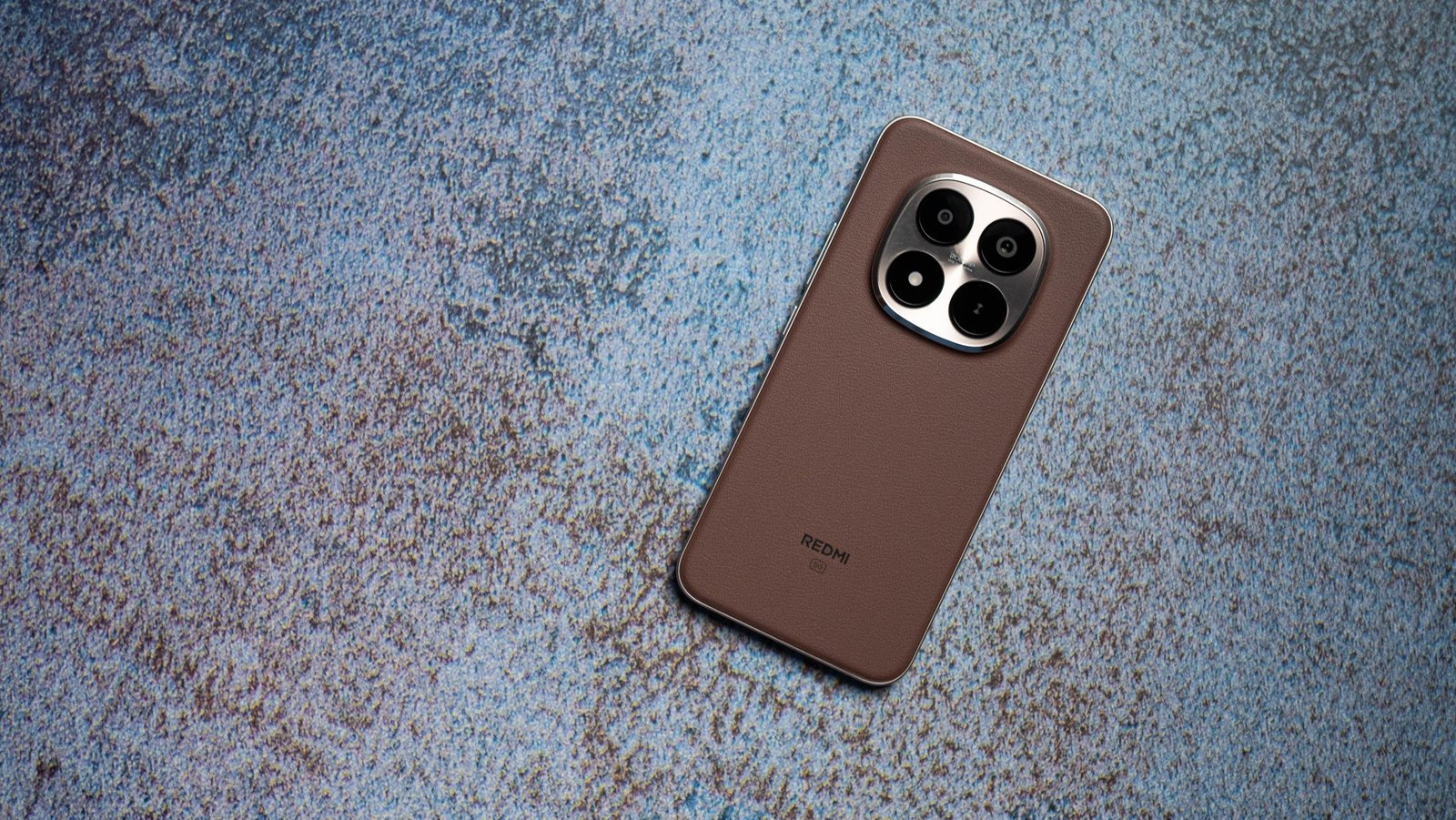
It isn’t that I don’t like everything on the Redmi Note 15 Pro+. The new design is pretty good, and the Mocha Brown model I’m using looks great. The vegan leather finish feels good in-hand, the camera island stands out for all the right reasons, and the slightly bigger 6.83-inch AMOLED panel is a joy to use.
Image 1 of 4
(Image credit: Apoorva Bhardwaj / Android Central)(Image credit: Apoorva Bhardwaj / Android Central)(Image credit: Apoorva Bhardwaj / Android Central)(Image credit: Apoorva Bhardwaj / Android Central)
And thanks to a massive 6,500mAh battery, there are no problems getting the Redmi Note 15 Pro+ to last over a day even with heavy use. The device also gets IP69 ingress protection alongside IP68, giving it the same resilience as high-end devices like the Xiaomi 15 Ultra and Find X9 Pro.
I’m not as enthused about the choice of chipset; the Snapdragon 7s Gen 4 is good enough in daily use, but it just doesn’t have the power that you get with the Snapdragon 8s Gen 3, which is on the Nord 5. I noticed some lag in day-to-day use, particularly around launching the camera and saving photos to the gallery, and the Redmi Note 15 Pro+ doesn’t handle intensive games well. Also, the use of UFS 2.2 storage modules is annoying given that most other devices get UFS 3.1 storage in this category.
The biggest bugbear has to do with the cameras; the Redmi Note 15 Pro+ uses the same 200MP main camera as its predecessor, and it gets an 8MP wide-angle lens. There’s no telephoto lens, and I would’ve liked a decent 3x shooter instead of the wide-angle lens.
(Image credit: Apoorva Bhardwaj / Android Central)
Look, the main camera takes great photos, and that hasn’t been a problem with the device. But it doesn’t quite have the versatility that you get on the POCO F8 Pro, and while that device costs more, the gulf isn’t as wide as it should be — and that’s where the Redmi Note Pro 15+ once again fails to justify its pricing.
I just don’t see why you should pay over $400 — it costs £349 in the U.K. and ₹37,999 in India — for a device that doesn’t come with the latest software and misses out in other areas. Xiaomi has shown that it can deliver good budget phones and flagships, and its POCO strategy has been on point over the last two years, with the F8 Ultra being a standout. The brand needs to reevaluate what it’s doing with Redmi Note devices, because as it stands, the Redmi Note 15 Pro+ is nowhere close to a recommendation.
