

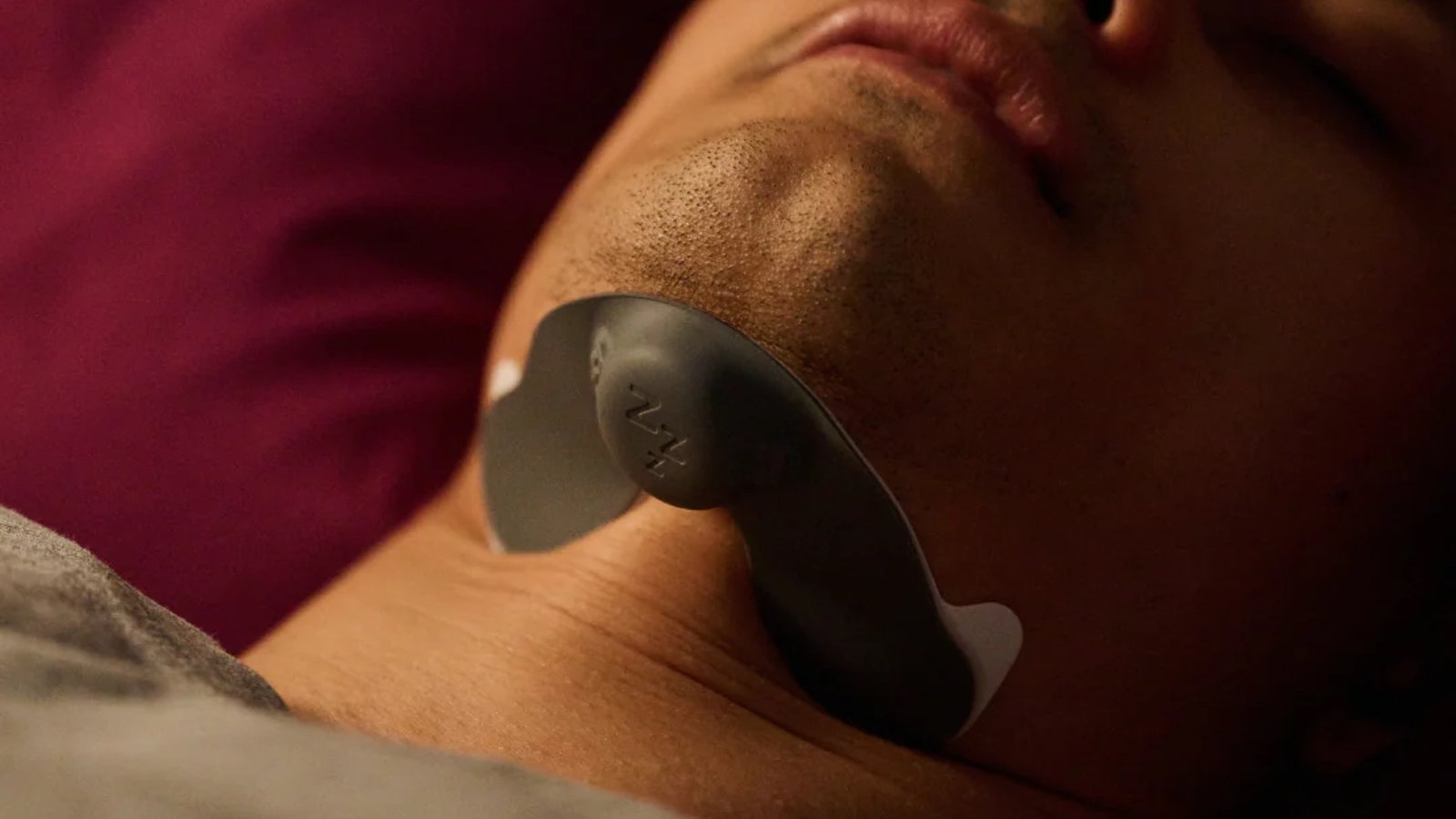
The trial aims to position the TENS-based wearable as the primary clinical alternative to CPAP machines
Zeus Sleep has secured a £1.48 million grant from the National Institute for Health and Care Research (NIHR) to fund one of the largest trials for Obstructive Sleep Apnea (OSA) in UK history.
Led by King’s College London and Guy’s and St Thomas’ NHS Foundation Trust, the study will evaluate the ZeusOSA device, a non-invasive wearable that treats sleep-disordered breathing without the masks or pressurized air required by standard CPAP machines.
The trial is the final hurdle before the planned early 2026 launch of a regulated medical version of the device.
Earlier pilot studies (including the TESLA-HOME trial) have yielded impressive results: 84% of participants reported improved sleep quality, while 85% of users remained compliant with the therapy—a massive leap over the 50% abandonment rate of CPAP.
Unlike surgical hypoglossal nerve stimulators, which are substantially more expensive and require invasive surgery, the Zeus device is a lightweight alternative that can be managed entirely at home. It delivers gentle Transcutaneous Electrical Neurostimulation (TENS) to the hypoglossal nerve via a patch under the chin, preventing airway collapse during sleep.
Advertisement
For the NHS, the appeal of the Zeus device lies in its potential to significantly reduce long-term cardiovascular costs associated with untreated OSA, which affects an estimated eight million people in the UK.
By proving that TENS can achieve clinical parity with CPAP in a large-scale setting, Zeus Sleep aims to make ‘wearable prescriptions’ a standard part of British sleep medicine. The trial will focus on daytime sleepiness and nocturnal breathing metrics, providing the robust evidence needed for full NHS integration.
If successful, it would mark the end of the CPAP-only era, offering a scalable, patient-led solution to one of the world’s most prevalent chronic health conditions.
