

I’ve made it pretty clear over the years that I don’t like Wear OS, but that stance has changed after using the Pixel Watch 3 and Pixel Watch 4; Google did a great job making meaningful changes to its wearable platform, and the Pixel Watch 4 in particular has been a joy to use.
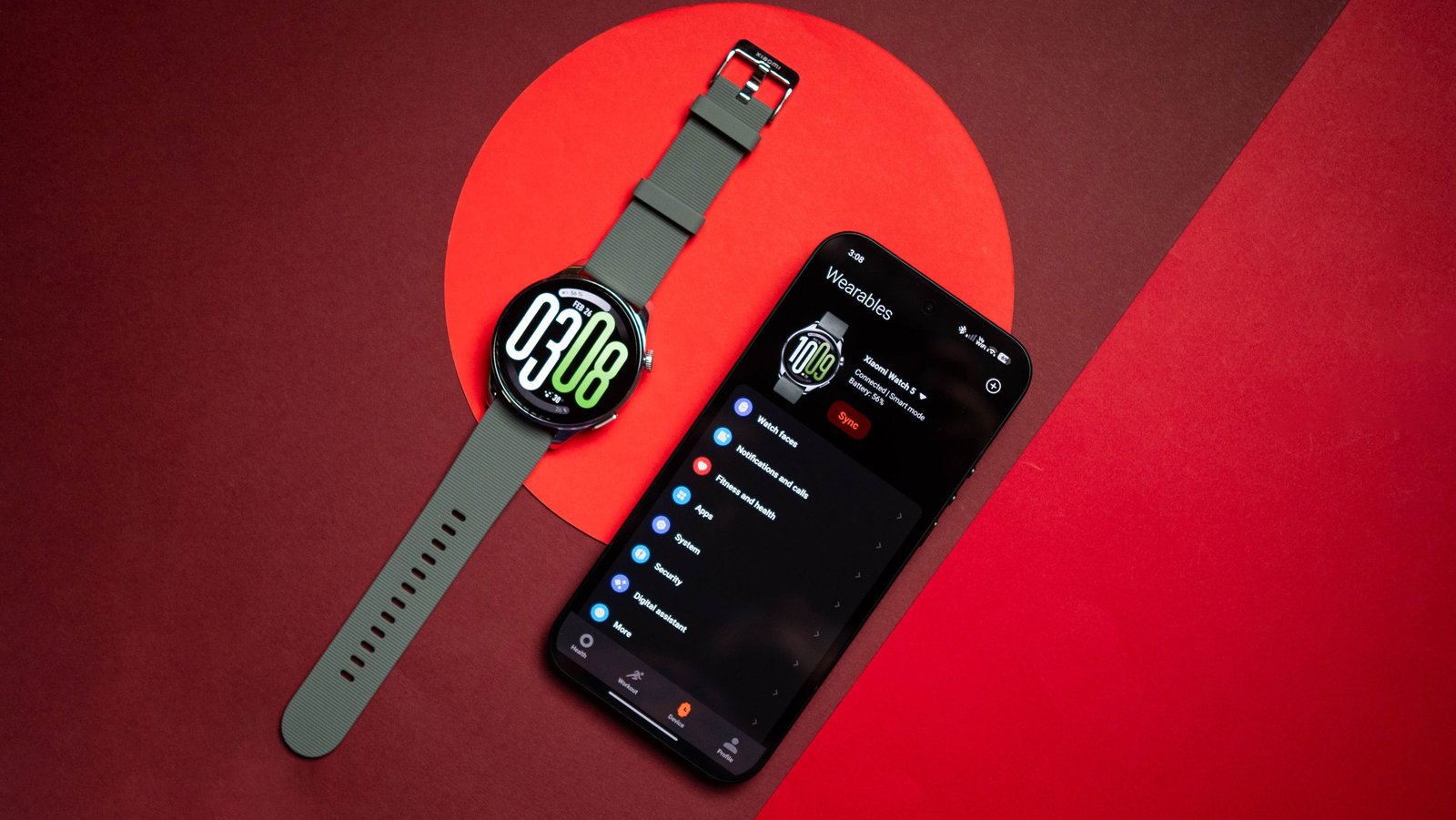
That said, battery life is still an issue with most smartwatches, and this is where Xiaomi’s Watch 5 comes into the equation. The global model of the Watch 5 gets Wear OS 6, giving it a noticeable advantage over the Chinese model. Xiaomi also added a massive battery this time — it even has silicon-carbon tech — and the design looks better than previous offerings.
You may like
Standout software powered by Wear OS
(Image credit: Apoorva Bhardwaj / Android Central)
Xiaomi did a great job integrating Wear OS 6 into the Watch 6, and the interface is just as fluid as the Pixel Watch 4. There’s no lag whatsoever, the UI is intuitive to use, and you get a decent amount of customizability overall.
You get Maps, Spotify, Calendar, and other utilities on the smartwatch, and if you like Gemini, you can enable the digital assistant on the watch, allowing you to interact without having to pull out your phone.
Image 1 of 4
(Image credit: Apoorva Bhardwaj / Android Central)(Image credit: Apoorva Bhardwaj / Android Central)(Image credit: Apoorva Bhardwaj / Android Central)(Image credit: Apoorva Bhardwaj / Android Central)
Alongside Wear OS 6, you get Xiaomi’s usual extras, and this is where the Watch 5 truly comes into its own. The brand’s extensive health and fitness monitoring tools are present, and you get the usual slate of sensors — SpO2, blood oxygen, heart rate module, and barometer — included.
Image 1 of 3
(Image credit: Apoorva Bhardwaj / Android Central)(Image credit: Apoorva Bhardwaj / Android Central)(Image credit: Apoorva Bhardwaj / Android Central)
Interestingly, you get gestures on the watch, and these are similar to the double tap gesture on the Apple Watch. The gestures are driven by wrist and hand movements, and while I noticed issues triggering these at times, they’re generally a decent enough alternative to interacting with the screen on the Watch 5.
The best battery life on a Wear OS smartwatch
(Image credit: Apoorva Bhardwaj / Android Central)
Xiaomi slotted in a huge 930mAh battery in the Watch 5, and what’s interesting this time is that it used silicon-carbon tech — the same as the Xiaomi 17 Ultra — to boost battery density and durability. This is a big deal as it allows the brand to fit a bigger battery into a smartwatch, and I see other manufacturers joining the bandwagon shortly.
The result is that the Watch 5 easily lasts over four days between charges, which is twice as long as the Pixel Watch 4. It can go up to two weeks if you switch to the low-power mode, which uses the BES2800 low-power platform and a basic interface.
(Image credit: Apoorva Bhardwaj / Android Central)
In regular use, you get Wear OS 6 that’s powered by Qualcomm’s Snapdragon W5 Gen 1 platform, and it’s a big deal in and of itself that Xiaomi is able to deliver four days of battery life. This is my biggest pain point with smartwatches, and one of the main reasons I use Huawei’s Watch Ultimate 2 whenever I’m on the road; that smartwatch lasts over a week between charges, and with the Watch 5 coming close, there’s now a Wear OS-powered alternative.
A bright AMOLED panel
(Image credit: Apoorva Bhardwaj / Android Central)
The Watch 5 gets a 1.54-inch AMOLED panel with 480 x 480 resolution, and it gets bright — going up to 1500 nits in HBM mode. I used the smartwatch during an unusually-hot season in Hyderabad, and I didn’t have any problems with outdoor visibility.
The only quibble I have is that the ambient light sensor takes a little while to adjust brightness when going outdoors, and I had to manually boost the brightness levels twice. Outside of that, I didn’t see any problems.
(Image credit: Apoorva Bhardwaj / Android Central)
The bigger panel makes it easy to interact with the smartwatch, and it allows you to view two additional lines of text with mirrored notifications on your wrist. I didn’t use the smartwatch enough to gauge its durability yet, but this hasn’t proven to be a problem in the past, and Xiaomi’s custom glass protection should hold its own against scratches and tumbles.
A design that stands out
(Image credit: Apoorva Bhardwaj / Android Central)
I know that the Watch 5 is an absolute unit, but I like that in a smartwatch. It’s just as big as the Huawei Watch Ultimate 2, and while it may not have quite as bold a presence, I like the overall design.
The stainless steel frame distinguishes the watch from the dozens of budget-focused options available today, and the silhouette lends itself well to the dozens of watch faces that Xiaomi offers. Of course, you can design your own or choose from a list of hundreds of other choices.
Image 1 of 2
(Image credit: Apoorva Bhardwaj / Android Central)(Image credit: Apoorva Bhardwaj / Android Central)
The watch isn’t too heavy at 56g, and it gets 5ATM water resistance. Xiaomi has the Watch 5 with a selection of two fluoroelastomer bands, and I would’ve liked to see leather or steel bands instead — they just go better with the design of the smartwatch. That said, the bundled bands are of a decent enough quality, and I didn’t see any issues.
(Image credit: Apoorva Bhardwaj / Android Central)
Ultimately, the Watch 5 comes with all the features standard in Wear OS 6, and you get Xiaomi’s extras alongside, leading to a smartwatch that’s uniquely different.
The long-lasting battery is the biggest differentiator in my view, and it is the reason I’ll be using the Watch 5 on the road. The UI itself is similar to other Wear OS watches, and Xiaomi did a good job ensuring there’s no noticeable lag in daily interactions.
Combine all of that with a big 1.54-inch AMOLED panel and a bold design, and it’s easy to see why the Xiaomi Watch 5 is such an attractive choice if you’re looking to get a new Wear OS watch in 2026 — it’s now my go-to recommendation if you need an Android smartwatch. And at €299, it doesn’t cost as much as its immediate rivals, and that’s always a good thing.
