

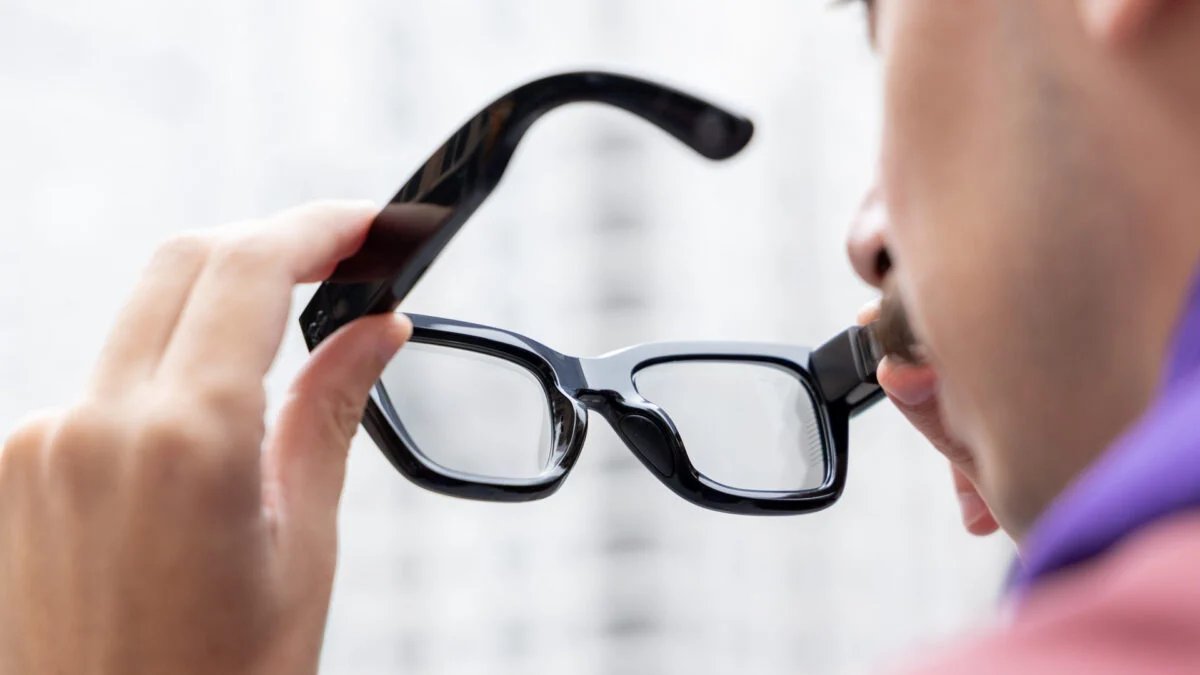
No one likes being recorded by Meta’s Ray-Bans smart glasses, which have gotten increasingly popular in the last year or so. Now the wearers know how everyone else feels. According to a joint investigation published by Swedish newspapers Svenska Dagbladet and Göteborgs-Posten, sensitive and personal footage captured by the devices—including people going to the bathroom, getting dressed, and having sex—is being reviewed by contractors who see all of it uncensored.
The investigation found that much of the footage captured by Meta’s smart glasses, of which more than seven million pairs have reportedly been sold, is reviewed by contracted workers at a Kenya-based company called Sama. These workers are data annotators who are tasked with reviewing footage captured from the camera on the glasses and labeling it to help AI systems get better at identifying what they see. The process is tedious and labor-intensive, requiring workers to meticulously label everything on screen that can be identified.
The firehose of footage meant to serve as valuable training data that is being delivered to these contractors apparently doesn’t undergo much of a culling process before it lands at their stations, because, according to the investigation, a lot of private, personal, and at times intimate images are getting shared.
Contractors reported being able to see things like a person’s credit card when they go to complete a transaction at a store or text messages they send and receive when they look down at their phone. Those are things that one could reasonably assume might accidentally get caught on camera when a person forgets to turn off the record feature, but some contractors reported seeing a lot more of people than they ever expected.
“In some videos you can see someone going to the toilet, or getting undressed,” one contractor for Sama told Svenska Dagbladet and Göteborgs-Posten. “I don’t think they know, because if they knew, they wouldn’t be recording.” Another contractor claimed that they reviewed footage where the wearer of the glasses set them down on a bedside table, only to have their wife walk into the room and undress, presumably unaware that she was being watched. Other footage reportedly showed the wearer watching porn or even recording themselves having sex (Odds are they knew they were recording in that instance, given smart glasses have really caught on in the world of adult content lately.)
The wearers of these glasses probably don’t want that footage seen by third parties. And the contractors sure seem like they’d rather not watch it—though they risk losing their job if they decide not to label something. “You understand that it is someone’s private life you are looking at, but at the same time you are just expected to carry out the work,” an employee told the papers. “You are not supposed to question it. If you start asking questions, you are gone.”
Futurism pointed out that Meta’s terms of service for its AI products, which cover its smart glasses products, include a line that states the company can “review your interactions with AIs, including the content of your conversations with or messages to AIs, and this review can be automated or manual (human).” It also notes content from its users can be reviewed “through automated or manual (i.e. human) review and through third-party vendors in some instances,” to, among other things, “provide, maintain, and improve Meta services and features,” and to “monitor your use of AIs for compliance with these Terms and applicable laws and to report violations of applicable laws or regulations as required by law.”
The only solution the company offers for users who would rather not have their trip to the dressing room reviewed by a set of eyes they never intended to send the footage to? “Do not share information that you don’t want the AIs to use and retain, such as information about sensitive topics.” Basically, don’t record it if you don’t want a stranger to see it.
That’s far from an ideal solution, even for the wearer of the glasses, but it’s not a solution at all for other people who are caught in the camera’s view. The owner of the glasses can turn them off to avoid capturing something they don’t want on camera. Everyone else just has to hope they’re not being filmed by a stranger, only for that footage to get reviewed by other strangers. It’s bad enough that we live in a surveillance state. It’s made even worse by the fact that corporations are convincing people to pay for products to participate in advancing it.
Gizmodo reached out to Meta for comment but did not receive a response at the time of publication.
