

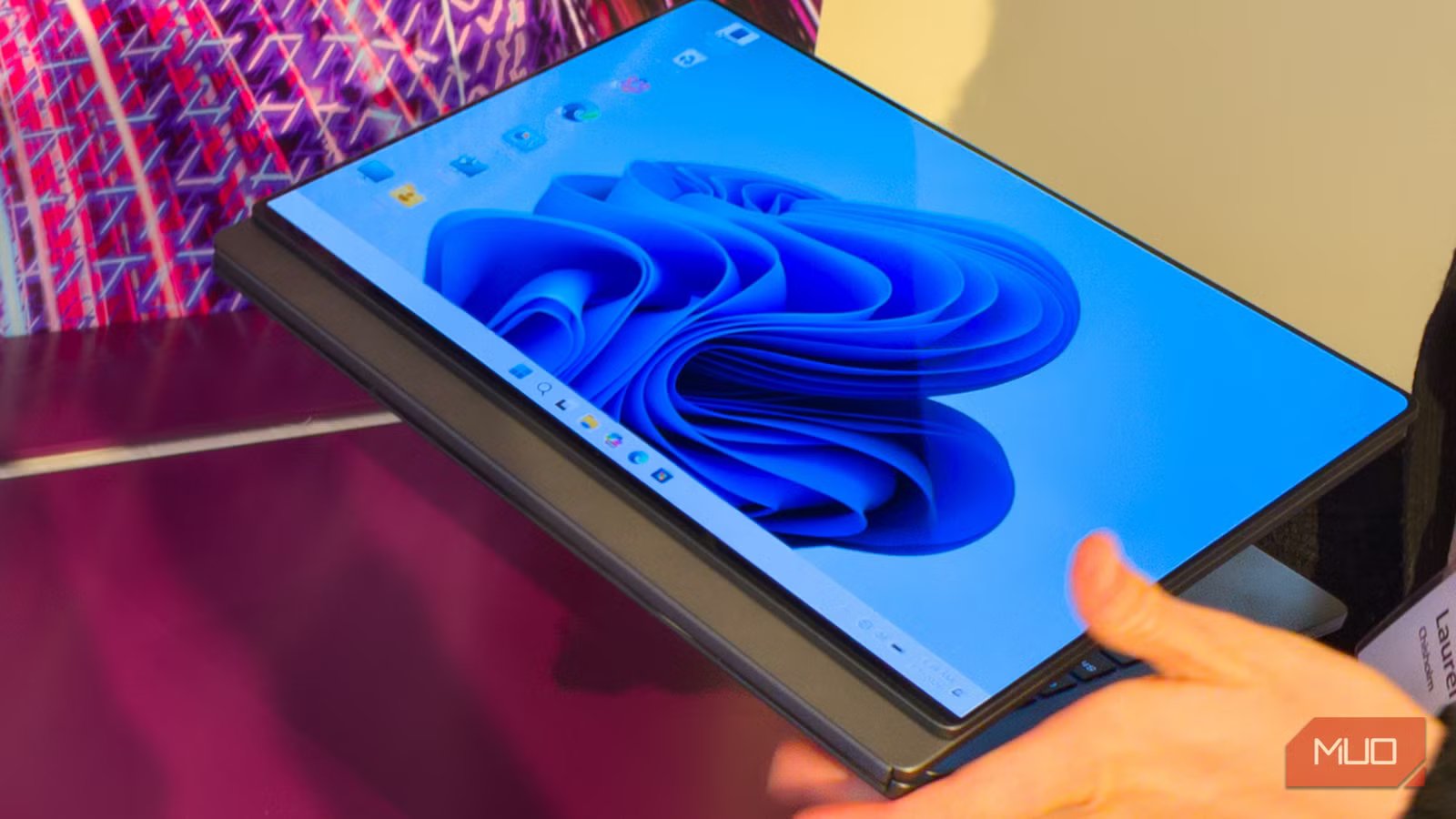
Have you heard of Framework, the tech company aiming to increase sustainability and repairability amongst categories like laptops? If so, you’ll know that modular laptops have been around for quite some time, but have failed to achieve the mainstream uptake that would force all laptop makers to consider the category.
Yet, Lenovo may have the answer with a new concept device it showed off at MWC 2026. The aptly-named ThinkBook Modular PC concept is the best implementation of modularity I’ve seen on a laptop, and it shares the same hallmarks and characteristics as many of Lenovo’s best laptops.
It’s also the most refined modular laptop concept I’ve seen in years, with tons of swappable parts that actually blew me away. This would make it the ideal product for many people — especially those who travel — if it were ever made into a commercial product. Here’s why I’m so excited.
Related
Why people are still buying this 2018 laptop in 2025
It’s the dream combination for so many reasons.
Two screens for more than twice the fun
The second screen can be used in multiple ways
Framework has made very interesting laptops because the core premise should appeal to everyone: you can swap or add components to build the laptop you truly want. Yet it’s never felt like Framework had the infrastructure to make this a mainstream product category, and I’ve often found their displays somewhat disappointing.
The Lenovo ThinkBook Modular PC solves both of these problems. It combines Lenovo’s incredible Yoga lineup with dual-OLED displays, with the flexibility of Framework, and the result is a two-screen laptop where one screen faces you and the other faces outwards. That isn’t new; Lenovo has also made this, but what is new is the ability to detach the second screen and use it as a secondary display, which can be propped up with the included kickstand.
It’s worth noting that you do need to use a cable to pair the screen with the laptop, at least in this concept device, but if you don’t want to use it as a second screen, you can also remove the keyboard and place the screen in its place. This instantly transforms it from an external screen into a dual-display setup that’s perfect for travel, especially since it works in both horizontal and vertical orientations, and the keyboard becomes wireless.
The really surprising part is just how seamless this integration is. Everything connects via Pogo pins, and even though this is a concept device, it felt almost ready for a commercial launch. Given that Lenovo has a considerable pedigree for bringing concept devices to market fairly quickly after showing them off during a tradeshow, this shouldn’t come as too much of a surprise.
What stood out for me is that the second screen also doubles as the perfect portable desk monitor. I travel a lot — and am currently writing this article on a plane from Barcelona to London — and I always miss my dual-4K display setup in my home office. Lenovo has made portable displays before, but that’s meant carrying yet another device, whereas the ThinkBook Modular AI PC concept feels like one seamless device. The second screen is quite light and thin, which helps reduce the device’s overall bulk when it’s attached to the laptop.
Related
I turned my old Android tablet into a second monitor for free
I skipped buying a portable monitor and reused an old tablet instead—and it worked far better than expected.
The best of Lenovo, with the flexibility of Framework
There’s a host of ports to choose from
If the ThinkBook Modular AI PC concept were just a dual-screen laptop, it probably wouldn’t appeal as much as other devices, but where it shines is the ability to swap out the ports included in the laptop as needed.
The premise is simple: you don’t always need an HDMI port or a USB-A port, but when you do need them and your laptop doesn’t have them, it’s a considerable productivity blocker.
The ThinkBook Modular AI PC concept solves this by letting you remove the keyboard, unclip an existing port, and replace it with the one you need at that moment. Most of us will default to using USB-C, but many buildings and offices may have peripherals that require USB-A or only support HDMI for sharing with included TVs.
It’s worth noting that even though this is just a concept, the ports were easy to change, and there is a handy carrying case that makes it simple to store the ports that you aren’t using. Right now, Lenovo has only designed three ports – USB-C, USB-A, and HDMI – but if this were to come to market, I do hope they’d consider building an SD card reader or a Thunderbolt port.
Related
I really want to say hello to Neo — Apple’s budget laptop looks like a game-changer
The MacBook Neo outclasses the competition at $599
I’ve longed for flexibility like the ThinkBook Modular PC
This is definitely still a concept device, and Lenovo would need to improve the kickstand for the second screen. However, unlike most concept products, this also feels like a laptop that could be ready for commercial release in the near future, and I’m hoping that Lenovo persists with this idea and actually brings it to market.Of course, there are many things we don’t know yet, including the all-important questions of price and battery life, but Lenovo is onto something with this modular PC concept. The real question now is whether the company will make it, and whether it can achieve what Framework hasn’t quite achieved by making modularity a key feature in the computing industry.
