

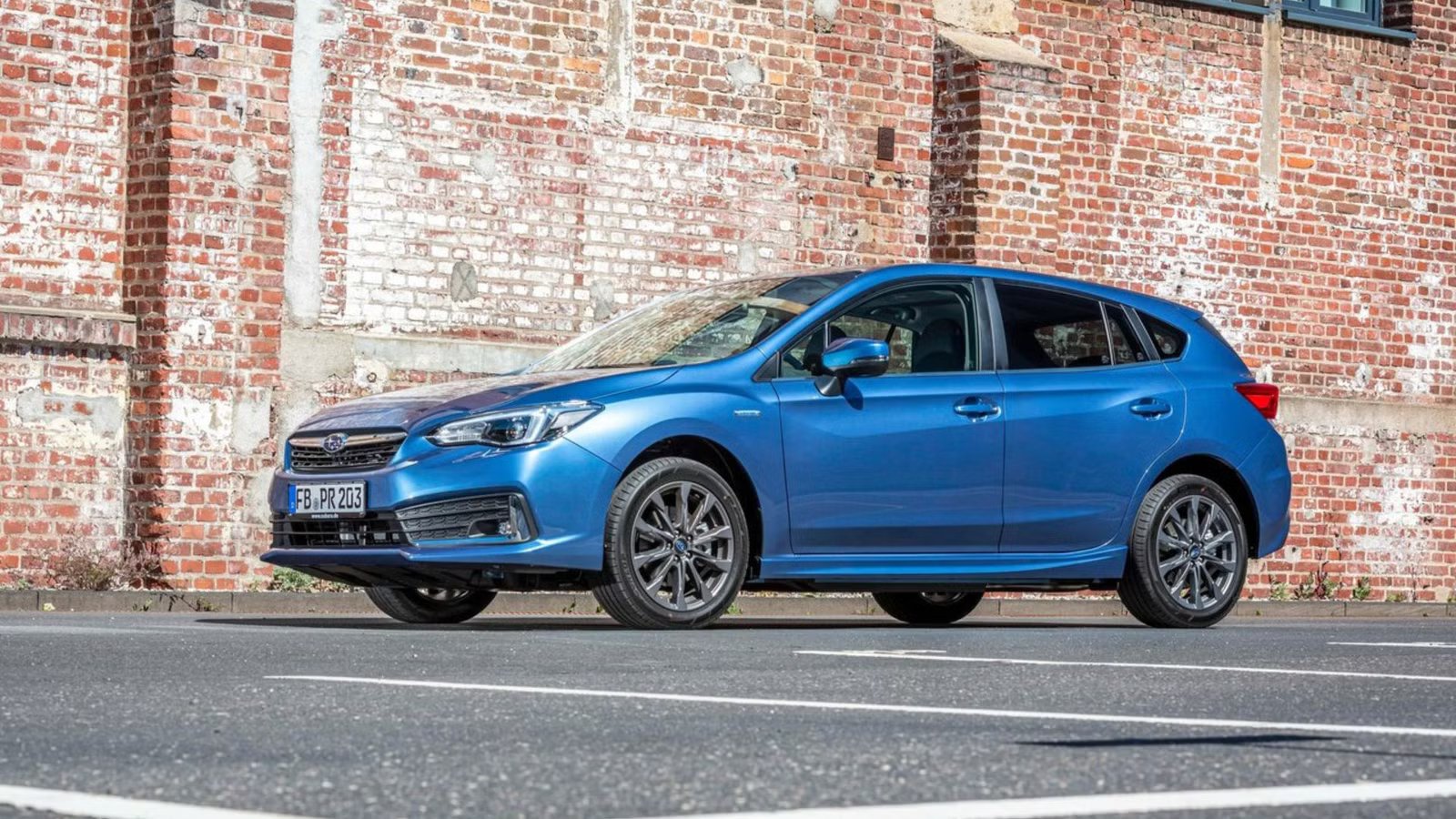
When people start shopping for a reliable compact car, they usually end up looking at the same names over and over again. The Honda Civic, Toyota Corolla, and Mazda3 tend to dominate the conversation, while Subaru quietly gets ignored in the background.
That’s a mistake, especially with how expensive some new Civics have become lately. Subaru still builds cars with a strong reputation for reliability and durability, but without quite the same price premium attached.
One model in particular delivers a lot of what buyers already like about the Civic, while adding standard all-wheel drive and a lower used price tag into the mix.
Related
10 Most Reliable Used American Cars Under $15,000
These 10 used American cars offer impressive reliability and value, proving you don’t need to spend a fortune for a dependable ride under $15,000.
Why buyers still flock to the Honda Civic
Reliability, efficiency, and strong value keep it at the top of the compact car market
Credit: Honda
The Honda Civic has been around since 1972, which is pretty wild when you think about it. Back then it made just 36 horsepower, yet somehow it grew into one of Honda’s biggest success stories with nearly 30 million sales worldwide.
These days, the Civic still sits near the top of the compact car segment thanks to its mix of reliability, efficiency, and everyday usability. Here’s a quick look at what the current sedan brings to the table:
Starting MSRP
$24,695
Engine
Naturally aspirated 2.0-liter 4-cylinder or turbocharged 1.5-liter 4-cylinder
Power
150 to 200 hp
Fuel economy
Up to 31 mpg city /40 mpg highway
Body style
Sedan or hatchback
Transmission
CVT or 6-speed manual
Why the Civic has such a strong reputation
Credit: Honda
The Civic’s reputation isn’t just hype or brand loyalty—the numbers back it up too. RepairPal gives it a 4.5 out of 5 reliability score, ranking it near the top of the compact car segment, while average yearly repair costs sit at a pretty reasonable $368.
The newer models continue that trend as well. According to J.D. Power, the 2025 Civic scored 85 out of 100 overall, which helps explain why so many buyers still default to it.
Why people still buy it new
Credit: Honda
The numbers explain the loyalty, but it’s the day-to-day ownership that really seals it. Kelley Blue Book even ranks the Civic as the top compact sedan you can buy right now, which says a lot about how well-rounded it is.
It’s also seriously efficient, especially with the hybrid version, which delivers some of the best fuel economy figures you’ll find in a modern car. On top of that, every trim comes with Honda Sensing as standard, so you get things like adaptive cruise control and lane-keep assist without paying extra.
Related
This reliable Japanese four-cylinder engine has powered cars for 25 Years
A quarter-century of dependability — this four-cylinder just keeps going.
The real cost of buying new right now
Prices and interest rates are making even practical cars feel expensive
Credit: Hyundai
As most buyers already know, the average price of a new car in the U.S. is sitting around the $50,000 mark, and there’s not much sign of it dropping anytime soon. That pressure isn’t just limited to luxury models either—it’s creeping into pretty much every segment.
The monthly hit is just as noticeable, with average payments around $756, and in some cases climbing well past $1,000 depending on the deal and financing.
How new car prices are pushing out everyday buyers
Credit: Honda
Everyone tends to focus on the monthly payment, but the real sting is often the interest rate. Finding anything close to a 2 percent APR is rare these days, with 2025 averages sitting anywhere from about 9 percent to 14 percent depending on credit.
There are still the occasional zero percent deals floating around, but they’re far from the norm. As Cox Automotive analyst Erin Keating puts it, the market is increasingly being driven by wealthier buyers who can actually access better financing and keep the higher end of the industry moving.
What you actually get for a Civic’s price tag
Credit: Honda
While the rest of Honda’s lineup has crept up in price a bit, the Civic still lands in a fairly reasonable spot and gives buyers solid value for the money. Even the base LX isn’t stripped bare, either.
You still get LED headlights, automatic climate control, a rearview camera, and a 7-inch touchscreen with Android Auto and Apple CarPlay built in.
Related
New cars are so expensive that a six-figure salary barely cuts it
The modern car market is leaving average buyers behind.
The used Subaru most shoppers keep overlooking
Cheap, capable, and quietly better value than you’d expect
While the Civic and Corolla tend to soak up most of the attention in the compact car space thanks to their reputation for value, features, and reliability, the Impreza quietly hangs back in the background. It’s the one waving at buyers who are too busy looking elsewhere.
The 2023 Subaru Impreza still delivers exactly what this segment is about, just without the spotlight. What makes it stand out even more now is how its pricing lines up with cars that feel a generation or two older.
Standard AWD and strong safety credentials
Credit: NetCarShow.com
Most cars in this segment would consider all-wheel drive a premium extra, and some—like the Civic—don’t even offer it. The Impreza just gives it to you as standard, which is pretty rare at this price point.
It also ends up undercutting cars you wouldn’t normally compare it to, even something like a Mazda Miata in some cases. You might not need AWD all the time, but having it baked in definitely adds peace of mind.
Base Trim Engine
2.0L Flat 4 Gas
Base Trim Transmission
5-Speed Manual
Base Trim Drivetrain
All-Wheel Drive
Base Trim Horsepower
152 hp
Base Trim Torque
145 lb-ft @ 4000 rpm
Fuel Economy
24/31 MPG
Make
Subaru
Model
Impreza Hatchback
Segment
Compact Hatchback
Where the Impreza quietly stacks up against the Civic
The Impreza doesn’t exactly bring the same flash or attention-grabbing design as the Civic—or even something like the Kia K4, which leans more into that style-first vibe. But in terms of covering the basics, it still does the job just as well.
You get a choice of sedan or hatchback, a roomy cabin, and a comfortable ride that’s easy to live with day to day, according to Consumer Reports. Subaru’s EyeSight safety tech also comes standard, adding another layer of reassurance.
The Civic still wins on power and interior polish, but the Impreza is aimed more at people who just want something solid, safe, and straightforward for getting around without paying extra for the extras.
Related
Here Are 10 of the Cheapest New Cars You Can Buy Right Now in The U.S.
If you’re looking for a budget-friendly ride, here are 10 new cars that deliver style, value, and practicality without breaking the bank.
Should you actually switch to the Impreza?
A simpler, cheaper AWD alternative to the Civic that still covers the essentials
Credit: NetCarShow.com
The Impreza might sound like it’s trying a bit too hard with the name, but it’s not really a car for everyone—and that’s kind of the point. While most people are laser-focused on the Civic, the Impreza quietly delivers a very similar day-to-day experience without drawing much attention.
The big standout is still its standard all-wheel drive, which makes it one of the cheapest ways to get AWD in the US right now. It’s worth noting Subaru has trimmed back some of its entry-level pricing recently, but it still undercuts a lot of the obvious rivals for what you’re getting.
Who should buy it, and who’s better off with a Civic
Credit: NetCarShow.com
At the end of the day, both cars just suit different types of buyers. The Civic leans more polished, with sharper styling and a more refined interior that makes everyday driving feel a bit more premium.
It also makes more sense in milder climates, while the Impreza’s standard AWD gives it an edge if you’re dealing with tougher weather or want a bit more confidence off the beaten path. It’s also slightly smaller, which can make city driving and parking easier.
The trade-off is a bit of cargo space—you lose a few cubic feet compared to the Civic hatch—but for some buyers, that’s a fair exchange for the added practicality and AWD grip.
You can pick one up for as low as $17,500
Credit: NetCarShow.com
So how much does a 2023 Impreza actually cost? According to Kelley Blue Book’s Fair Purchase Pricing, you’re looking at roughly $17,500 to $21,800 depending on mileage, condition, and spec.
For comparison, a 2023 Honda Civic typically starts around $21,500, which means the Subaru often comes in noticeably cheaper on the used market. In other words, the Impreza quietly undercuts one of the segment’s most popular choices.
