

Affordable accuracy with some minor growing pains
The Leep Ring marks a strong debut for the startup. By forgoing a subscription model and hitting a $199 price point, it undercuts more established brands without sacrificing core data quality. Its sleep and stress tracking are surprisingly robust, and the design compares well to devices twice the price. While the current iOS exclusivity and occasional bugs remind you that this is a first-generation product, the titanium build and offline sync capability make it a legitimate option to consider for those who want a budget smart ring.
Intuitive app interface with actionable data
Sleep tracking accuracy compares well
Super competitive price (and no ongoing subscription)
Quite a few platform bugs
Currently exclusive to iOS
No serious health insights
Though the smart ring industry has boomed in recent years, it’s also quickly become a battlefield of patent disputes and import bans. Coupled with the fact that reams of unreliable, cheap options have flooded the market, it can be a challenging place for newcomers to enter.
Yet, emerging from the UK with a budget-friendly, sleep-first mission is Leep Health.
While market leader Oura continues to operate with a monthly subscription fee, Leep, like many other startups, is positioning its smart ring as the champion of the one-time purchase. And by offering a premium-looking titanium design for just $199, it’s a compelling pitch.
The brand is looking to find its footing through an intuitive app platform and a refined focus on one of the form factor’s key tracking strengths: sleep.
Not everything about the Leep Ring is perfect. However, after spending a few weeks wearing it alongside rings from household names, it’s clear that it’s more than just a first-gen experiment.
Advertisement
Price, competition, and availability
(Image credit: Wareable)
The Leep Ring costs $199/£149—and, again, unlike market-leader Oura, that’s all you need to pay. There’s no added subscription, and Leep Health suggests things will stay that way.
Compared to other subscription-free smart rings—such as the Samsung Galaxy Ring ($399), RingConn Gen 2 ($299), and Circular Ring 2 ($349)—it’s considerably cheaper.
In some cases, it’s half the price of a rival option, and you would have to opt for a device like the Amazfit Helio Ring ($149) or RingConn Gen 2 Air ($199) for a credible alternative.
In basic terms, this is one of the few budget-friendly smart rings around—and, at least at the time of writing, is available to buy in the US (as well as other markets). That’s something many smart ring challengers—including Ultrahuman, with its Ring Air and Ring Pro—can’t necessarily say.
The only sticking point here is the ease of availability. As this is from a startup rather than an established household name, you can currently only buy it on the brand’s website (not from third-party retailers like Amazon). And, as with every small company, that also means there’s no real guarantee on overall stock levels and waiting times.
Advertisement
Design, fit and comfort
(Image credit: Wareable)
The smart ring market has pretty much hit a design plateau by this stage, and it’s now hard to tell the major brands apart.
Aside from some small etching on the Leep Ring, that sentiment also applies here. But the relatively plain look isn’t necessarily a bad thing, especially if you like a more subtle ring—it’s just not bringing anything new to the table.
Currently, you have two color options for the titanium shell ring: the starlight silver version tested here, and a midnight blue one. A gold version is also coming soon, with sizes determined via the usual free sizing kit.
We blind-chose the same size as our Oura Ring 4, Ultrahuman, and RingConn rings, and the fit has generally been good. It may roll around a little on the finger, though, so we advise using the sizing kit and experimenting with different fingers to find the best fit.
(Image credit: Wareable)
Advertisement
It measures 2.6mm thick, which is essentially the same as Ultrahuman Ring Air—and, interestingly, slimmer than the latest Oura Ring. That means you can expect a relatively comfortable fit, but not one that ‘disappears’ on the finger—again, something that’s true of every smart ring on the market at this moment.
Squaring up to rivals
While the sensor bump on the ring’s inside doesn’t disappear quite as much as it does on an Oura, it’s never made the ring uncomfortable to wear. In our testing, the titanium exterior hasn’t picked up many scratches, either.
As with pretty much every smart ring, though, you’ll need to accept some wear over time (and help it by not wearing the device for things like moving furniture or lifting weights at the gym).
(Image credit: Wareable)
It also carries a 5ATM rating, which means it’s technically suitable for swimming and showering. That isn’t the highest level of water protection you’ll find on a smart ring, but it’s likely enough for most people to avoid constantly taking the ring on and off.
So, is the Leep Ring the most stylish smart ring available? Not necessarily. However, it’s a very functionally sound design—it sticks to the tried-and-tested thickness and style of bigger brands and is certainly good-looking and comfortable enough to wear every day.
Advertisement
The Leep Health app experience
(Image credit: Wareable)
As any seasoned screenless wearable user knows, the hardware is only half the story. A device like a smart ring lives or dies by its companion app; if the graphs are intuitive and the guidance is actionable, you’re far more likely to let the data influence your daily habits.
However, at the time of writing, the Leep experience is iOS-exclusive. While the company’s website confirms an Android version is in development, this lack of cross-platform support immediately narrows its appeal compared to established rivals.
Still, for iPhone users, there’s a lot to enjoy here. The app feels like a deliberate attempt to avoid the cluttered pitfalls of its competitors. The interface is refreshing: inviting, uncluttered, and prioritized.
As we’ll dive into in more detail in the next section, this is broken down into five distinct sections, with sleep taking center stage on the primary tab. From the typography to the intuitive insights, there’s a thoughtful approach to data communication here. So, whether you’ve nailed your recovery or overextended during a workout, the app makes your status immediately obvious at a glance.
(Image credit: Wareable)
Advertisement
Software quirks and growing pains
Despite the polished look, our testing revealed plenty of first-gen bugs. Some are minor, such as the app frequently misrepresenting the time of day—a glitch crying out for a quick patch.
There’s also the UI decision to hide the specific battery percentage inside the settings menu, forcing users to rely on a vague icon on the home screen. It’s nothing major, but is an unnecessary extra step for a metric that’s vital for a screenless device.
The ‘Insights’ section also feels very thin, often linking out to external web pages rather than hosting content natively within the app.
However, the most concerning hurdle was a syncing failure that resulted in several days of missing data during our review period.
To Leep Health’s credit, when we flagged the issue, they were already deploying a fix, and the ring was back to full health within 48 hours. This responsiveness is a win. But, mostly, we just hope such stability issues don’t become a recurring theme for early adopters.
One neat addition that deserves a mention is the offline sync capability. Unlike most smart rings, which require a handshake with the cloud to update your stats, the Leep app can crunch your data without a Wi-Fi or cellular connection. It’s a rare, practical feature that ensures your metrics are always available—even when you’re off-grid.
Advertisement
Sleep tracking and fitness insights
(Image credit: Wareable)
Leep Health’s sensor setup inside the ring is similar to other smart rings, featuring optical, motion, and temperature sensors.
These don’t enable the kind of premium, advanced health insights or AI-driven features you can expect from Oura or Ultrahuman, but the basics are all here. In fact, the brand even claims a 97% accuracy for heart rate and sleep tracking, and 98% for blood oxygen levels.
Either way, it’s the way the data from these sensors is displayed in the app and used to assess your overall state that’s often most crucial.
Leep markets the Ring 1 as a sleep-first smart device, with this data prominently shown as the first section in the app. Your sleep score is displayed front and center, with trends on sleep consistency and efficiency available by scrolling down. The sleep data is presented clearly, with helpful UI cards offering quick, easy-to-understand tips.
Sleep tracking comparison: Leep Ring vs. Garmin Forerunner 970 vs. Luna Ring 2 — (Image credit: Wareable)
Advertisement
We tested it alongside the Luna Ring Gen 2 and Garmin’s ever-improving sleep tracking, observing similar data on sleep duration, stages, and times asleep and awake. Some sleep scores varied by one or two points compared to other devices—but, in the grand scheme, that’s no big deal. It’s right where we’d like to see a device that challenges more established offerings.
What we appreciate most, though, is the intuitive interface and wording. It helps you quickly assess whether your sleep was good or bad—and then dive into more detail if you fancy it.
Stress insights
Next up is stress tracking—an area very few wearables are able to deliver actionable and accurate-feeling insights.
Like its sleep-tracking feature, Leep scores your stress levels on a scale from stressed to relaxed using heart rate variability spot-checks. It also provides a daily breakdown of your most stressful periods and highlights the most stressful parts of your day.
(Image credit: Wareable)
Again, it’s the presentation of this data that impresses and helps you absorb the key insights without much data deciphering.
Advertisement
We’ve been comparing the stress data to Garmin’s, and, again, it’s nice to see that they tell similar stories about the changes in your stress levels. We don’t generally love 0-100 scores in this area, but the added context here helps considerably.
Solid enough for tracking basic movement
There’s also the movement section of the app to explore, which, as you would expect, focuses on telling you how active you’ve been. It’s where you’ll find data such as daily step counts, the distance covered during the day, and the heart rate zones you’ve spent the most time in.
You can’t use your phone to manually track workouts—which we actually don’t care too much about on a smart ring anyway—so it relies on the heart rate sensor to detect when you’ve increased your intensity.
Step tracking comparison: Leep Ring vs. Garmin Forerunner 970 — (Image credit: Wareable)
Resting heart rate data was generally reliable, though it typically showed a 3-4 bpm difference compared to other trackers. And we also wore the ring during a few intense workouts, but found that this more vigorous effort wasn’t really reflected in the day’s data.
This is undoubtedly the weakest aspect of the Leep experience. However, it’s certainly not unique—as we’ve explored in countless smart ring reviews over the last few years. It’s more a natural shortcoming of the form factor than any brand’s inability to track accurately, with the finger’s constant movement making it virtually impossible to capture a strong signal from the sensors.
Advertisement
As we always advise: don’t buy a smart ring if you mostly just want to track your workouts. The Leep Ring, like others, can work well as a step tracker and spot trends in when you physically move, but that’s about it. Really, the realistic challenge for Leep Health in this area is replicating the same level of third-party integrations that a brand like Oura has delivered.
Battery life
(Image credit: Wareable)
The Leep Ring doesn’t deliver the best battery life a smart ring can provide, but it’s certainly not the worst, either. Leep Health quotes up to 8 days, which matches the Oura Ring 4’s battery life.
So, while it won’t give you nearly two weeks like RingConn, it’s been more than enough to get through our work trips, busy weeks, and times when we couldn’t locate the charger. We noticed a daily drop-off of just over 10%—much of it during overnight tracking—but it all adds up to a charging routine that won’t have you worrying about its battery levels too often.
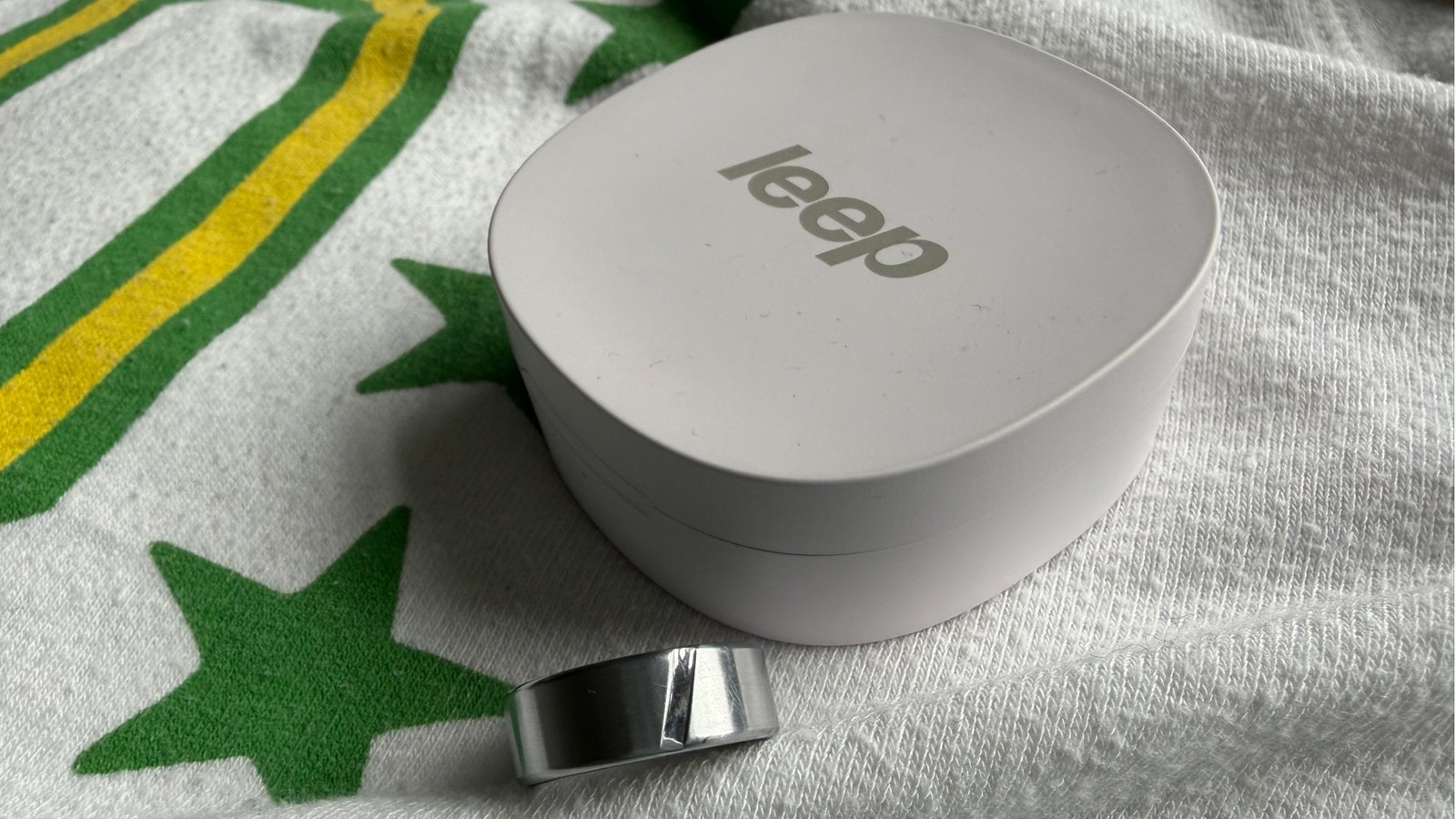
When the Leep Ring needs to top up, too, it’s done via the charging case—a huge bonus for a smart ring at this price point. While not the smallest, the case can give you up to 60 days of battery life when fully charged.
That’s still fewer days than the battery champ, RingConn—and we did notice the ring sits quite precisely inside the case (and therefore requires a bit more care to ensure it’s in the right position for charging compared to other smart ring cases).
Advertisement
Overall, though, we’re happy with the battery performance, and most users should find it comparable to other devices.
