

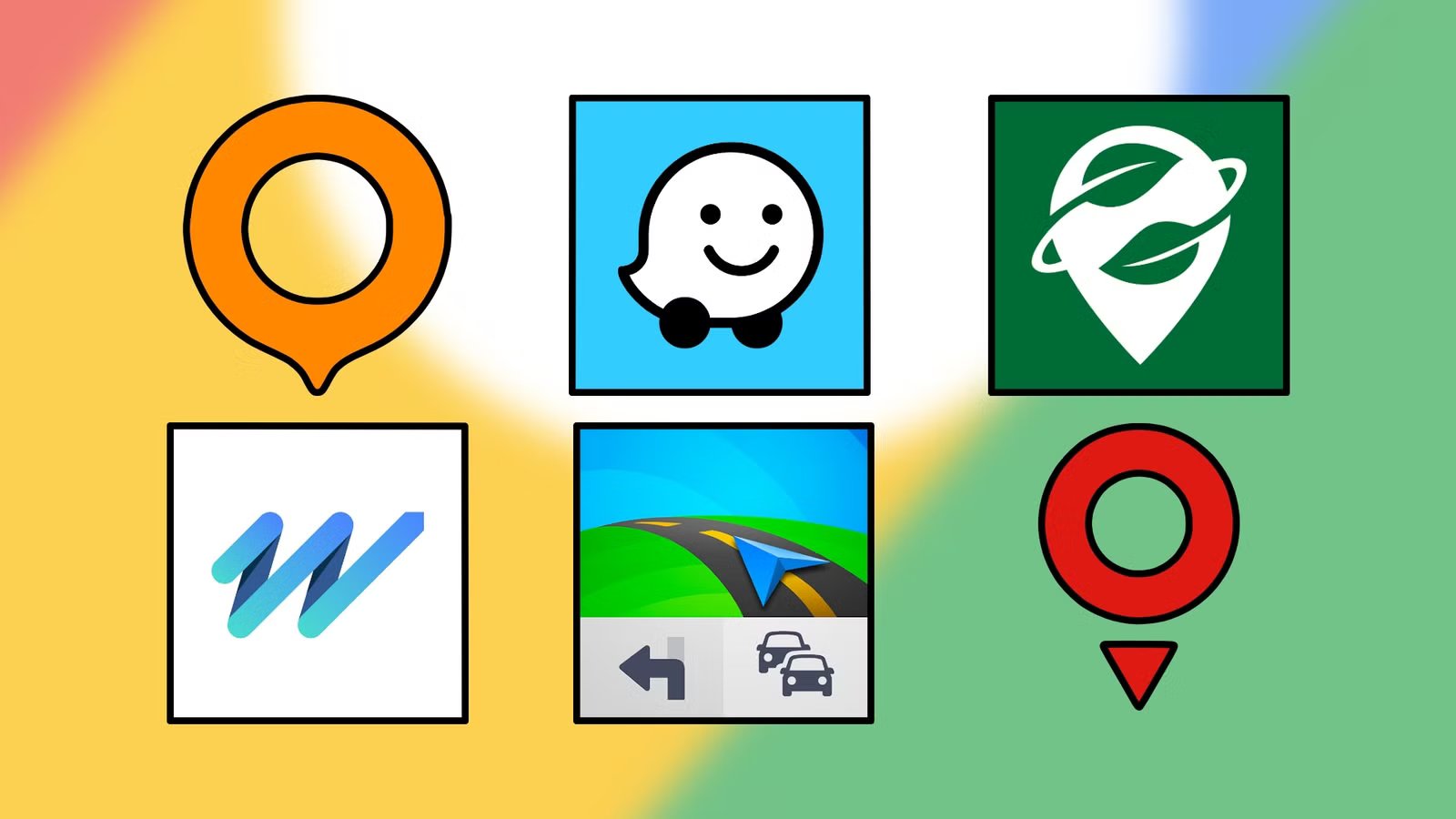
As good as Google Maps is, I’ve long found it cluttered and bloated, offering features that I never use. And since I’m also becoming increasingly aware of how much data Google has on me, I decided to find an alternative. After testing out six of the best, with hundreds of millions of downloads between them, there’s one that I really recommend.
6
TomTom
One of the early navigation giants
TomTom is a real blast from the past. I used to own a TomTom GO back in the days when we needed dedicated navigation devices rather than using our phones. I was keen to see what it’s like now, and sadly, it’s a pale imitation of what it used to be.
It’s very basic, especially compared to modern navigation apps. It only caters to drivers and has an extremely limited set of features. The maps are good, the routing seems fine, and the live traffic information was useful. Speed trap locations also pop up as you drive along your route. But that’s about it. Searching for businesses and other points of interest was hit-and-miss, and there are few other options to dig into.
5
OsmAnd
A free and open-source option
OsmAnd is a Google Maps alternative that you can download through the Play Store or the open-source app store F-Droid. It uses OpenStreetMap and runs offline. You need to download maps for your region when you first launch it. I live right on the edge of the map area it selected for me, so I had to download a second one. These were free, but you need to pay to unlock unlimited downloads.
The maps and routing are good, and you can use the app for driving, walking, cycling, and public transport. But it lacks polish in some areas. The navigation voice is somewhat robotic, the search is more basic than what you get from Google, and there are too many settings to work through. You have to dig into the menus to enable basic things like live traffic, business information, or bus routes.
And if you add too much, the map gets very cluttered. It’s a solid open-source option, though.
4
Waze
Google’s other navigation app
Waze is owned by Google and is already well established as a popular Google Maps replacement. It has its strong points. It’s less bloated and easier to pick up and use. It also makes great use of crowdsourced info for pretty much anything from live traffic to speed cameras, and even potholes. There are also a few fun features, like the ability to use novelty voices in your navigation.
But the simplicity makes the app a lot more limited. The maps are more basic, lacking the often useful satellite view, and it’s for driving only. Despite the app’s social focus, it isn’t suited to walking, cycling, or anything else.
3
Sygic
A premium app with bags of unusual features
Sygic is a premium navigation app that’s crammed with features, albeit most of them are hidden behind a paywall. You get a seven-day trial so you can see how useful they are and if they’re worth paying for.
The app is solely for driving and works offline. It prompts you to download maps straight away. You can grab individual states in the US or entire countries elsewhere. The maps come in a range of views, including 2D, 3D, and satellite.
The extra features range from essentials like crowdsourced updates for roadworks and traffic jams, to things you won’t find elsewhere, such as what3words integration and even a very neat dash cam mode. These, along with live traffic data, speed camera locations, and Android Auto support, are all paid.
2
Organic Maps
The best choice for the privacy-conscious
Organic Maps is another open-source option that uses OpenStreetMap, and this is the ultimate privacy choice, for better or worse. Like OsmAnd, it runs offline and automatically downloads a map for you when you open it.
The app is completely free, and the maps are good. As well as driving, you can use them for walking and cycling, and can add contour lines to show off-road detail. The routing and navigation are also solid.
But the privacy focus comes at a cost. While it’s pretty decent as a basic navigation tool, it offers none of the extras we tend to take for granted. It’s poor for detail on businesses and other points of interest, and falls down entirely on traffic information. This normally comes via apps tracking their users, and this doesn’t do that. If you can live without it, though, it’s worth a look.
1
HERE WeGo
The closest thing to Google Maps that isn’t Google Maps
HERE WeGo was originally created by Nokia and is now owned by a consortium of car makers. It’s the closest you can get to Google Maps. Although it’s more private than Google, the app does track its users to generate live traffic information. You can opt out of this if you wish, and you can also use it with or without an account.
It works online, or you can download maps of entire countries to use offline. It offers a range of map styles, including satellite, terrain, and 3D views. The business information is pretty comprehensive, making it easy to find places to go near you.
I had no issues with the routing and navigation, and it works whether you’re driving, cycling, walking, or traveling on public transport. Among the extra features, it can suggest parking places along your route, and it works with Android Auto.
Why I’m sticking with HERE WeGo
For me, HERE WeGo is the best alternative to Google Maps. It was the only app I tested that had all the features I use every day. The others all had something missing, whether it was live traffic, walking routes, or something else. It’s also got a cleaner, less cluttered interface that makes it simple and easy to use.
I set out to reduce my reliance on Google without feeling like I was downgrading. With HERE WeGo, I’m not. I’m ready to disable Google Maps and make the switch permanent.
