

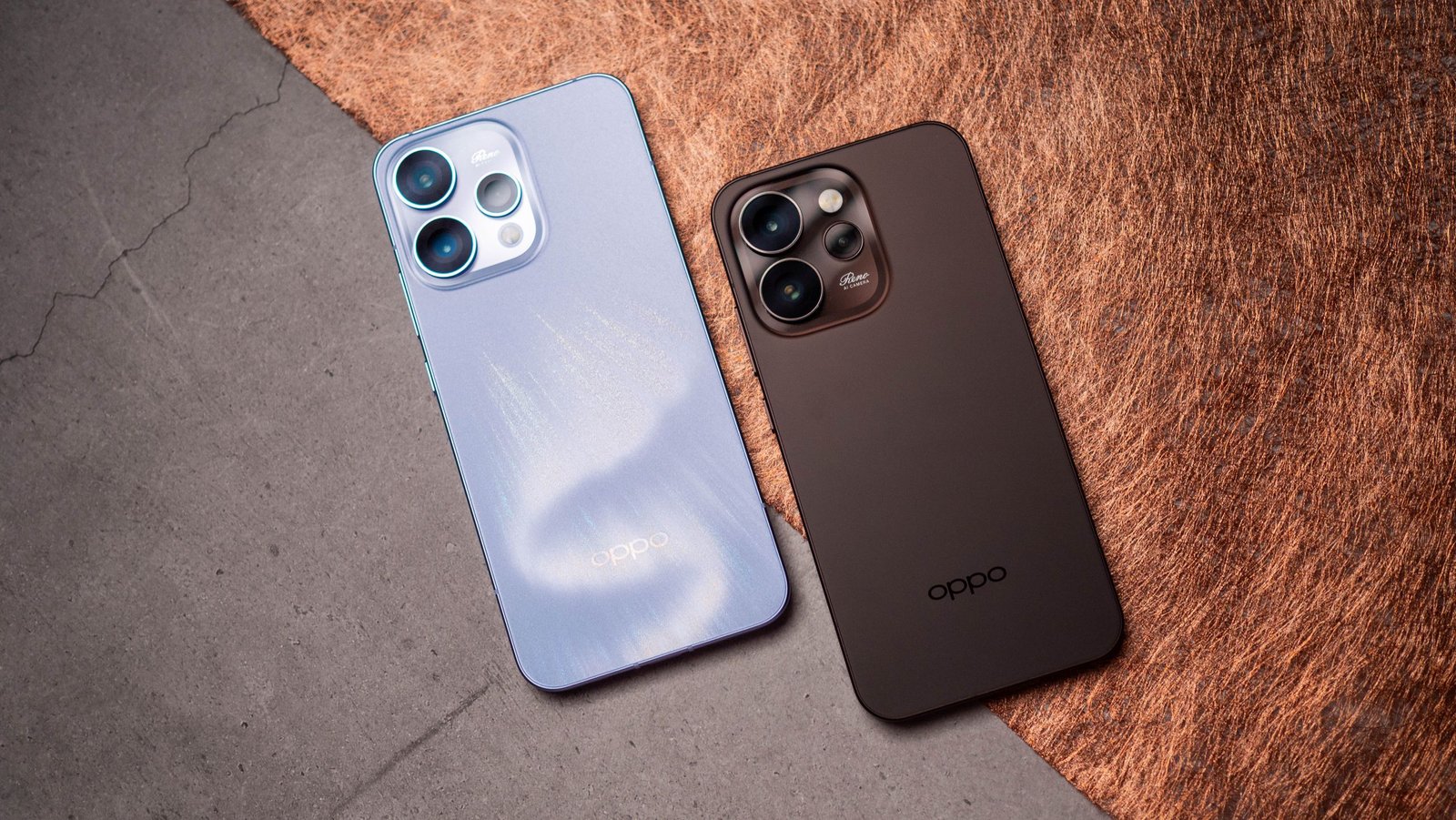
OPPO isn’t just killing it with flagships; the brand’s mid-range devices contribute a bigger chunk to its bottom line, and there’s plenty of choices available. The Reno 15 Pro and Reno 15 debuted at the start of 2026, and they’re easily among the best mid-rangers you can buy today — if anything, the cameras on the Pro model makes it the ideal flagship killer.
I didn’t use the phones immediately after launch, but I tested both the Reno 15 Pro and the standard Reno 15 over the course of the last month, and it’s easy to see that these devices have a lot to like. I prefer the Pro model, so I’ll start with that. OPPO changed the design this year, and the Reno 15 Pro has a smaller size thanks to a 6.32-inch panel — it’s sold as the Reno 15 Pro mini in India.
Image 1 of 4
(Image credit: Apoorva Bhardwaj / Android Central)(Image credit: Apoorva Bhardwaj / Android Central)(Image credit: Apoorva Bhardwaj / Android Central)(Image credit: Apoorva Bhardwaj / Android Central)
The size makes the phone a delight to hold and use, and the design is just as premium as the Find X9 Pro. The brown color doesn’t stand out that much, but there’s an Aurora Blue model that looks exquisite, and that’s the one I recommend if you’re eyeing this phone.
Article continues below
You may like
It has all the basics covered; you get an aluminum frame with good balance, and the phone has IP68 and IP69 ingress protection. The 6.32-inch OLED panel gets bright even under harsh sunlight, and colors are excellent — I didn’t see any issues while playing games or watching movies on the device.
(Image credit: Apoorva Bhardwaj / Android Central)
There’s plenty to like with the cameras as well, as the phone gets a 200MP Samsung HP5 main camera with a 50MP tele lens with 3.5x optical zoom and 50MP wide-angle lens. OPPO’s mid-rangers held their own for a while now, but with the Reno 15 Pro, you get flagship-quality photos, and that alone makes the phone that much more interesting. Yes, the Find X9 Pro has a lot of unique extras, but if you just need a phone that takes great photos in challenging situations, the Reno 15 Pro does a great job at half the cost, and that’s no small feat.
What I like the best about the phone is that it gets a decent 6,200mAh battery in spite of the smaller size. If anything, switching to the Galaxy S26 Ultra from the Reno 15 Pro feels like a downgrade because of the battery, and I easily got a day even with heavy use. You get the same 80W charging tech as other OPPO phones, and it goes up to 50W over the USB PD protocol as well.
Image 1 of 4
(Image credit: Apoorva Bhardwaj / Android Central)(Image credit: Apoorva Bhardwaj / Android Central)(Image credit: Apoorva Bhardwaj / Android Central)(Image credit: Apoorva Bhardwaj / Android Central)
And there’s the software; the Reno 15 Pro runs ColorOS 16 with Android 16 as the foundation, and it is just as good as the Find X9 Pro. The UI is fluid, you get extensive customizability, and the modern styling and fluid design makes it my favorite Android interface now.
The phone doesn’t get the latest internals, and is instead powered by MediaTek’s Dimensity 8450. Even then, I didn’t see any issues in daily use, and it handled demanding tasks well. There is some throttling with visually-intensive games, but that’s the case with every phone I test in this category, so it isn’t an outlier. If anything, the only quibble I have with the internals is that OPPO is still using UFS 3.1 storage modules — we need UFS 4.0 on these devices.
Image 1 of 4
(Image credit: Apoorva Bhardwaj / Android Central)(Image credit: Apoorva Bhardwaj / Android Central)(Image credit: Apoorva Bhardwaj / Android Central)(Image credit: Apoorva Bhardwaj / Android Central)
Then there’s the Reno 15; it gets a lot of the same features, but is a little slower, and doesn’t take photos that are quite as good. The 6,500mAh battery lasts even longer, and I got the Aurora variant of the phone, and it may just be the best-looking mid-ranger I used in the last 12 months. The unique etched pattern creates a tantalizing effect, and it instantly draws attention when using the phone outdoors.
The Reno 15 has a bigger 6.59-inch OLED panel, and while it’s still good to use, it doesn’t have the same in-hand feel as the Pro model, and that’s one of the reasons I predominantly used the 15 Pro. Honestly, while there are some limitations with the hardware, that’s about the only drawback I can think of, and the Reno 15 Pro in particular is a great choice if you need a camera-focused phone that doesn’t cost anywhere in the vicinity of $1,000. The standard Reno 15 is a good alternative to the Vivo V70 Elite in Asian markets.
