

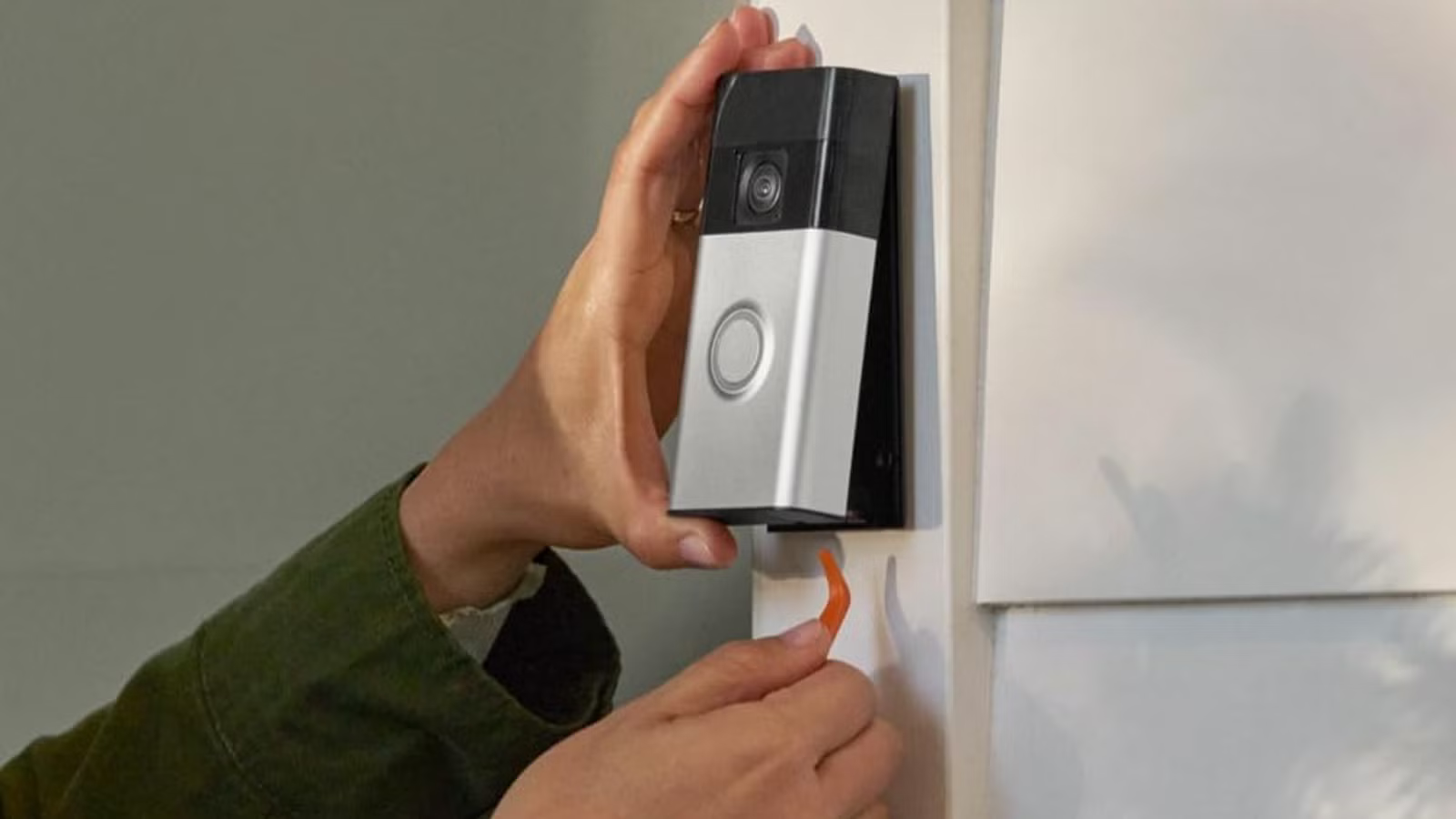
My first smart cameras were Ring cameras, and I used them for several years. The increasing subscription costs and worrying privacy issues finally made me switch to Reolink, and I wish I’d made the move much sooner.
Related
Why and How I’m Switching to Local Storage for My Security Camera Setup
I’m done renting space in the sky.
Why I bought Ring cameras in the first place
Low cost and easy integration
Credit: Ring
When I first started looking for smart cameras, I already owned some Amazon Echo smart displays. Like the smart displays, Ring cameras were reasonably priced, particularly during Amazon Prime events since Amazon owns the Ring brand.
The cameras also work well with Alexa. For example, if someone rings a Ring video doorbell, the feed from the doorbell camera can automatically be displayed on your Echo Show devices so you can see who’s at the door. This simple integration appealed, so choosing Ring cameras seemed like the right choice.
There was a subscription required to use some of the features of the cameras. I needed a subscription to access video history and to get notifications for things such as person detection. I only had to pay a few dollars a month, so it didn’t seem too horrific.
The problems that became harder to ignore
Rising prices and privacy issues
Credit: Ring
Unfortunately, what started as a modest subscription continued to increase over time. The cost of subscriptions rose, and as I added more cameras, I needed to upgrade to a higher tier that covered more devices. Before I knew it, I was paying around $10 a month to be able to use some of the most useful features of my smart cameras.
The increasing costs weren’t the only issue. I was becoming more and more concerned about privacy; since my camera recordings were stored in the cloud, it meant that video from my home was ending up on third-party servers, which didn’t sit well. Amazon has never had the greatest record when it comes to privacy.
Many Ring owners felt the same after the recent Super Bowl commercial. The ad showed a Ring feature called Search Party, which used Ring cameras within a neighborhood to locate a missing dog. The reaction to the ad was not positive, with people understandably concerned that the same technology could be used to track people as well as animals.
The worst part was that the feature was enabled by default. Many Ring users were concerned that their cameras were being used to monitor their neighborhood without their explicit prior consent.
Why I switched to Reolink
Local storage and subscription-free
I finally decided that the spiraling costs and privacy concerns with Ring cameras had become too much. It was time to replace them with something else.
I knew that I wanted two things that Ring cameras couldn’t give me. I wanted local video storage, so that I wouldn’t have to send all the video from my cameras to the cloud. I also wanted products where you could access the main features without having to pay a subscription.
After a lot of research, I eventually settled on Reolink as the brand that seemed to fit my needs the best. Many Reolink cameras let you use microSD cards up to 512 GB in size, which can store weeks of motion-triggered video clips.
You can also buy products such as the Reolink Home Hub that can store the video from all of your cameras in a centralized location, which supports a microSD card up to 1TB.
Using local storage means that I no longer have to pay a subscription fee to access the video recordings from my cameras or video doorbell. Instead of paying Ring to store my recordings in the cloud and let me view them on demand, all my recordings are saved locally, and I can view them easily on my local network. I can even access the recordings remotely without a subscription via the Reolink app.
Reolink also offers much better privacy. Since my recordings are stored locally rather than in the cloud, I don’t have to worry about them living on third-party servers where anything could happen to them. Local cameras keep recordings off Reolink’s servers, so they’re unlikely to be used for surveillance without your consent, unlike with Ring’s Search Party feature.
Convenience often comes at a cost
You don’t have to pay for privacy
Credit: Michael Bizzaco / How-To Geek
Ring cameras seemed like a great choice for me at the time as they offered a lot of convenience. They worked seamlessly with my Echo displays, which made them much more useful. That convenience came at a cost. Not just the price of my subscription but also the cost of my privacy.
When those costs rose too high, it was time to switch. Because Reolink cameras work really well with Home Assistant, I’ve been able to recreate the Ring features I liked without having to pay for them. My cameras are now local and private, and I couldn’t be happier with them.
There are plenty of private, local cameras
If you’re looking to say goodbye to your Ring cameras, there are plenty of options that you can use locally without having to pay for cloud storage. Reolink is a popular choice, but it’s not the only option out there.
