

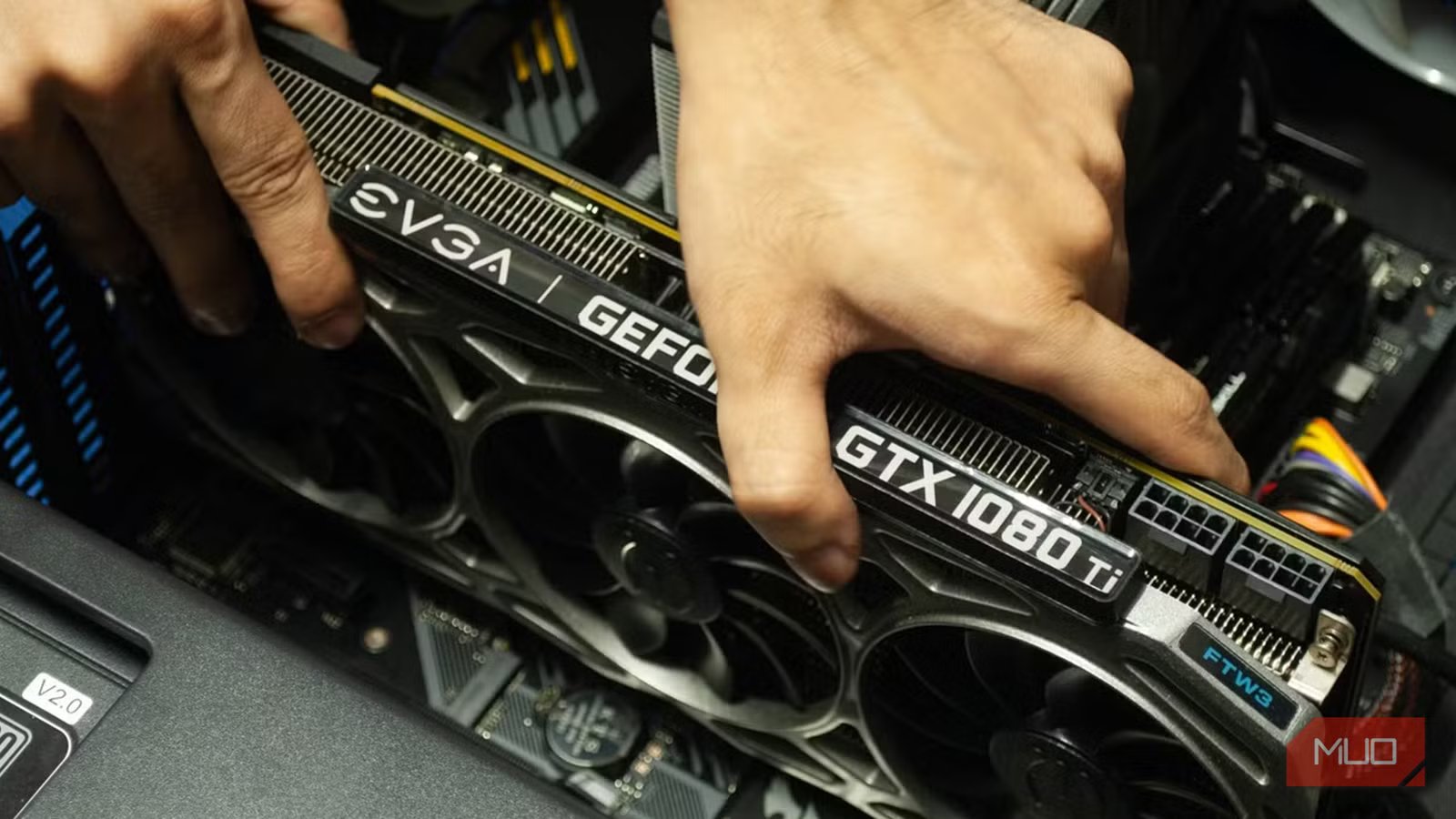
GPU prices have been absolutely unhinged for a while now. You can thank companies hoovering up huge amounts of RAM for AI data center purposes for the continuing skyrocketing costs of modern graphics cards. That’s why you should think twice before upgrading your GPU right now. Still, buying a secondhand card in this current climate should make some sense though, right?
While it’s certainly true that you can save a huge chunk of change by picking up a refurbished GPU from eBay or third-party Amazon sellers, you have to be extra careful that you’re buying from a reputable vendor.
Purchasing a used GPU comes with inherent risks; chief among them being you don’t know how much stress the previous owner has put on the card. Thankfully, there are tell-tale signs that a GPUn has been mistreated. Here are the main warnings to consider before you buy a secondhand model.
Related
I’ll never buy these PC components new
You don’t need to spend a fortune to upgrade your hardware; you just need to be smart about what you buy.
Noisy fans
If a GPU sounds like a jet engine, step away
Credit: Dave Meikleham \ MakeUseOf
Excessive fan noise on a used graphics card is a potential sign that it’s been mistreated by its original owner. GPUs that have been used for crypto/data mining will have seen their fans undergo tremendous pressure. If a card has been running 24/7 at maximum loads for long spells of time, there’s a real chance its fan bearings have worn out. Should this be the case, your used GPU may be making a buzzing or rattling sound.
Though the card you’re eyeing up may not have been mined, if it’s an older GPU, it may well have gathered excessive fan dust. This can obviously negatively impact performance, though in some cases, dust buildup can be fixed. Noisy, dust-covered fans can be cleaned with compressed air, while BIOS settings changes can lower fan curves, in turn making your GPU run more quietly.
Still, overly loud fans can definitely be a sign your used GPU has endured a hard previous life.
The threat of a crypto-mined GPU
That secondhand card may have been mined to the brink
Noviansyah M / ShutterstockCredit: Noviansyah M / Shutterstock
The crypto mining craze has been hugely damaging to the secondhand graphics card market. Bad faith sellers can easily list a used GPU that has been mined for crypto purposes for months on end, and they’re unlikely to admit this in a sales listing.
Even if a card has been mined to oblivion, that doesn’t mean it will necessarily show signs of physical damage. Despite crypto-mined cards often being forced to operate at full load for dangerously prolonged periods, the damage to a GPU is more likely to be internal.
Should a graphics card have been mined for extended periods, performing at 100% load may have fried its memory and capacitors, while the constant pressure on its fans could have caused internal heat damage to the silicon. Because of the inherent instability of mined cards, only buy from reputable sellers with excellent feedback to avoid inadvertently picking one up.
Physical wear and tear on the card
Be on the lookout for signs of physical damage
Credit: Shaheer Khan/Make Use Of
One of the reasons you should always ask for additional photos than provided on a used GPU listing, is so that you can spot signs of external damage on a card. Where possible, ask a vendor to provide a video of the GPU so that you can view it from all angles.
So what warning signs should you be looking for? A good place to start is around its display sockets. If there are excessive or deep scratches around the DisPlay Port or HDMI connectors, this could lead to cables that don’t slot properly into the GPU, potentially causing display issues.
You should also carefully inspect a card’s circuit board and fans when looking at photos of a secondhand card. If the PCB is warped even slightly, this could lead to serious performance problems, while bent fans can cause damaging overheating.
Only buy used GPUs that show minimal wear and tear.
Warranty issues
Most GPU warranties aren’t transferable
Credit: Dave Meikleham / MakeUseOf
While it’s often fine to invest in a secondhand graphics card (just like it’s actually okay to buy a used CPU), you still need to be diligent. One of the big risks when picking up a used GPU is that it likely won’t have a transferable warranty.
If you pick up a card that has no warranty protection and something quickly goes wrong, you’re basically all out of luck. Without a transferable warranty, the manufacturer of that secondhand GPU you’ve just splurged on won’t fix it should it suddenly become bricked.
EVGA is that rare GPU maker that does offer transferable warranties, but this is very much the exception. The likes of ASUS, Gigabyte, and MSI normally don’t allow buyers to transfer their warranties to other parties, so if you’re looking at a used GPU from one of these brands and the seller is claiming the warranty will go in your name, be extra suspicious. On a related note, try these GPU cooling fixes before voiding your warranty.
A suspiciously enticing price point
Be wary of GPUs that are aggressively priced
Image by Jayric Maning –no attributions requiredCredit: Jayric Maning / MakeUseOf
Look, I get it. In the current financial climate, it’s oh-so tempting to go hunting for alluring deals on used GPUs. After all, almost every high-end graphics card in 2026 now costs way more than it did at launch. For context, the Nvidia GeForce RTX 5090 hit the market at $2,000 and can now be found selling for upwards of $3,500.
Yet if a deal on a used GPU looks too good to be true, then it almost certainly is. Before you blow a wad of cash on what appears to be a killer value GPU, school yourself on the average secondhand market price of the model you’re interested in.
Take the RTX 5080 as an example. The second-fastest consumer graphics card on the planet, it’s the ideal option for running games that support path tracing. The average used price of the 5080 is around $1,200-$1,300, so if you see a seller trying to peddle one for well under $1,000 that should set off major warning signs. An undervalued sale price could point to a faulty or fake card or worse yet, potentially one that’s been stolen.
Used GPUs carry potential pitfalls
Image Credit: Gavin Phillips/MakeUseOfCredit: Gavin Phillips/MakeUseOf
Physical damage and excessively loud fans are two of the big issues you need to look out for when purchasing a used GPU. That’s why you should always ask for both photo and video evidence that a card is looking and running in acceptable condition. Finding out whether a GPU has been mined or whether its warranty is transferable is a trickier prospect; one that will require the seller you’re dealing with to be honest and transparent. Secondhand graphics cards can be well worth the money, but you do need to be careful before buying one.
Brand
Gigabyte
GPU Speed
2.73 GHz
Memory
16GB
Power
360W TDP
CUDA Cores
10,752
The Gigabyte GeForce RTX 5080 delivers next-generation performance for gaming and creative workloads, featuring advanced ray tracing, AI-enhanced graphics, and high-speed GDDR7 memory. Its robust cooling system ensures stable operation under load, while factory overclocking and modern connectivity make it ideal for high-resolution gaming, streaming, and demanding GPU-intensive tasks.
