

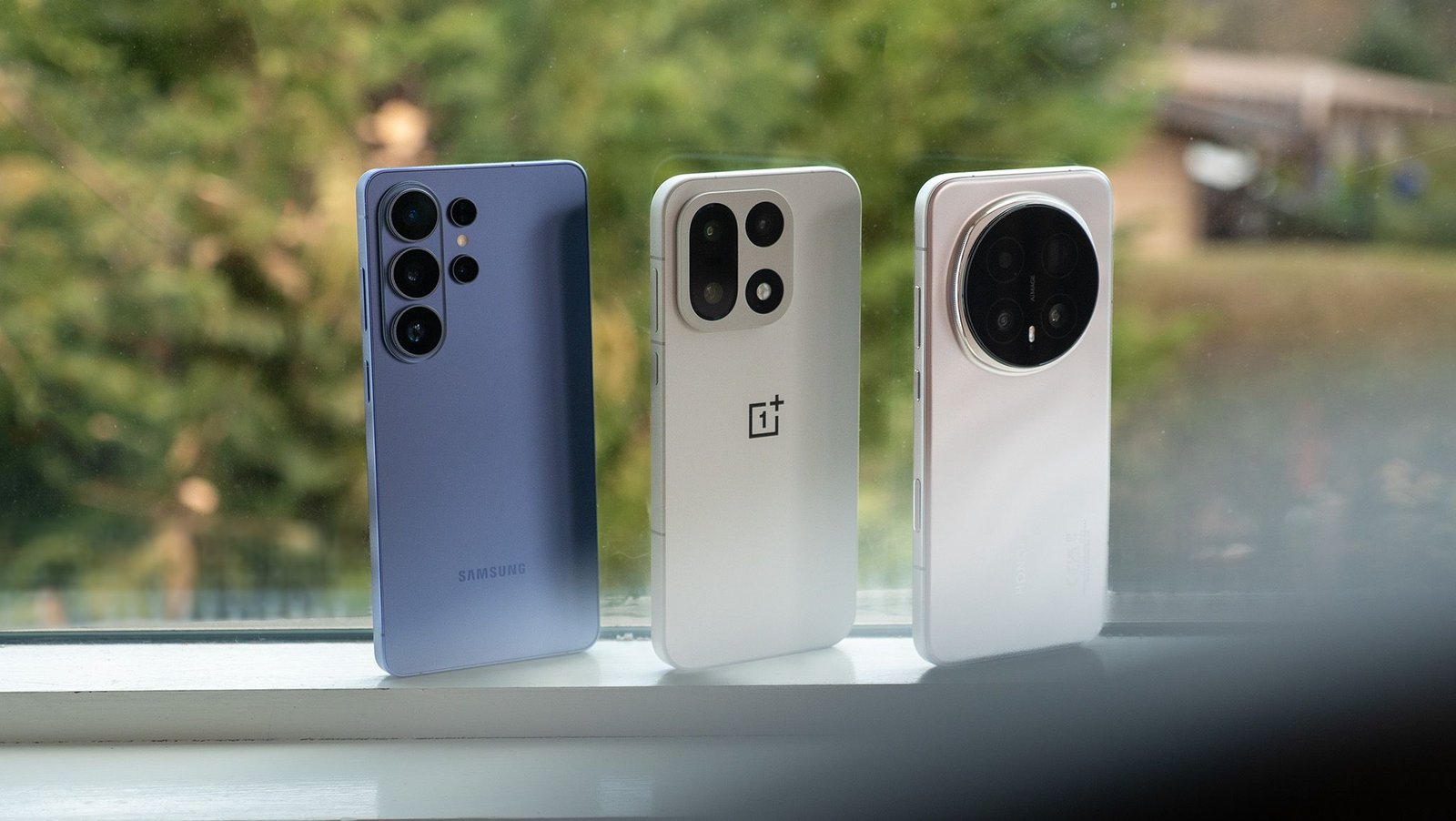
Back in 2022, I started getting regular headaches and having eye pain, something I had never chronically dealt with in my life. After months of trial and error (and several visits to the optometrist), I stumbled upon a Reddit post that would change my life. As it turns out, most modern smartphones don’t dim like a light bulb. Instead, they use something called PWM dimming, which rapidly turns the display on and off to trick your eyes into thinking it’s brighter or dimmer.
Flickering or strobing lights are a known problem for 10-20% of the population, so just know that you’re not alone in dealing with this problem, but you’re likely ahead of the curve now that you know it exists! Over the years, I’ve developed several testing methods and tested dozens of phones in my quest to find ones that don’t give people headaches, yet don’t sacrifice what makes a modern smartphone great. That’s why you can trust me (and Android Central) to help guide you to the right phone!
The OnePlus 15R is the best overall phone for PWM-sensitive people because it not only has a fantastic OLED display with impressive eye friendly features, but it also provides one of the absolute best daily experiences of any device on this list. But there are also lots of other options these days, so I’ve assembled a list of the nine best phones for PWM-sensitive people that will help you find your next smartphone and eliminate the pain that other phones cause in our lives.
At a glance
Best overall
Best overall
The OnePlus 15R sports the lowest modulation I’ve ever seen from an OLED and has no dithering at all. It’s also impressively affordable and has great specs, making this the best overall pick for most people.
Read more below
Runner-up
Runner-up
NXTPAPER displays were built to be eye-friendly, and the NXTPAPER 70 Pro is TCL’s most well-rounded phone yet. A gorgeous matte display with custom diffusion layers makes this a joy to read, day and night, and the price will have you doing a double-take in the best way.
Read more below
Best camera
Best camera
No company has worked harder on creating displays with more eye care solutions than Honor, and it also just so happens to make some of the best cameras on any smartphone in existence.
Read more below
Best foldable
Best folding phone
The Honor Magic V5 isn’t just slim and powerful, it’s also got impressively eye-friendly displays that won’t give you a headache like Samsung or Google’s foldables will. With a massive battery and some of the best cameras in any foldable, it’s a real winner.
Read more below
Best flip phone
5. Motorola Razr Plus 2026
Best flip phone
Motorola was one of the first companies to reintroduce DC dimming to its OLED phones, and that great flicker prevention technology is found on the gorgeous dual screens of the Razr Plus 2026, a flip phone you’re going to love.
Read more below
Best mid-range
Best mid-range phone
The Nothing Phone 4a is priced just right, with a unique design, great features, and a fantastic camera. Plus, the OLED display uses DC-like dimming above 50% brightness and 2,160Hz PWM dimming below that.
Read more below
Most affordable
Best affordable phone
The Moto G line has always been known for its affordability, but not always great performance. Motorola upgraded things this year and still kept an eye-friendly LCD panel on the Moto G 2026, making it an easy recommendation at a low price.
Read more below
Best E Ink
8. Bigme HiBreak Pro Color
Best E Ink
Bigme has been around since 2008, but the company’s E Ink products have made a spectacular breakthrough only fairly recently. The HiBreak Pro Color runs Android 15 on a completely flicker-free color E Ink panel, making this the best choice for people who love to read.
Read more below
Best stylus
9. Motorola Razr Fold 2026
Best stylus
The Motorola Razr Fold 2026 is the company’s first book-style foldable, and it’s currently the only foldable phone with DC dimming and stylus support for the inner and outer screens. It’s a fantastic choice for notetaking or drawing anywhere!
Read more below
Best overall
(Image credit: Nicholas Sutrich / Android Central)
1. OnePlus 15R
Best overall
Specifications
Display: 6.83-inch 165Hz AMOLED, 2800 x 1272
Dimming types: DC and 2160Hz PWM
CPU: Qualcomm Snapdragon 8 Gen 5
RAM: 12GB
OS: Android 16, Oxygen OS 16
Storage: 256GB/512GB UFS 4.1
Battery: 7,400mAh, 80W wired charging
Camera: 50MP main + 8MP ultrawide + 32MP selfie
Reasons to buy
+
Lowest modulation AMOLED panel on the market
+
DC and PWM dimming
+
No dithering
+
Great battery life
+
Good performance
+
IP68 and IP69 water resistance
Reasons to avoid
–
No telephoto lens
–
Ultrawide camera is underwhelming
OnePlus was one of the first companies that experimented with DC dimming on OLED displays, and while that disappeared for a few years, the company’s latest phones have used more eye-friendly screens each generation. Even with that track record, the OnePlus 15R was the watershed moment many have been waiting for on an OLED smartphone, including DC dimming with the lowest modulation I’ve seen on any OLED display to date.
That modulation rate is important on OLEDs, especially because OLED pixels emit their own light. This means there’s always some flicker present since the light has to be refreshed when the image refreshes. On the OnePlus 15R’s display, this typically happens 120 times per second, or at 120Hz.
Some OLED displays do a poor job of managing this brightness change, but OnePlus clearly went out of its way to ensure that brightness dip is imperceptible because of the low modulation rate. Even at low brightness, the 2160Hz PWM dimming uses modulation in the single digits, something I’ve never seen on another OLED phone. Ever.
OnePlus 15R PWM dimming and dithering display review: I didn’t see this one coming! – YouTube
Watch On
It’s also a proper 10-bit display, so temporal dithering doesn’t have to be used to fake 10-bit colors, making the display even more flicker-free than other OLEDs.
The rest of the package here is also quite excellent, and while our initial review was unhappy with the price increase and camera changes year-over-year, market changes have made this price increase feel reasonable.
The OnePlus 15R packs in a top-tier processor, tons of RAM, and a good main camera, plus an absolutely massive battery with ultra-fast charging and a charger included in the box.
Runner-up
(Image credit: Nicholas Sutrich / Android Central)
Runner-up
Specifications
Display: 6.9-inch 120Hz NXTPAPER LCD, 2340 x 1080
Dimming types: DC dimming
CPU: Mediatek Dimensity 7300
RAM: 8GB
OS: Android 16, TCL UI 9
Storage: 256GB, 512GB
Battery: 5,200mAh
Camera: 50MP main + 8MP ultrawide + 32MP selfie
Reasons to buy
+
Best value ever and an amazing price
+
Superb, eye-friendly display
+
Great performance
+
Solid build, IP68 rating, microSD card support
+
Full North American 5G plus satellite connectivity
+
TCL T-Pen stylus support (sold separately)
Reasons to avoid
–
Lots of bloatware (that, thankfully, can be uninstalled)
–
Dithering used on some colors
–
Outdoor visibility could be better
The TCL NXTPAPER 70 Pro is the first NXTPAPER 4.0-powered phone to launch in North America, and this LCD-based tech might just make all the difference in the world for you. The backlight is a true flicker-free DC-dimmed LED with no perceivable modulation at all.
NXTPAPER technology amplifies the best qualities of LCDs by softening the light output from the backlight, passing it through a circularly polarized filter, a blue light frequency shift filter, and a special matte top layer that features micro-abrasions to simulate a paper aesthetic. The result is the best LCD you’ve ever seen, and the anti-reflective layers help deepen the blacks in a way that makes it look more like an OLED.
All isn’t perfect, though, as this 8-bit LCD sometimes uses temporal dithering to create colors the panel can’t naturally make. The built-in color paper mode turns the screen a pleasant pastel hue, but uses temporal dithering to achieve it. Because of this, some flicker-sensitive users might have to be careful about what’s on the screen.
TCL NXTPAPER 70 Pro PWM and dithering display comfort review – YouTube
Watch On
Despite having such a phenomenal display, this phone retails for just $199, and it’s quite frankly mind blowing to see a phone like this debut in 2026 with all the technology-related price increases.
And while it’s not as fast as a flagship, there are few times you’ll ever notice the speed difference. It’s impressive what companies like TCL can do with affordable phones these days! It’s a night and day difference from what $200 phones felt like even just 2-3 years ago.
Best camera
(Image credit: Nicholas Sutrich / Android Central)
Best camera
Specifications
Display: 6.71-inch 120Hz OLED, 2808 x 1256
Dimming types: DC, 3840Hz or 4320Hz PWM dimming
CPU: Qualcomm Snapdragon 8 Elite Gen 5
RAM: 12GB/16GB
OS: Android 16, Magic OS 10
Storage: 256GB/512GB/1TB
Battery: 7,100mAh
Camera: 50MP main + 50MP ultrawide/macro + 200MP periscope telephoto + 50MP selfie
Reasons to buy
+
Mind-blowing telephoto camera
+
3D face and excellent ultrasonic fingerprint biometrics
+
Ultrafast charging with superb battery life and performance
+
Class-leading OLED display with the best eye-friendly features to date
+
Seven years of OS updates and improved UX
+
Great haptics and rugged IP69K build
Reasons to avoid
–
Some OS design is still clunky
–
Curved glass means lower-quality tempered glass protectors
–
Photos can look oversharpened at times
Ever since the Magic 5 series, Honor has been steadily improving its phone displays by focusing on eye health and long-term eye care. Since then, Honor has launched a bevy of unique features that ensure your eyes will feel better long-term using the company’s phones than any other brand.
The Honor Magic 8 Pro is the culmination of all those technologies, packing class-leading brightness and color accuracy in a true 10-bit panel (meaning no temporal dithering), while simultaneously offering great eye care features like DC dimming, and a selection of either single-pulse 3840Hz PWM dimming or triple-pulse 4320Hz PWM dimming at low brightness.
The company also includes a new flicker detection tool that can help you identify lights in your room (and elsewhere) that might be causing you eye pain or headaches. It’s these additions that make Honor phones an impeccable choice for flicker-sensitive users, and the reason the Magic 8 Pro’s displayis so darn good.
Honor Magic 8 Pro display review: PWM dimming, dithering, and HDR tests – YouTube
Watch On
And while the display is truly amazing for a flagship OLED device, it’s the camera that landed the Magic 8 Pro a spot on this list. The Honor Magic 8 Pro’s camera is fantastic, particularly that 200MP telephoto sensor, and you can see why in my Magic 8 Pro camera review.
On top of that, Honor offers a nifty photography kit for folks looking to get even better zoom quality and a more “professional camera” look for their phone, including a MagSafe case inside that works perfectly with MagSafe tripods.
Best folding phone
(Image credit: Nicholas Sutrich / Android Central)
Best folding phone
Specifications
Inner Display: 7.95-inch 120Hz foldable AMOLED, 2172 x 2352
Outer display: 6.43-inch 120Hz OLED, 2376 x 1060
Dimming types: DC, 3840Hz or 4320Hz PWM dimming
CPU: Qualcomm Snapdragon 8 Elite
RAM: 12GB/16GB
OS: Android 16, Magic OS 10
Storage: 256GB/512GB/1TB
Battery: 5,820mAh
Camera: 50MP main + 50MP ultrawide + 64MP periscope telephoto + 20MP selfie (inside and outside)
Reasons to buy
+
Sleek design
+
Outstanding cameras
+
The best OLED panels of any foldable
+
Amazing battery life
+
IP58 and IP59 ingress protection
+
Seven Android OS updates
Reasons to avoid
–
Magic OS is a little too iOS-inspired at times
–
Sizeable rear camera module
Honor made huge strides year-over-year with the Magic V5, as the company not only retained the crown for the thinnest foldable phone available at launch, but also massively increased the battery size and even improved the OLED displays to include DC dimming at medium to high brightness, and a choice of single-pulse 3840Hz PWM dimming or triple-pulse 4320Hz PWM dimming at low brightness.
Both the inner and outer displays are 10-bit, and I found no evidence of dithering on either. That’s a big upgrade from the Magic V3, which used dithering on the inner display, but not the outer display. The foldable also supports all of Honor’s latest eye care solutions, including blue light blocking, circadian rhythm color management, defocus myopia prevention, and more.
Despite all the amazing eye care features and eye-friendly nature of this display, we’ve found that it’s the best foldable display on the market for image quality, too.
Honor Magic V5 vs V3 PWM and dithering display review – YouTube
Watch On
The Magic V5 also has exquisite cameras, something that’s good since the camera island on the back is so honkin’ big. Most book-style foldables have poorer cameras than non-folding flagship phones, but Honor’s inclusion of bigger sensors ensures that you won’t feel like this is a second-rate experience.
And there’s no forgetting the battery life on this foldable, too. With a massive 5,820mAh cell, this phone sports a nearly 30% larger battery than the Samsung Galaxy Z Fold 7, so you not only get better displays than Samsung’s phone, but substantially better battery life, all without sacrificing performance or thinness.
Best flip phone
(Image credit: Nicholas Sutrich / Android Central)
Best flip phone
Specifications
Inner Display: 6.9-inch 165Hz foldable AMOLED, 2640 x 1084
Outer display: 4-inch 165Hz AMOLED, 1272 x 1080
Dimming types: DC, 720Hz PWM dimming
CPU: Qualcomm Snapdragon 8s Gen 3
RAM: 12GB
OS: Android 16, Hello UX
Storage: 256GB
Battery: 4,500mAh
Camera: 50MP main + 50MP ultrawide + 32MP selfie
Reasons to buy
+
Excellent OLED displays with flicker reduction technology
+
Good daily performance and battery life
+
Titanium hinge
+
Clean software with five years of updates
+
All your existing cases and accessories still work
+
Surprising camera upgrade
Reasons to avoid
–
Not the latest gen SoC
–
Outer display uses dithering
–
Modulation is a bit high on both displays
Motorola was one of the first companies to reintroduce DC dimming to its OLED-equipped phones in 2023 with the Motorola Edge Plus 2023, and it’s kept that excellent setting around ever since then. The Motorola Razr Plus 2026 is the company’s latest mid-tier flip phone, and the company’s Flicker Prevention mode is here in all its glory.
Out of the box, the Razr Plus 2026 uses DC dimming at medium to high brightness, then switches to 720Hz PWM dimming at low brightness. That’s not a great rate, so it’s good that the Flicker Prevention mode swaps out PWM dimming for full DC dimming, even down to 1% brightness.
Motorola outfits this phone’s dual displays with what it calls “Extreme AMOLED” panels, noting that they support over 3000 nits of peak brightness and Dolby Vision colorspace. The inner display is a true 10-bit panel and exhibits no dithering, but the smaller cover display uses dithering. On the bright side, you could always just not use the outer display if you are sensitive to dithering, since the foldable inner display is the best part of the phone.
Best mid-range phone
(Image credit: Nicholas Sutrich / Android Central)
Best mid-range phone
Specifications
Display: 6.83-inch 144Hz AMOLED, 2800 x 1260
Dimming types: DC, 2160Hz PWM dimming
CPU: Qualcomm Snapdragon 7 Gen 4
RAM: 8GB/12GB
OS: Android 16, Nothing OS 4.1
Storage: 128GB/256GB
Battery: 5,080mAh
Camera: 50MP main + 8MP ultrawide + 32MP selfie
Reasons to buy
+
Impressively bright OLED display with high-frequency PWM dimming
+
No bloatware, six years of software support
+
Stand out build quality and design
+
Essential Button and Playground
+
Excellent everyday performance
+
The Nothing community supercharges the phone’s most unique features
Reasons to avoid
–
Cameras could be better
–
No wireless charging
–
Moderately high modulation
If you know anything about Nothing’s phones, you’ll know the company takes its design language seriously. While that trademark transparent design and “light glyph” LEDs on the back have morphed over the years, Nothing phones are always immediately recognizable, no matter which model you buy.
Most Nothing phones are also very eye-friendly, often earning top marks in their price categories. The Nothing Phone 4a Pro sports DC dimming above 50% brightness, and 2160Hz PWM dimming below that. The modulation is a bit on the higher end of things, but it’s still considerably lower than Galaxy or Pixel phones, and it sports a 9x faster PWM rate than Samsung or Google’s devices, too.
This one also sports a true 10-bit panel with no dithering. The cheaper Nothing Phone 4a Pro has far lower modulation, but it uses dithering, so that might be a better pick if you’re not sensitive to dithering.
Nothing Phone 4a vs 4a Pro PWM and dithering display review – YouTube
Watch On
Aside from great displays that should feel great for lots of people, Nothing phones are a ton of fun to use because Nothing always packs interesting features inside. The Glyph Matrix “display” on the back can be used to show the time, notifications, timers via an hourglass, and more.
Plus, with cool features like Essential Voice and community-supported features like Essential Apps, there’s no shortage of fun, new things to do with this phone.
Best affordable phone
(Image credit: Nicholas Sutrich / Android Central)
7. Moto G 2026
Best affordable phone
Specifications
Display: 6.7-inch 120Hz IPS LCD, 1604 x 720
CPU: Mediatek Dimensity 6300
RAM: 4GB
OS: Android 16, Hello UX
Storage: 128GB
Battery: 5,200mAh
Camera: 50MP main + 2MP macro + 32MP selfie
Reasons to buy
+
Totally flicker-free LCD panel
+
3.5mm jack and microSD card slot
+
5G connectivity and NFC
+
Great battery life and ultra-fast charging
Reasons to avoid
–
Anemic amount of RAM
–
Useless macro camera
–
Some light dithering on greys
The Moto G series has always been one of the most affordable phones you can buy in any given year, and they’ve largely always had very eye-friendly displays. The Moto G 2026, as this North American model is called. There’s no exact equivalent model on the international market, but there are several similar releases in other regions.
The Moto G 2026 features a flicker-free 120Hz LCD with no perceivable modulation. I found that some grey colors use dithering, which is common on LCDs, but it’s a very “light” dithering rather than the aggressive color dithering I’ve seen on many other phones. It’s not technically dither-free because of this, but it’s still a very gentle dither.
Moto G 2026 PWM and dithering display review – YouTube
Watch On
Motorola has been sprucing up its entry-level models like the Moto G 2026 quite a bit in recent years, and the phone sports a brilliant shade of pink or a more subtle gray color, both with vegan leather backs.
It’s only got 4GB of RAM, which is probably the worst part of the entire experience, but Motorola has done a good job of enhancing its RAM boost software feature, and this feels notably faster and more responsive than other Moto G models in the last three years.
Best E Ink phone
(Image credit: Nicholas Sutrich / Android Central)
8. Bigme HiBreak Pro Color
Best E Ink phone
Specifications
Display: 5.84-inch Kaleido 3 color E Ink, 1648 x 824
Dimming types: DC Dimming
CPU: Mediatek Dimensity 1080
RAM: 8GB
OS: Android 14, Bigme UI
Storage: 256GB
Battery: 4,500mAh
Camera: 20MP main + 5MP selfie
Reasons to buy
+
Fully flicker-free color E Ink display
+
Separate warm and cool DC-dimmed frontlights
+
New 42Hz refresh mode
+
IR, NFC, and 5G support
+
Days-long battery life
Reasons to avoid
–
E Ink can feel slow
–
Color E Ink can look grainy
–
Cameras aren’t great
–
Only on Android 14
E Ink phones are still relatively new to the market, but the segment has grown substantially over the past two years thanks to companies like Bigme. The Bigme Hibreak Pro Color is the latest Android-powered smartphone from the company, and it utilizes fully flicker-free color E Ink technology.
While most E Ink refreshes at 20-30Hz, Bigme’s enhanced Kaleido 3 displays push that up to 42Hz when set to Hyper refresh rate mode. This is a new benchmark for phone-sized E Ink devices, and it means that this screen can refresh fast enough to comfortably watch videos and even play games using E Ink technology.
Plus, the dual frontlights offer scalable cool and warm hues, so you can comfortably set the display’s color to your preference at any time of day. This is the best choice for people who have a hard time using other OLED or LCD-equipped phones.
The Bigme HiBreak Pro Color just got a MASSIVE 42Hz upgrade – YouTube
Watch On
The phone is powered by Android 14, so while it’s not the latest version of Android, it’ll still run all your favorite apps from the Google Play Store. It’s got 5G support and worked just fine for me on T-Mobile in the U.S., so you don’t have to worry about lack of connectivity.
The Mediatek Dimensity 1080 that runs the show is impressively capable given what previous E Ink phones used, and 8GB of RAM ensures that you can multitask without apps constantly reloading or taking forever to initially load. Plus with NFC and IR blaster support, this one will get all the things you need done without giving you a headache.
Best stylus phone
(Image credit: Derrek Lee / Android Central)
Best stylus phone
Specifications
Inner Display: 8.1-inch 120Hz foldable P-OLED, 2484 x 2232
Outer display: 6.6-inch 120Hz P-OLED, 2520 x 1080
Dimming types: DC, 720Hz PWM dimming
CPU: Qualcomm Snapdragon 8 Gen 5
RAM: 12GB/16GB
OS: Android 16, Hello UX
Storage: 256GB/512GB/1TB
Battery: 6,000mAh
Camera: 50MP main + 50MP ultrawide + 50MP periscope telephoto + 20MP cover selfie + 32MP inner selfie
Reasons to buy
+
DC-dimmed 10-bit OLEDs with no dithering
+
Thin, durable design
+
Fantastic cameras with impressive zoom
+
Long software support
+
Battery easily lasts more than a day
+
Active Bluetooth stylus pen adds some welcome functionality
Reasons to avoid
–
Moto AI suite is still just okay
–
Few available accessories
–
Moto Pen Ultra sold separately
–
A few bugs
Motorola is one of those companies you can count on offering great flicker-prevention solutions on all of its phones, and that extends to its most premium (and most expensive) phone, the Razr Fold 2026. This is Motorola’s first book-style foldable, and it supports the Moto Pen, an active stylus that writes on both the outer and inner displays of this folding phone.
Being able to write on both displays is unique, as most folding phones that support styluses only allow stylus use on the larger inner display. The stylus is sold separately, which is a hit since the phone already costs a pretty penny, but it is the most capable stylus-supported device on the market, so you get what you pay for.
Motorola Razr Fold 2026 display comfort review – YouTube
Watch On
The dual displays are both P-OLED with support for Motorola’s flicker-prevention DC dimming tech, so you can completely disable the 720Hz PWM dimming with the flick of a switch in display settings. Modulation on these displays is quite high, so it’s not going to work for all flicker-sensitive users, but there’s no dithering present on either display, which is fantastic.
The rest of the experience is top-notch, too. Despite Motorola’s shaky history with camera quality, the Razr Fold pushes the boundaries of foldable camera quality, often meeting or beating the best rivals from companies like Honor and Oppo. As is the case with flip phones, Motorola’s Fold not only has better displays than the Samsung Galaxy Z Fold 7, but it also has a 40% larger battery and substantially better cameras, PLUS stylus support (the Z Fold 7 doesn’t support styluses at all). It’s a win-win-win-win.
How to choose
What’s the best phone for PWM/flicker-sensitive people?
Why you can trust Android Central
Our expert reviewers spend hours testing and comparing products and services so you can choose the best for you. Find out more about how we test.
(Image credit: Nicholas Sutrich / Android Central)
The OnePlus 15R is the best phone for flicker-sensitive people, followed closely by the TCL NXTPAPER 70 Pro. My third pick is the Bigme Hibreak Pro Color, an Android-powered color E Ink phone that’s truly flicker-free but might feel a little sluggish compared to the other two choices.
If you’re PWM or flicker-sensitive, it can be extremely difficult to figure out which phones work best for you. As a rule of thumb, IPS LCD and E Ink panels are usually friendlier on the eyes than any kind of OLED panel, but even that’s not guaranteed. PWM dimming is sometimes used for cost reasons, while it’s used to mask poor low-light screen quality in other instances, so even LCD panels can use it.
What phone works for one person may not work for another person, especially if you have sensitive eyes.
OLED displays often use PWM dimming to retain accurate colors and details, but some manufacturers, like Motorola, allow you to disable it if you care more about flicker-reduction than peak picture quality. Unfortunately, some manufacturers — like Samsung and Google — refuse to allow users to make the best choice for themselves.
While the phones on this list have been tested and used by us, everyone’s eyes and brains work a little differently. That means what works for one person won’t always work for another person. If you’re PWM-sensitive, you may have to try several options on the list before you find something comfortable for you.
If you find your phone bothers your eyes when using automatic brightness, try setting it to manual at 100% brightness. Then use an app like this screen and notification dimmer to artificially lower the brightness. I’ve tested a lot of screen-dimming apps, and this is the best one.
